
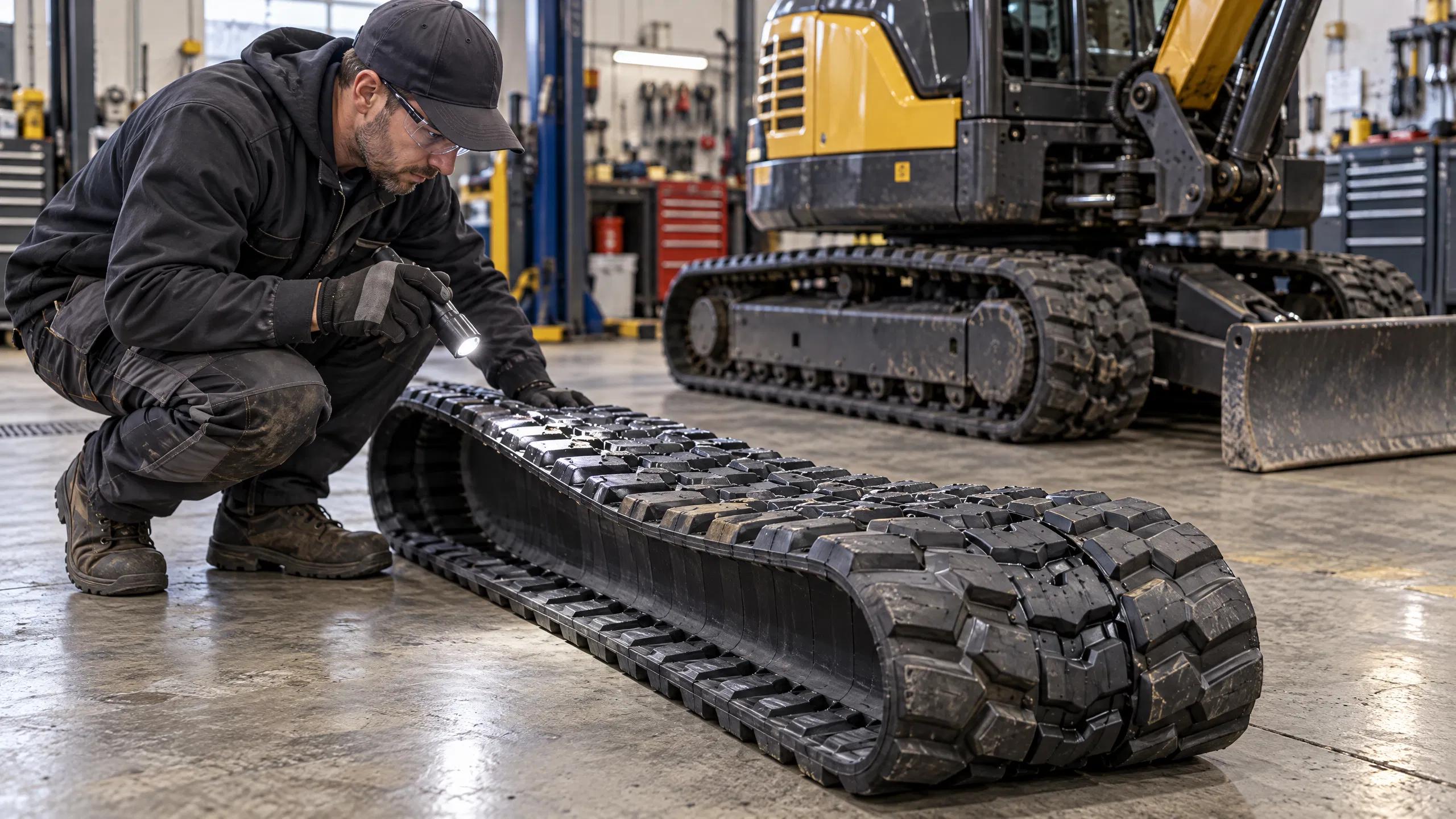
A rubber track is a working component that affects machine availability, ground contact and maintenance costs. For equipment dealers and fleet managers, a consistent inspection routine can help identify damage early, investigate abnormal wear and plan replacements with less disruption. Maintenance cannot eliminate wear, but it can help teams make better-informed decisions about track condition and machine readiness.
In this guide, we share practical recommendations for rubber track maintenance across compact equipment fleets. We focus on routine inspections, undercarriage checks, operating practices and parts planning. Track construction and maintenance requirements vary by machine and manufacturer, so we recommend using the machine and track manuals as the authority for adjustment procedures, service limits and replacement criteria.
Establish a repeatable inspection routine
We recommend inspecting tracks at intervals set by the equipment manufacturer and after work in unusually abrasive, muddy or debris-heavy conditions. Operators should also report unusual vibration, tracking behavior or visible damage rather than waiting for a scheduled service visit. Before inspection, park and secure the machine according to its manual. Never inspect moving components or reach near a track while the machine is operating.
A visual check should cover the full accessible track surface. Look for cuts, cracks, missing or damaged tread blocks, exposed reinforcement, embedded debris and unusual wear. Compare the left and right tracks for differences, and note whether damage is concentrated in one area. Photographs taken from consistent angles can help teams compare condition over time.
Record the inspection date, machine hours, operating conditions, findings and any action taken. A simple history can help dealers and fleet managers distinguish normal wear from a developing problem. It is also useful when discussing a potential warranty matter with a supplier, subject to that supplier’s terms.
Inspect the whole undercarriage
A track does not operate in isolation. Rollers, idlers, sprockets, guides and other undercarriage components influence how it runs. Worn or damaged parts, debris buildup, misalignment or an adjustment outside the manufacturer’s specified range may contribute to abnormal wear or tracking issues.
If a track wears unevenly, repeatedly comes off or appears to deteriorate faster than expected, inspect the complete undercarriage before ordering a replacement. The same principle applies when evaluating mini excavator tracks: operating conditions matter, but so do machine setup and the condition of related components. Replacing a track without investigating an underlying issue may not prevent the problem from recurring.
Follow the equipment manual for checks and adjustments. There is no universal track tension value or adjustment procedure that applies to every machine. Where staff are not trained or the cause of damage is unclear, have a qualified technician assess the machine.
Adapt maintenance to the job
Ground conditions affect the type of wear a track may experience. Abrasive surfaces, sharp debris, repeated turning, long travel distances and frequent transitions between surfaces may all influence condition. Mud and other material can accumulate around the undercarriage and should be addressed using the manufacturer’s recommended cleaning methods. Avoid tools or procedures that could damage the rubber or machine components.
Operator practices are another part of the maintenance picture. Where the task allows, smooth turns, avoiding unnecessary pivoting and limiting travel over sharp obstacles may reduce avoidable stress. These practices should never override safe operation or site requirements, but they can be included in equipment briefings and operator training.
Different machines may have different duty cycles. Skid steer rubber tracks, for example, may experience frequent changes of direction depending on the work. The actual application—not just the equipment category—should guide inspection frequency and replacement planning. Record changes in workload or jobsite conditions so maintenance teams can interpret wear in context.
Plan around track service life, not assumptions
The expected track service life varies with track design, machine weight, undercarriage condition, operating surface, workload and maintenance. A fixed calendar interval or hours figure should not replace inspection and manufacturer guidance. Instead, fleet managers can use service records and condition reports to estimate replacement needs and coordinate work around equipment schedules.
When tracks are nearing replacement, consider more than purchase price. Include lead time, installation scheduling, downtime, freight and the availability of the correct specification. Dealers may help customers by confirming machine details, reviewing photos of the current track and checking fitment requirements before quoting. Buyers should provide the complete machine make and model, serial information where available, and any relevant undercarriage details.
If a previous track failed prematurely, document the failure and inspect the machine before changing specifications. The issue may relate to the track, but it may also involve the undercarriage, operating conditions or setup. A clear record helps the supplier and maintenance team assess likely causes rather than relying on guesswork.
Make parts planning more reliable
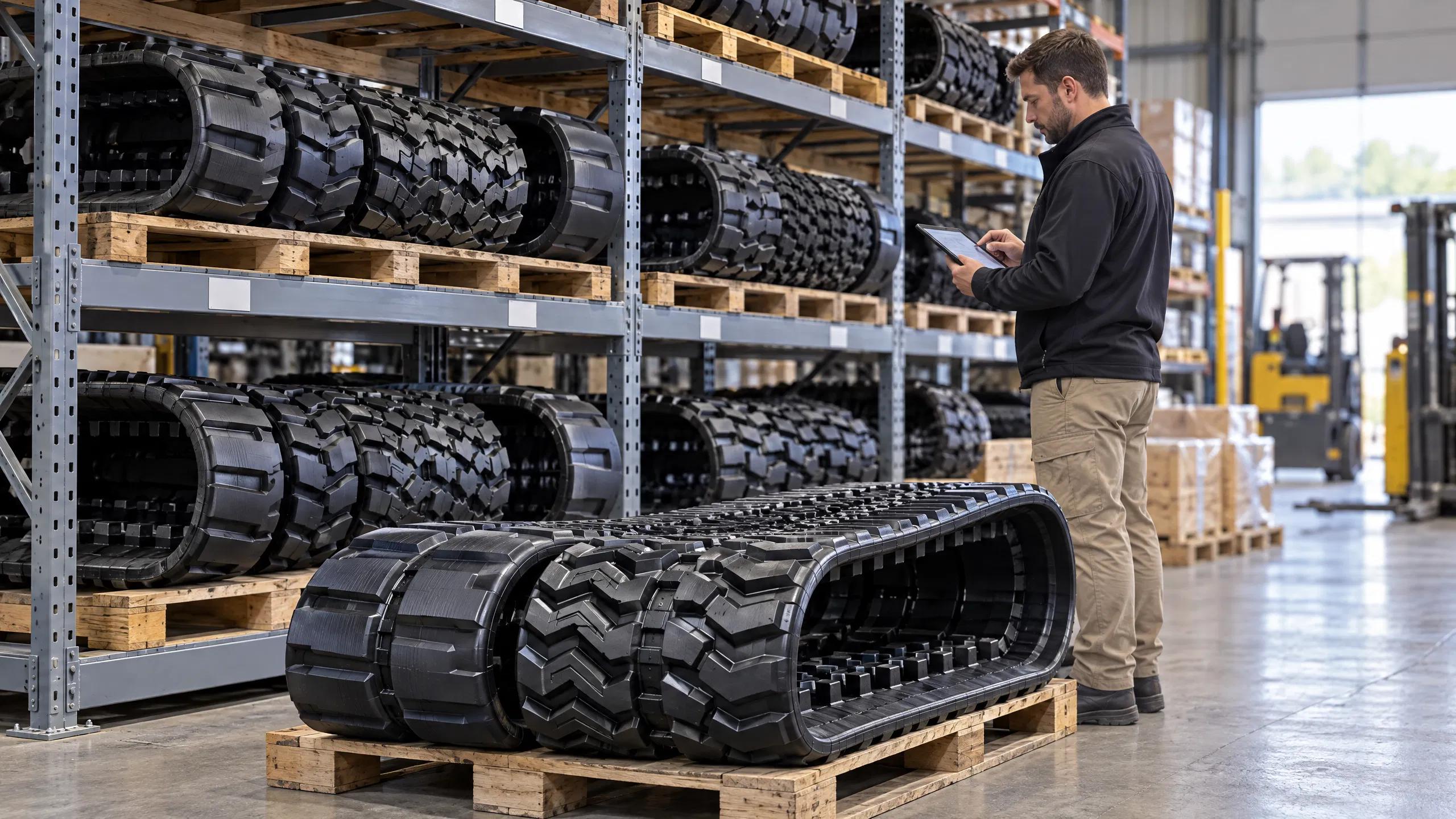
Fleet maintenance teams can reduce last-minute purchasing by linking each machine to its verified track specification, approved supplier and service history. For mixed fleets, avoid assuming that tracks are interchangeable across similar-looking models. Confirm compatibility against the exact machine configuration.
Dealers and procurement teams can also standardize an inspection form that captures machine hours, condition, jobsite, photos and follow-up actions. This supports consistent communication between operators, service staff and purchasing teams. Before ordering, verify the part reference, fitment, warranty terms, stock status and delivery estimate with the supplier.
A practical approach for dealers and fleet managers
Effective maintenance is a repeatable process: inspect safely, record findings, check related undercarriage components, follow model-specific instructions and plan replacements using condition and operating history. We recommend treating each inspection as information about both the track and the machine’s working environment.
That approach helps teams spot changes earlier and make more deliberate purchasing decisions. It does not promise a specific service life, but it supports clearer maintenance planning and fewer avoidable surprises.
Frequently Asked Questions
1. How often should rubber tracks be inspected?
Follow the machine manufacturer’s maintenance schedule. Additional checks may be appropriate after work in abrasive or debris-heavy conditions or when operators notice unusual wear or tracking behavior.
2. What are signs of abnormal track wear?
Look for uneven wear, significant cuts or cracks, missing tread material, exposed reinforcement or repeated derailment. Have a qualified technician assess significant damage.
3. Are maintenance needs different for mini excavator tracks and skid steer rubber tracks?
The basic inspection principles are similar, but machines and duty cycles differ. Follow the correct manual and consider how often the equipment turns, travels and changes surfaces.
4. Can proper maintenance guarantee a longer track service life?
No. Maintenance can help identify issues and support informed decisions, but service life also depends on design, operating conditions, machine setup and other factors.
5. What should I check before ordering replacement tracks?
Verify the machine make, model and configuration, track specifications, undercarriage condition, supplier fitment confirmation, lead time and warranty terms.

Post time: Nov-12-2026