Choosing the best tracks for skid steer loaders plays a huge role in boosting efficiency. The right tracks improve traction, ensuring stability even on tough terrains. They help operators complete tasks faster and with greater precision. Whether it’s construction, landscaping, or farming, the proper tracks enhance productivity and performance across different surfaces.
Key Takeaways
- Picking the right rubber tracks helps skid steer loaders work better. They give better grip and balance on different grounds.
- Rubber tracks lower ground pressure, protecting soft surfaces. This makes them great for farming and yard work.
- Checking and caring for rubber tracks often makes them last longer. This keeps them working well and saves money over time.
Why Rubber Tracks Matter
The Role of Tracks For Skid Steer Loaders in Performance
Tracks play a vital role in how skid steer loaders perform. They determine how well the machine handles different terrains, from soft soil to rocky surfaces. Rubber tracks, in particular, provide a smoother ride by reducing vibrations. This improves operator comfort and control, which leads to better precision during tasks. Whether it’s moving heavy materials on a construction site or navigating delicate lawns in landscaping, the right tracks ensure the loader operates at its best.
Market research highlights the impact of rubber tracks across industries. In construction, they offer unmatched stability on uneven surfaces, making it easier to transport heavy loads. In agriculture, they minimize soil compaction, which helps maintain soil health. Landscaping professionals also benefit from their ability to reduce ground disturbance, especially in urban areas. These advantages make rubber tracks a preferred choice for maximizing efficiency.
Benefits of Rubber Tracks: Traction, Flotation, and Reduced Ground Pressure
Rubber tracks excel in providing traction, flotation, and reduced ground pressure. Their design ensures better grip, even on slippery or uneven surfaces. This makes them ideal for tasks requiring precision, like grading or trenching. Additionally, their larger footprint spreads the machine’s weight evenly, reducing damage to delicate surfaces like manicured lawns or soft soil.
- Rubber tracks offer increased flotation, which minimizes ground disturbance.
- They provide excellent traction, allowing skid steer loaders to push effectively and perform well on slopes.
- Their reduced ground pressure protects the terrain, making them perfect for landscaping and agricultural tasks.
These benefits not only enhance performance but also extend the lifespan of the loader by reducing wear and tear.
Comparison to Steel Tracks and Other Alternatives
Rubber tracks and steel tracks each have their strengths, but rubber tracks stand out in many applications. Steel tracks are durable and perform well in rugged terrains, such as mining or heavy construction. However, rubber tracks are better suited for delicate surfaces, offering shock absorption and minimal ground disturbance. They also require less maintenance, as individual pads can be replaced instead of the entire assembly.
Rubber tracks are more eco-friendly, often made from recycled materials. Steel tracks, while recyclable, have a higher carbon footprint. For industries like landscaping and agriculture, where ground impact matters, rubber tracks are the clear winner. Their versatility and lower maintenance costs make them a practical choice for most operators.
Key Criteria for Selecting Tracks For Skid Steer Loaders
Terrain Type: Soft Soil, Rocky Surfaces, Snow, and More
Choosing the right tracks depends heavily on the terrain where the skid steer loader will operate. Different surfaces present unique challenges, and the tracks must provide the necessary grip and stability to handle them effectively. For example:
- Soft soil: Tracks with a wider footprint, like bar tracks, distribute weight evenly and prevent the loader from sinking.
- Rocky surfaces: Durable tracks, such as heavy-duty options, resist wear and tear caused by sharp rocks.
- Snow: All-season bar tracks excel in snowy conditions, offering excellent traction and minimal ground disturbance.
- Hard or uneven surfaces: Zig-zag tracks provide superior grip and control, ensuring smooth operation.
A study on skid-steer vehicles highlights the importance of terrain-dependent coefficients, such as rolling resistance and friction. These factors directly impact performance, especially on sloped or uneven ground. Operators should always match the track type to the terrain for optimal results.
| Track Type | Characteristics | Best Use Cases |
|---|---|---|
| Block | Durable, good for a wide range of applications, not ideal for snow removal | General applications |
| Bar | All-season, performs well in snow, low ground disturbance, good finish | Snow removal, hard surfaces |
| General Duty | Lower expected service life, cost-effective for low hour operations | Budget-conscious users |
| Heavy Duty | Higher expected service life, suitable for high hour operations | Heavy-duty applications |
Task Requirements: Construction, Landscaping, Agriculture, etc.
The type of work being performed also plays a critical role in selecting the right tracks. Skid steer loaders are versatile machines used across industries, and their tracks must align with the specific demands of each task.
- Construction: Heavy-duty tracks are ideal for construction sites. They handle heavy loads and rough terrain with ease.
- Landscaping: Tracks that minimize ground disturbance, like bar or block patterns, are perfect for maintaining delicate lawns and gardens.
- Agriculture: Tracks with excellent flotation reduce soil compaction, preserving soil health during planting or harvesting.
Specialized attachments, such as grapple buckets or trenchers, further enhance the loader’s capabilities. For instance, grapple buckets are invaluable for clearing land in agriculture, while trenchers are essential for digging tasks in construction. Matching the tracks to the task ensures efficiency and reduces wear on the machine.
Project Duration and Cost Considerations
The duration of a project and budget constraints are equally important when selecting tracks. Operators working on short-term projects may prioritize cost-effective options, while those with long-term needs should invest in durable tracks that offer a longer service life.
- Application: Different job sites and materials affect track wear.
- Operating techniques: High-speed movements and aggressive turns increase wear and tear.
- Underfoot conditions: Grass, dirt, rock, and snow impact track longevity.
- Maintenance practices: Regular upkeep, such as cleaning and greasing the undercarriage, extends track life.
Daily inspections for damage and proper track tension monitoring also prevent premature failure. Following the Operations & Maintenance Manual (OMM) ensures the tracks remain in top condition, maximizing their lifespan and reducing replacement costs.
Tip: Investing in high-quality rubber tracks may seem costly upfront, but it saves money in the long run by reducing downtime and maintenance expenses.
Types of Rubber Tracks and Their Applications
Straight Bar Tracks: Best for Muddy or Wet Conditions
Straight bar tracks are the go-to choice for muddy or wet environments. Their aggressive tread pattern is specifically designed to provide exceptional traction in these challenging conditions. This design prevents skid steer loaders from getting stuck, even in deep mud or slippery surfaces. Operators working in construction sites, wetlands, or agricultural fields often rely on these tracks to keep their machines moving smoothly.
The straight-bar tread also helps maintain stability when navigating uneven or waterlogged terrain. By reducing slippage, these tracks ensure that the loader can perform tasks like trenching or hauling materials without interruptions. For anyone dealing with wet conditions, straight bar tracks are a reliable and efficient solution.
Multi-Bar Tracks: Ideal for General-Purpose Use
Multi-bar tracks are incredibly versatile, making them a favorite for general-purpose operations. Their lug patterns enhance traction across a variety of terrains, from soft mud to hard, rocky ground. These tracks minimize slippage, allowing operators to maneuver confidently through uneven surfaces. They also provide stability, which is essential for tasks requiring precision.
- Multi-bar tracks excel on delicate surfaces like loose dirt, sand, or gravel.
- They offer reliable traction in icy or snowy conditions, ensuring year-round usability.
- Operators appreciate their smooth ride and minimal ground disturbance, especially in landscaping or urban projects.
These tracks are also comfortable to use on hard pavement, reducing vibrations and improving the operator’s experience. Whether it’s construction, landscaping, or agriculture, multi-bar tracks deliver consistent performance in various weather and ground conditions.
Zig-Zag Tracks: Suited for Hard, Uneven Surfaces
Zig-zag tracks are designed to tackle hard and uneven surfaces with ease. Their unique tread pattern provides superior grip, ensuring the loader remains stable even on challenging terrain. These tracks are particularly useful for construction sites with compacted soil or rocky areas, where maintaining traction is critical.
The zig-zag design also enhances the loader’s ability to make sharp turns without losing stability. This makes them ideal for tasks like grading or excavation, where precision and control are essential. For operators working on rugged landscapes, zig-zag tracks offer the perfect balance of durability and performance.
Block Pattern Tracks: Designed for Maximum Traction on Loose Gravel
Block pattern tracks are engineered to deliver maximum traction on loose surfaces like gravel or sandy soil. The larger individual blocks increase the surface area in contact with the ground, improving grip and stability. This design is especially beneficial for maintaining control on loose gravel, where slippage can be a significant issue.
- These tracks enhance traction, ensuring reliable performance on loose soil and gravel.
- Their stability makes them ideal for tasks like hauling heavy loads or operating on sloped terrain.
- Operators value their ability to maintain consistent performance, even in challenging conditions.
Block pattern tracks are a practical choice for industries like construction and agriculture, where loose surfaces are common. Their robust design ensures that skid steer loaders can operate efficiently without compromising safety or productivity.
Features That Maximize Efficiency
Advanced Tread Designs for Better Grip and Durability
Advanced tread designs play a crucial role in improving the performance of skid steer loaders. These designs enhance grip, reduce slippage, and ensure durability, even in challenging conditions. For example, C-pattern tracks provide a smooth ride and ample traction, making them ideal for general applications. Terrapin tracks, on the other hand, excel in reducing vibrations and are perfect for turf-friendly environments.
Here’s a quick comparison of popular tread designs and their benefits:
| Tread Design | Key Features | Efficiency Improvements |
|---|---|---|
| C-pattern tracks | Smooth ride, ample traction, ideal for general applications | Maintains OEM specifications, good all-around performance |
| Terrapin tracks | Multi-purpose, high-performance, reduces vibration, turf-friendly | Impeccable traction on uneven surfaces, long lifespan |
| TDF tracks | Designed for heavy workloads, multiple lugs per pitch profile | Longer lifespan, optimal performance under maximum load |
| Zigzag tracks | Best for wet applications, maintains traction in slippery terrain | Enhanced traction in mud, clay, or snow |
| Turf pattern tracks | Smooth tread, lower ground pressure, ideal for sensitive environments | Minimal ground disturbance, smooth operation on lawns |
These designs not only improve traction but also extend the service life of the tracks, reducing maintenance costs and downtime.
Compatibility With Various Skid Steer Loader Models
Rubber tracks must be compatible with different skid steer loader models to maximize efficiency. Compatibility depends on factors like attachment mount plates, hydraulic couplers, and lift capacity. For instance, the attachment mount must match the machine’s quick-attach system to ensure seamless operation. Hydraulic couplers should align with the loader’s flow capacity to avoid performance issues.
| Compatibility Factor | Description |
|---|---|
| Attachment Mount Plates | Ensure the attachment mount is compatible with the machine’s quick-attach system. |
| Hydraulic Couplers and Flow | Verify that the coupler type matches and check the hydraulic flow capacity required by the attachment. |
| Lift Capacity | Consider the machine’s lift capacity to avoid exceeding rated limits, which can lead to wear and safety hazards. |
By ensuring compatibility, operators can avoid unnecessary wear and tear, improving the overall performance of their machines.
Optional Enhancements Like Over-the-Tire Tracks
Optional enhancements, such as over-the-tire tracks, offer additional versatility for skid steer loaders. These tracks can be added to wheeled loaders, transforming them into machines capable of handling rough terrains. Over-the-tire tracks improve traction and stability, especially on muddy or uneven surfaces.
Operators often choose these enhancements for temporary projects or when switching between terrains. They’re easy to install and remove, making them a cost-effective solution for boosting efficiency without investing in a new machine. For industries like construction and agriculture, over-the-tire tracks provide a practical way to adapt to changing job site conditions.
Real-World Applications and Recommendations
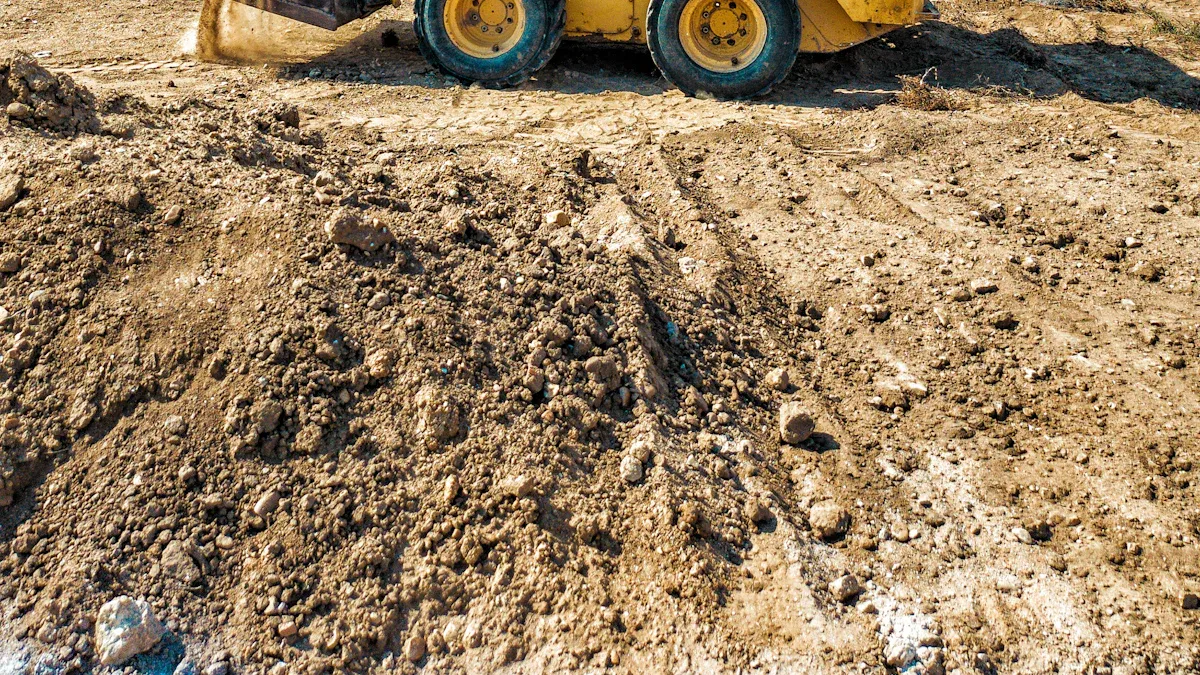
Examples of Tracks For Skid Steer Loaders in Action Across Industries
Rubber tracks have proven their value across a wide range of industries. In construction, they help skid steer loaders navigate uneven terrain while carrying heavy loads. Operators often rely on straight bar tracks to maintain traction in muddy or wet conditions. This ensures projects stay on schedule, even during challenging weather.
In agriculture, rubber tracks minimize soil compaction, which is critical for maintaining healthy crops. Farmers frequently use multi-bar tracks for planting and harvesting tasks. These tracks provide the necessary flotation to protect the soil while ensuring the loader operates efficiently.
Landscaping professionals also benefit from rubber tracks. Block pattern tracks are a popular choice for working on loose gravel or sandy soil. They allow operators to move heavy materials without damaging delicate surfaces. Whether it’s creating a garden or maintaining a golf course, these tracks ensure precision and care.
Choosing the right rubber tracks transforms how skid steer loaders perform. The right tracks improve traction, boost stability, and increase productivity across different terrains. Operators can complete tasks faster and with less wear on their machines.
Pro Tip: Evaluate your terrain, tasks, and budget to find tracks that fit your needs perfectly.
Need help? Contact us for expert advice or explore our offerings on LinkedIn. Let’s maximize your loader’s efficiency together!
FAQ
How do I know which rubber track is best for my skid steer loader?
Evaluate your terrain, tasks, and budget. Consider factors like traction needs, ground pressure, and durability to match the track to your specific requirements.
Can rubber tracks handle extreme weather conditions?
Yes, skid loader tracks perform well in snow, mud, and wet conditions. Choose all-season or specialized tracks, like straight bar or multi-bar, for optimal performance in extreme weather.
How often should I inspect my rubber tracks?
Inspect tracks daily for damage, tension, and wear. Regular maintenance, like cleaning and greasing, extends their lifespan and ensures consistent performance on the job.
Post time: Apr-27-2025