Key Specifications and Durability Factors
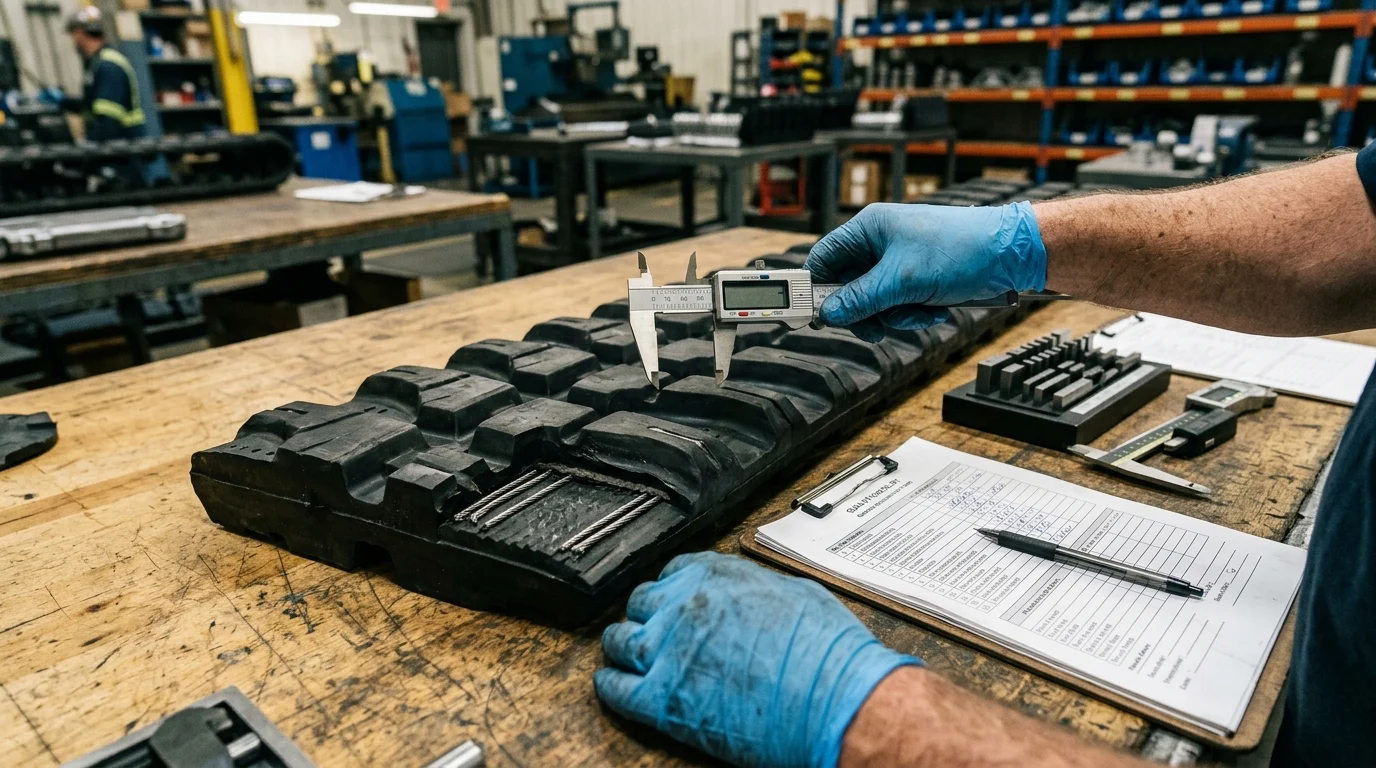
Achieving optimal performance in harsh earthmoving conditions requires strict adherence to precise manufacturing specifications. In our experience, prioritizing durability factors directly correlates with reduced equipment downtime. We maintain a stringent quality control threshold to ensure exceptional reliability across all export batches. This focus on defect prevention is critical when supplying distributors whose end-users operate in extreme temperatures ranging from -25°C to +55°C.
Track Size, Fitment, and Load Requirements
Proper fitment is non-negotiable for operator safety and machine longevity. Track dimensions are universally defined by width, pitch, and the number of links. For our export clients, we provide comprehensive sizing matrices to ensure exact OEM-spec fitment. Note that exact compatibility requires verification against specific machine serial numbers, undercarriage wear levels, and regional OEM specification variations. We also aim to ensure that the tracks can support maximum dynamic loads. Below is a comparative table illustrating common track dimensions we supply for popular dumper payload categories, alongside optimal soil-type applications.
(Disclaimer: Soil suitability is a general guideline and highly dependent on machine weight distribution and slope.)
| Dumper Payload Category | Typical Track Width (mm) | Pitch (mm) | Standard Link Count | Optimal Soil Application |
|---|---|---|---|---|
| Compact (1.0 – 2.5 Tons) | 230 – 320 | 72 / 84 | 40 – 48 | Firm dirt, light mud, landscaping |
| Mid-Size (3.0 – 5.0 Tons) | 320 – 450 | 86 / 100 | 50 – 60 | Mixed terrain, moderate mud, gravel |
| Heavy-Duty (6.0+ Tons) | 600 – 800 | 100 / 150 | 60 – 74 | Deep mud, soft clay, marshy conditions |
Rubber Compound, Steel Reinforcement, and Tread Design
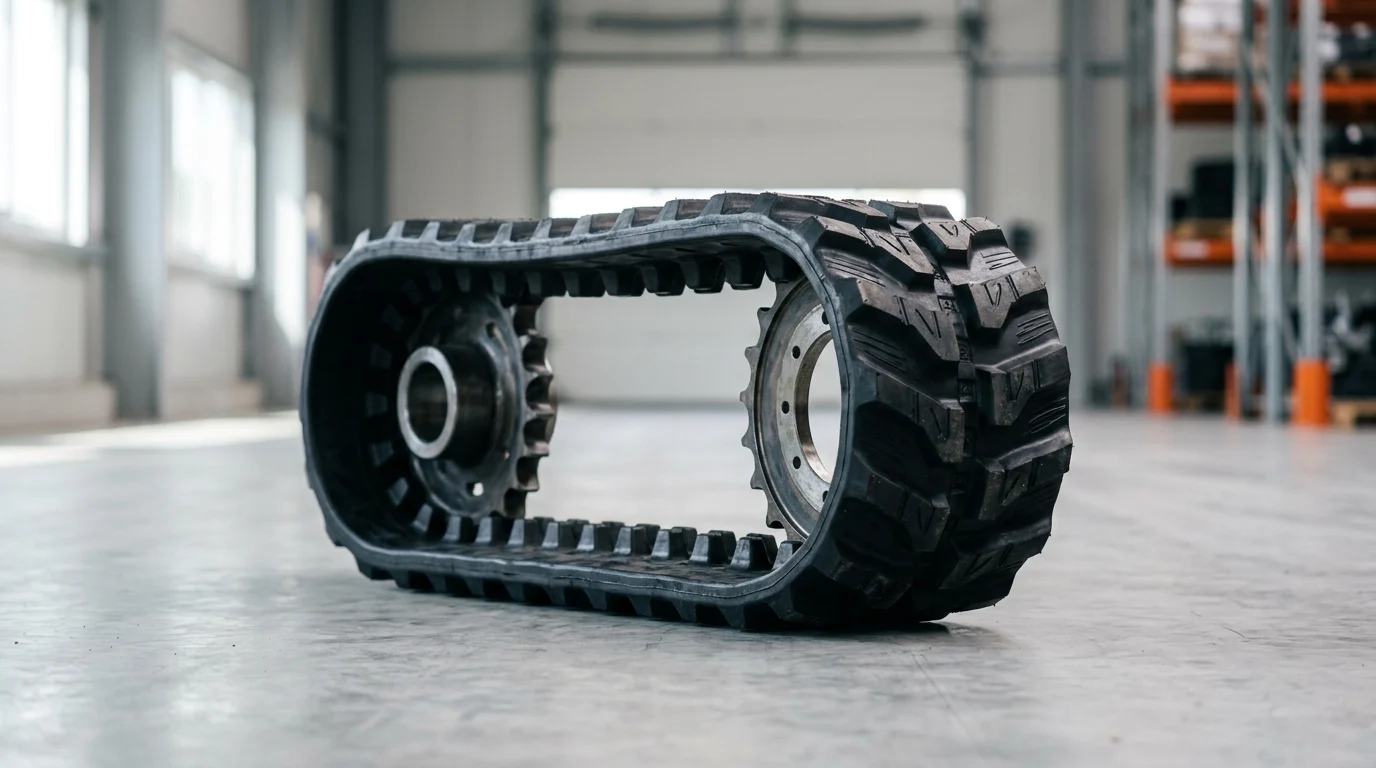
The core strength of our tracks lies in the synergy between the rubber compound and the internal steel architecture. We utilize a proprietary rubber blend targeting a composition of up to 50% natural rubber, supplemented with synthetic polymers to enhance resistance against chunking, cuts, and UV degradation. Inside the track, we embed high-tensile, continuous steel cords coated with anti-corrosion treatments. The tread patterns are equally critical; we utilize specialized aggressive lug designs—such as staggered block or zig-zag patterns—that maximize traction on muddy or uneven gradients while minimizing damaging vibrations transferred to the dumper’s undercarriage rollers.
Sourcing, Compliance, and Logistics Checklist
Transitioning from domestic distribution to international importing requires a highly structured approach to logistics and compliance. We understand that our B2B partners need predictability in their supply chains. Therefore, we have standardized our export protocols to maintain steady production lead times of 25 to 30 days for standard container loads. Our baseline Minimum Order Quantity (MOQ) for optimized pricing is typically set at one 20-foot container, which ensures that our partners benefit from the best possible freight economy per unit.
Documentation, Inspection, Packaging, and Labeling
Navigating international customs necessitates flawless documentation and rigorous packaging standards. We ensure every shipment is accompanied by commercial invoices, detailed packing lists, and Certificates of Origin to facilitate smooth port clearance. Our manufacturing facilities operate under ISO 9001:2015 quality management systems, providing verifiable inspection reports for every batch. For packaging, we utilize heavy-duty, heat-treated wooden pallets compliant with ISPM-15 international standards, securely banding the rubber tracks to prevent shifting during maritime transit. Each track features molded-in serial numbers and UV-resistant labeling indicating size specifications, allowing our distributors to seamlessly integrate the inventory into their warehouse management systems upon arrival.
To preserve track integrity post-delivery, distributors should store inventory indoors away from direct UV exposure, maintain storage temperatures between 0°C and 25°C, and avoid stacking pallets more than two high. During installation, technicians must perform critical tensioning checks according to OEM guidelines to realize the claimed fitment precision and lifespan.
Trial Orders, Supplier Selection, and Shipping Planning
As a key risk mitigation strategy, we encourage prospective distributors to initiate partnerships through structured trial orders before committing to high-volume annual contracts. A trial order requires a minimum sample quantity of just four units, offered at standard bulk pricing rather than retail markups, with a recommended 60-day field evaluation timeframe. This allows buyers to physically verify the rubber compound quality and fitment precision inside a Less than Container Load (LCL) shipment.
When evaluating supplier selection,
Key Takeaways
- Distributors should verify track width, pitch, link count, serial number, and undercarriage condition before confirming any bulk order.
- The premium track design uses jointless continuous steel cords, forged steel links, and cut-resistant rubber to reduce elongation and de-tracking risk.
- Priority stock supports major Japanese and European dumper brands, including Morooka, Yanmar, JCB, Wacker Neuson, and Messersi.
- The export range covers machines from compact 1-ton to 3-ton dumpers up to Japanese carriers exceeding 10,000 kg payload capacity.
- Structured trial orders help B2B buyers reduce supplier risk before committing to larger-volume procurement.
- Quality-controlled export batches are designed for harsh jobsite conditions, including temperatures from -25°C to +55°C.
Frequently Asked Questions
Which dumper brands are prioritized in the current export program?
The program focuses on high-demand Japanese and European models, including Morooka MST series, Yanmar carriers, JCB, Wacker Neuson, and Messersi compact track dumpers.
What makes these rubber dumper tracks premium?
They use jointless continuous steel cord technology, forged steel links, and a cut-resistant rubber compound to reduce elongation, improve tension stability, and lower de-tracking risk.
Can distributors place a trial order before committing to bulk purchasing?
Yes. Structured trial ordering is available so distributors can evaluate product fit, performance, and supplier reliability before scaling to larger export volumes.
How should buyers confirm the correct track fitment?
Fitment should be verified by width, pitch, link count, machine serial number, undercarriage condition, and any regional OEM specification differences.
What payload categories do these dumper tracks support?
The range covers compact European dumpers in the 1-ton to 3-ton class and heavier Japanese carriers that often handle payloads from 2,500 kg to over 10,000 kg.
Post time: Aug-17-2026