Introduction
Choosing an excavator tracks manufacturer affects far more than replacement intervals: it shapes machine uptime, operating costs, and performance across demanding jobsites. Buyers need to look beyond basic compatibility and compare how manufacturers handle material quality, steel cord construction, tread design, and production standards. This article explains what separates top-rated suppliers from average ones, why durability claims should be tied to real engineering features, and how the right manufacturing partner can reduce maintenance risk for global construction fleets. From product reliability to long-term value, the following sections outline the key factors that matter when evaluating excavator track solutions.
Why the Right Excavator Tracks Manufacturer Matters
Selecting an elite excavator tracks manufacturer is a strategic procurement decision that directly impacts fleet uptime, operational efficiency, and total cost of ownership (TCO). The undercarriage represents a significant portion of an excavator’s maintenance budget, often accounting for up to 50% of all track-type equipment repair costs over the machine’s lifecycle. Consequently, sourcing tracks from a manufacturing partner that prioritizes advanced engineering and high-grade materials is essential for mitigating premature failures, reducing maintenance intervals, and maximizing capital return on heavy equipment investments.
Durability and performance basics
The fundamental durability of an excavator track dictates its operational lifecycle and overall field performance. Inferior tracks frequently suffer from cable snapping, lug tearing, and rapid tread wear, leading to catastrophic field failures and costly machine downtime. Conversely, tracks engineered by top-tier manufacturers utilize continuous steel cord technology, which eliminates overlapping joints and significantly increases the tensile strength of the entire assembly.
Industry data indicates that premium rubber tracks engineered with continuous, jointless cables can deliver 2,000 to 2,500 hours of service life under standard operating conditions. This represents a 100% to 150% improvement over the 1,000-hour baseline typical of economy aftermarket alternatives. This extended lifecycle drastically reduces the frequency of track replacements, lowering associated labor costs and keeping heavy machinery active on the job site.
Operating conditions that affect track choice
The specific operating environment dictates the optimal track composition and tread pattern required for maximum efficiency. Excavators operating on abrasive surfaces, such as demolition rubble or sharp gravel, require tracks formulated with highly cut-resistant rubber compounds to prevent chunking. Conversely, applications involving sensitive turf or finished asphalt demand non-marking tracks with specialized tread patterns—such as the staggered block or C-lug design—to minimize surface disruption while maintaining traction.
Furthermore, equipment weight distribution plays a critical role in track selection. A premium manufacturer will engineer tracks to optimize ground bearing pressure, typically maintaining it within a strict 3.5 to 6.0 PSI range depending on the machine’s tonnage and undercarriage footprint. This precise engineering prevents excessive sinking in soft mud, ensures adequate traction on steep inclines, and minimizes dynamic stress on the excavator’s drive motors and idlers.
How to Evaluate Materials and Manufacturing Quality
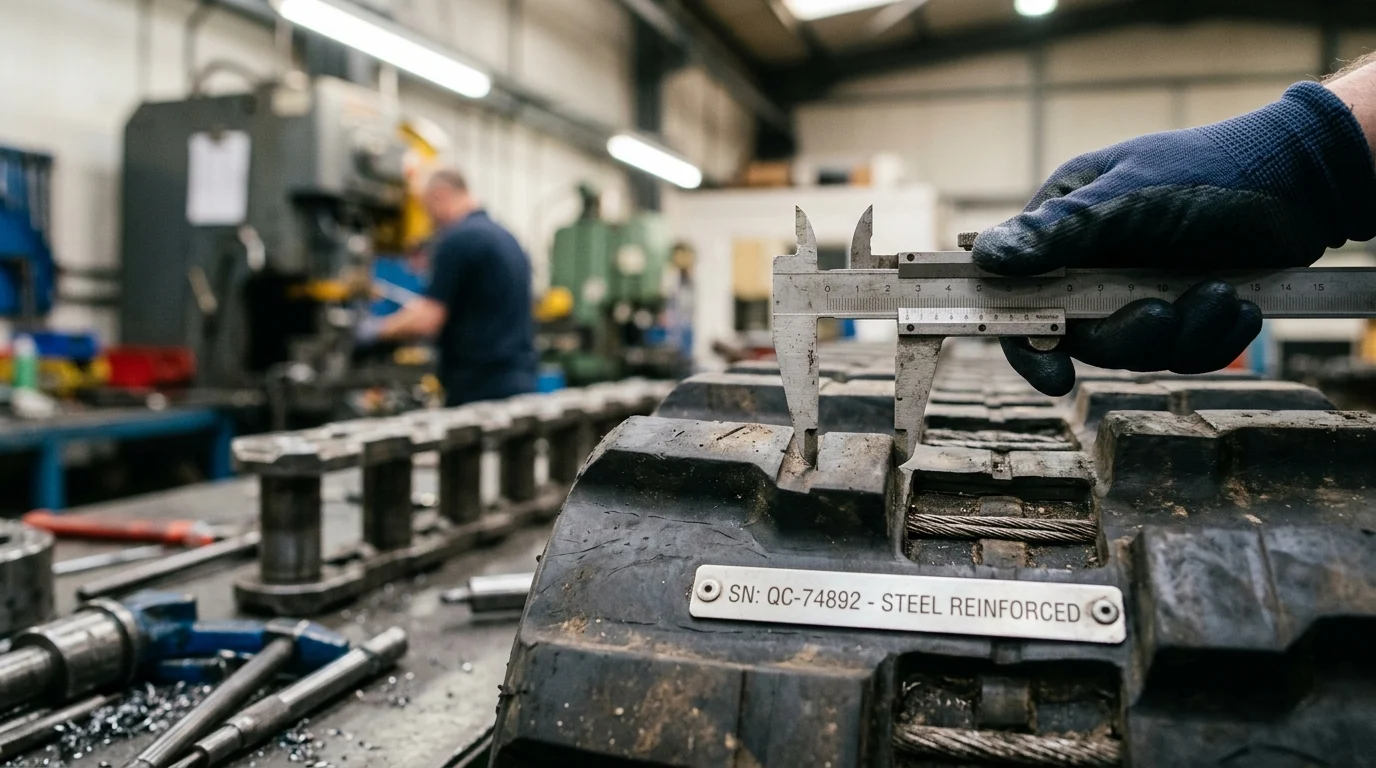
Validating the quality of an excavator tracks manufacturer requires moving beyond superficial visual inspections and analyzing the underlying metallurgical and chemical properties of their products. Procurement teams must scrutinize the technical specifications, raw material sourcing, and the rigorous testing protocols employed during the production cycle to ensure consistent field reliability across large fleet deployments.
Key specifications and testing standards
Reputable manufacturers adhere to strict international testing standards to guarantee material integrity. For the rubber exterior, vulcanization consistency is paramount. Premium tracks utilize virgin natural rubber blended with engineered synthetic polymers, formulated to exhibit a Shore A hardness of 65 to 70. This specific density provides the optimal balance between flexibility—necessary for navigating uneven terrain—and resistance to chunking or tearing under heavy loads.
| Specification | Economy Aftermarket Tracks | Premium OEM-Grade Tracks |
|---|---|---|
| Steel Cord Architecture | Overlapping joints | Continuous, jointless cables |
| Shore A Hardness | 55 – 60 (Prone to rapid wear) | 65 – 70 (Optimal tear resistance) |
| Expected Lifespan | 800 – 1,200 hours | 2,000 – 2,500+ hours |
| Rubber Composition | High recycled content | Virgin natural & synthetic blend |
| Defect Tolerance | Up to 3.0% | < 0.5% (5,000 PPM) |
OEM compatibility, wear resistance, and bonding quality
Seamless integration with the equipment’s existing undercarriage relies heavily on exact OEM compatibility. The pitch, width, and number of links must be manufactured to exacting tolerances to prevent sprocket misalignment, track derailment, and premature idler wear. Even minor dimensional deviations can accelerate undercarriage degradation and trigger drive motor failures.
Furthermore, the bonding quality between the embedded forged iron core, the steel cords, and the rubber matrix is a definitive indicator of manufacturing excellence. Advanced manufacturers utilize proprietary chemical adhesion processes during the vulcanization stage. A rigorous quality control protocol will mandate a minimum peel strength of 15 N/mm to prevent delamination between the rubber and the metal core. Tracks failing to meet this threshold are highly susceptible to core ejection, a fatal structural defect that renders the track entirely useless in the field.
How to Select the Best Excavator Tracks Manufacturer
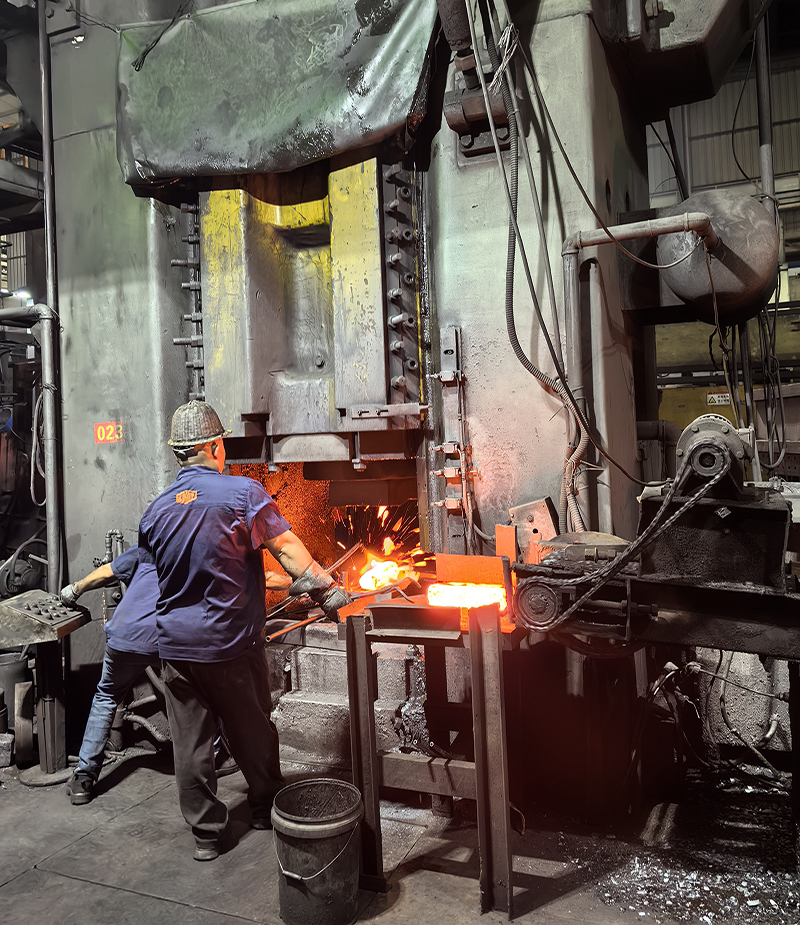
Identifying a manufacturer capable of producing high-quality rubber tracks is only the first phase of the procurement process. Establishing a resilient, global supply chain requires evaluating the vendor’s operational capacity, commercial stability, logistics infrastructure, and long-term commitment to post-sale technical support.
Practical supplier qualification steps
Effective supplier qualification involves comprehensive audits of the manufacturer’s production facilities and quality management systems. Procurement specialists should demand transparency regarding the factory’s historical defect rates. An industry-leading excavator tracks manufacturer will typically maintain a defect rate below 0.5% (5,000 PPM), achieved through automated production lines and rigorous end-of-line non-destructive testing, such as ultrasonic flaw detection.
Additionally, evaluating the supplier’s raw material sourcing—particularly the origin of their natural rubber and high-tensile steel—provides insight into their vulnerability to global supply chain disruptions. Facility audits should also verify the presence of modern, temperature-controlled vulcanization presses and automated winding machines, which are critical for maintaining dimensional consistency and structural integrity across large-scale production runs.
Lead times, export capability, certifications, and support
Commercial terms and logistical capabilities are the final determinants in selecting a long-term manufacturing partner. For international procurement, the manufacturer must demonstrate robust export capabilities, including adherence to ISPM-15 packaging standards for wooden pallets and seamless customs documentation processing. Production lead times should reliably range between 30 to 45 days for standard track models, with a clearly defined Minimum Order Quantity (MOQ), which often sits between 10 and 20 units for factory-direct, mixed-container shipments.
Furthermore, the manufacturer’s certification profile must include ISO 9001:2015 at a minimum, ensuring standardized operational procedures.
Key Takeaways
- The most important conclusions and rationale for Excavator Tracks Manufacturer
- Specs, compliance, and risk checks worth validating before you commit
- Practical next steps and caveats readers can apply immediately
Frequently Asked Questions
How do I choose the right excavator tracks manufacturer?
Check OEM-fit accuracy, rubber compound quality, steel cord construction, and testing standards. Gator Track focuses on replacement fitments across many model codes and undercarriage applications.
What track types does Gator Track manufacture for excavators and related equipment?
Gator Track makes rubber tracks, excavator track pads, skid steer tracks, dumper tracks, agricultural tracks, ASV tracks, and undercarriage rubber components.
Which excavator pad style should I pick for my machine?
Use bolt-on, clip-on, or chain-on pads based on your shoe setup and jobsite needs. Gator Track also offers RP, HXP, and DRP pad variants for broad compatibility.
Why does OEM-compatible sizing matter for excavator rubber tracks?
Correct width, pitch, and link count help prevent derailment, sprocket mismatch, and premature idler wear. Always match your machine model and existing track specifications before ordering.
How can durable rubber tracks reduce total ownership cost?
Higher-quality tracks last longer, cut downtime, and reduce replacement labor. Choosing durable tracks and pads helps fleets protect undercarriage parts and keep equipment working longer.
Post time: May-07-2026