
Agricultural machinery has undergone significant changes over the years, with technological advancements leading to increased efficiency and productivity. One of the key components that continues to evolve in this sector is agricultural rubber tracks. These tracks, designed specifically for agricultural machinery, offer a number of advantages over traditional steel tracks and tires, including greater traction, less soil compaction, and improved stability. Looking ahead, agricultural rubber tracks will continue to evolve, driven by innovation and the growing demands of modern agriculture.
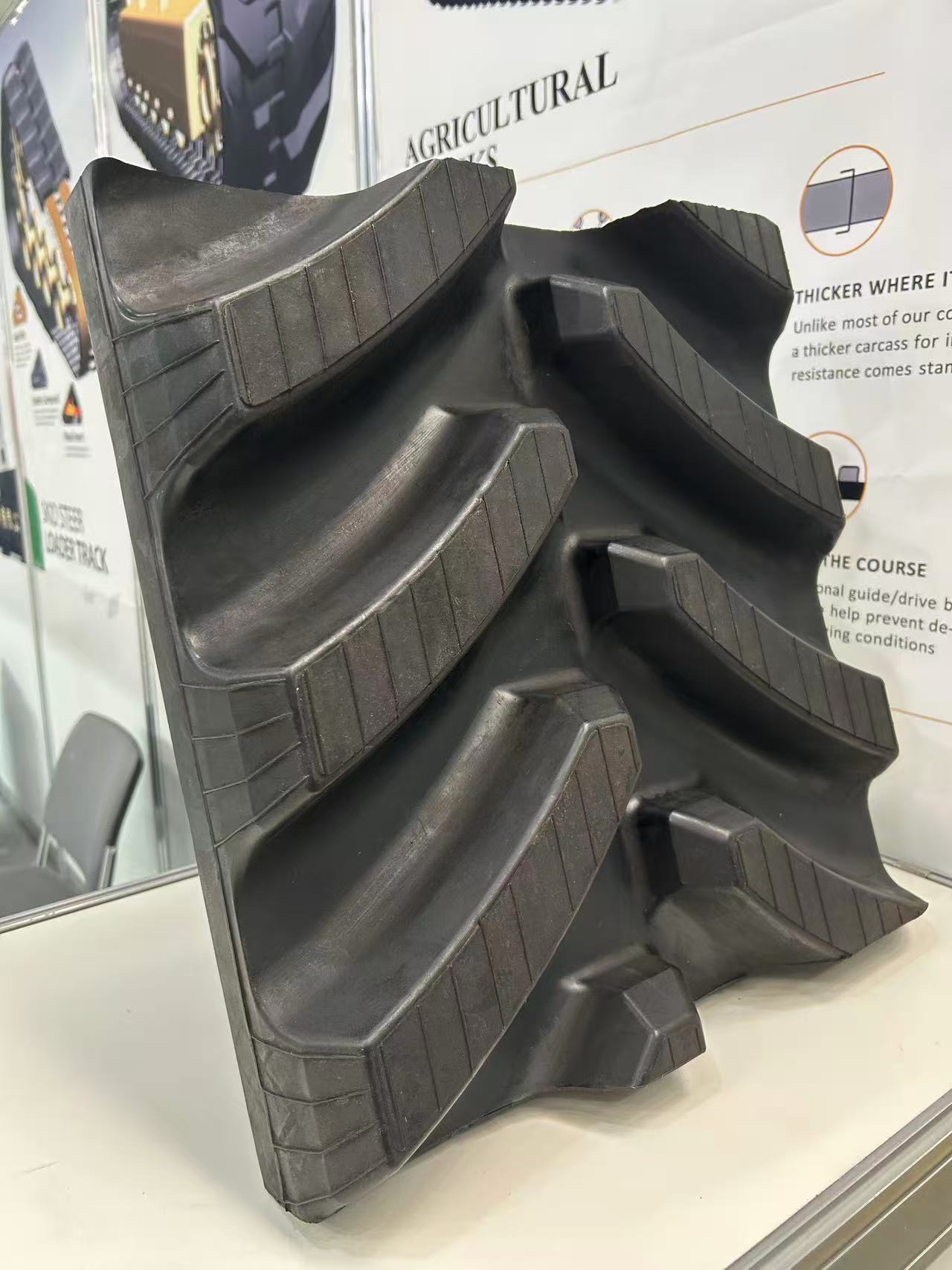
Enhanced durability and performance
One of the key focuses of the future development of agricultural rubber tracks is to improve their durability and performance. Manufacturers are increasing their R&D investment to create tracks that can withstand a variety of harsh agricultural environments. This includes the use of advanced materials to improve wear resistance and flexibility to adapt to different terrains. The integration of technologies such as reinforced fibers and special rubber compounds is expected to make the tracks not only last longer, but also provide excellent traction and stability for agricultural machinery.
Sustainability and environmental considerations
As the agricultural sector places increasing emphasis on sustainability, the future of agricultural tracks will also reflect this trend. Manufacturers are exploring environmentally friendly materials and production processes to reduce the environmental impact of rubber track production. This includes the use of recycled materials and bio-based rubber, which helps reduce the carbon footprint generated by agricultural machinery. In addition, developing tracks that can minimize soil compaction is essential to promote sustainable farming practices, thereby improving soil health and crop yields.
INTELLIGENT TECHNOLOGY INTEGRATION
The integration of smart technology into farm machinery is another area where agricultural rubber tracks are expected to see growth. With the rise of precision agriculture, there is a growing demand for tracks that can communicate with other parts of farm machinery. This may involve integrating sensors for real-time monitoring of track performance, soil conditions, and machine efficiency. These advances will enable farmers to make data-driven decisions, optimize operations, and increase productivity.
Customization and Versatility
In the future, rubber track for agriculture machinery will also develop in the direction of customization and versatility. As farming methods diversify, the demand for tracks that can be customized for specific applications will continue to grow. Manufacturers can provide a variety of track sizes, tread patterns and configurations to suit different types of agricultural machinery and farming conditions. This level of customization will enable farmers to choose the most suitable track for their needs, ultimately improving the performance of their equipment.
Global Market Trends
The global agricultural rubber tracks market is expected to grow significantly in the coming years, driven by the growing adoption of agricultural mechanization. As more farmers realize the advantages of rubber tracks over traditional tracks, the market demand will continue to grow. This growth is expected to further spur innovation as manufacturers strive to meet the changing needs of the agricultural sector.
In summary, the future development of agricultural rubber tracks will depend on their durability, sustainability, smart technology integration and customization. As the agricultural industry continues to develop, these innovations will play a key role in improving the efficiency and effectiveness of agricultural machinery, ultimately contributing to the success of modern agricultural practices. As research and development continues to advance, agricultural machine rubber track will continue to be an important part of achieving sustainable and efficient agriculture.
Post time: Jun-30-2025