
Bulk Ordering Plan for Rubber Tracks and Pads
As we transition into the Q3 and Q4 operational cycles, procurement focus shifts heavily toward securing undercarriage consumables before winter weather (in the Northern Hemisphere) and end-of-year supply chain bottlenecks disrupt schedules. Note that seasonal demand shifts are reversed for Southern Hemisphere operations. Bulk ordering these critical components requires a strategic approach that aligns capital expenditure with anticipated fleet utilization.
For enterprise-scale fleets, committing to a bulk order—typically 1.25× to 1.5× projected quarterly consumption—early in the quarter can help negotiate better freight rates, secure inventory ahead of seasonal price hikes, and effectively utilize remaining annual capital expenditure budgets. Small-to-mid-sized contractors should scale these tiered Minimum Order Quantities (MOQs) to match their specific fleet sizes and cash flow constraints. This proactive planning allows operations to maintain peak readiness across all active jobsites.
Assess Fleet Needs and Seasonal Demand
To optimize a bulk order, procurement teams must go beyond high-level fleet data and implement a concrete pre-order measurement checklist. This includes verifying pitch, width, and link counts via machine serial numbers or physical inspections, since specification errors in bulk orders are financially catastrophic. Crucially, installing new rubber tracks or pads on worn sprockets, rollers, or idlers causes rapid premature failure; therefore, bulk procurement plans must include comprehensive undercarriage inspection and rebuild budgets.
Mini-excavators and compact track loaders (CTLs) typically yield between 1,200 and 1,500 hours of track life, though these figures vary significantly depending on operator skill, machine size, and site conditions. In addition to tracking hours, analyzing historical wear patterns is essential. Machines operating primarily on sharp demolition debris will experience accelerated tread degradation compared to those deployed on soft soil.
By forecasting Q3/Q4 utilization rates across specific project environments, teams can pinpoint precisely which machines will cross their wear thresholds before December. Furthermore, seasonal demand shifts the focus toward specialized treads; for Northern Hemisphere fleets, staggered block patterns become critical for maintaining traction in the mud and snow typical of late-year deployments. When ordering at scale, accurate fleet assessment is paramount before finalizing quantities.
Identify Downtime Risks and Jobsite Requirements
Unplanned downtime is a severe liability for project margins. Rather than a vague loss, consider an illustrative U.S.-market estimate: an idled mid-sized excavator can cost an operation $800 to $1,200 per day in lost revenue and operator wages. This is calculated using a transparent framework (machine class × hourly rate + labor overhead) that scales depending on the contract size. By standardizing inventory with high-grade components from established vendors—such as the Rubber Tracks available across the industrial market—fleets can mitigate the risk of catastrophic track failure on rugged terrain and ensure operators maintain steady production rates.
Jobsite requirements also dictate localized inventory strategies. Transitioning from raw earth excavation to finished asphalt in urban environments means bulk orders must account for the rapid installation of surface protection. Depending on local regulations and specific contract terms, failure to equip machines with the appropriate pads can result in municipal fines and strained client relations, making immediate on-site availability of these components highly recommended.
Product Comparison and Specification Checks
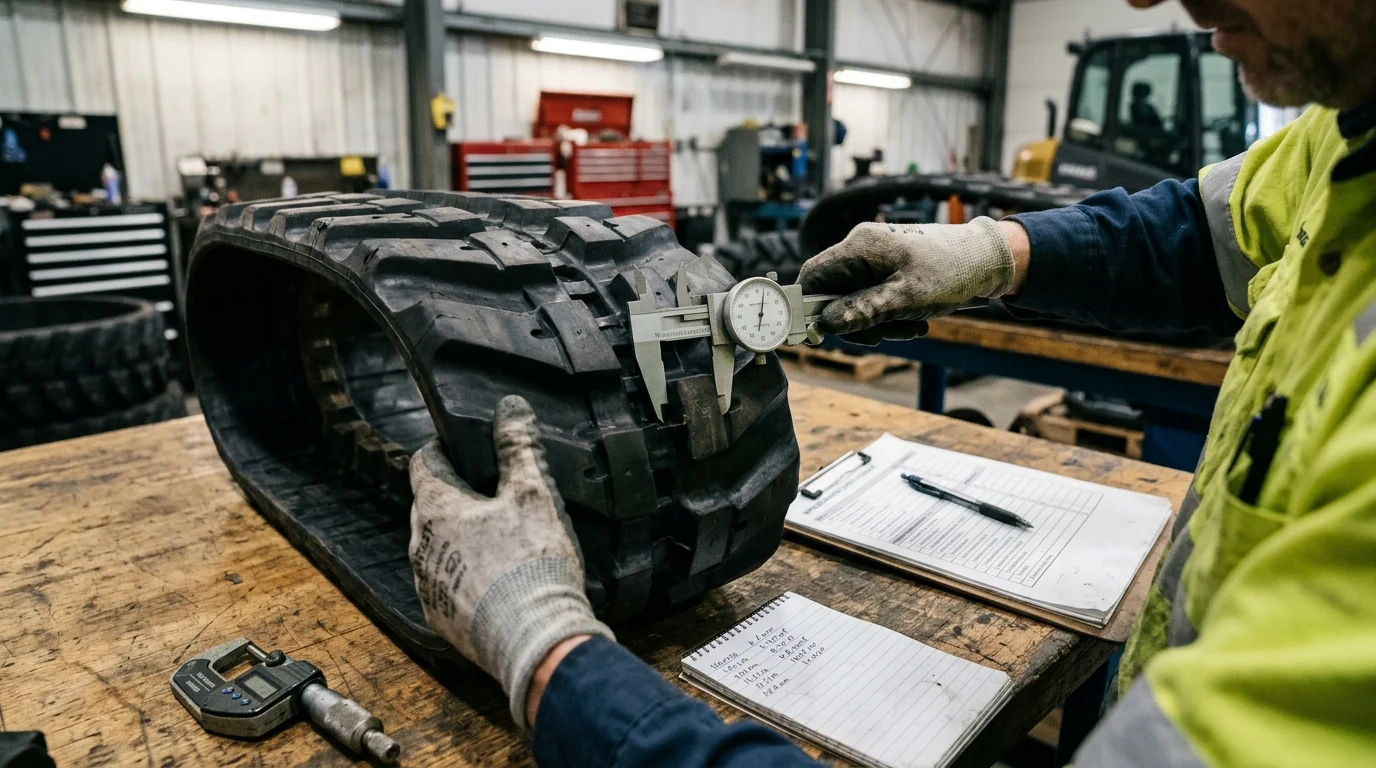
Procuring undercarriage components at scale leaves no room for specification errors. When evaluating bulk purchases, engineering and maintenance teams should conduct rigorous cross-checks against OEM specifications to ensure seamless integration across diverse machine makes and models within the fleet.
Verify Rubber Track Specifications
Procurement must meticulously verify the core dimensions of components: width, pitch, and the number of links. For instance, a standard specification like 300×52.5×84 must precisely match the machine’s undercarriage geometry to prevent de-tracking under heavy loads.
Prioritizing tracks engineered with continuous steel cord technology is essential. Spliced or jointed steel cords are a specific construction risk found in lower-tier products, whereas continuous cords are standard among reputable OEM and aftermarket suppliers. This continuous construction increases tensile strength significantly and drastically reduces the likelihood of snap failures under heavy Q4 payloads, provided the steel cord designs still match OEM undercarriage geometry. Additionally, specifying synthetic rubber compounds (such as SBR, NBR, or specialized blends) offers superior abrasion resistance and maintains flexibility in sub-zero temperatures, ensuring the material does not become brittle and crack during winter operations.
Compare Rubber Track Pad Materials and Fit
Selecting the correct Rubber Track Pads requires balancing durability with installation efficiency. Material specifications are not one-size-fits-all; pads should be evaluated based on their durometer ratings and the intended surface type. While a hardness of 65 to 75 Shore A is a common baseline, harder compounds are necessary for abrasive asphalt, whereas softer compounds better protect finished concrete without compromising traction.
Below is a comparative breakdown of the pad configurations typically considered for heavy fleets. (Note: Installation times and lifespans are estimates and will vary based on crew experience, machine size, and operating environment.)
| Pad Type | Installation Method | Ideal Application | Avg. Installation Time per Machine | Expected Lifespan (Hours) |
|---|---|---|---|---|
| Bolt-On | Bolted directly to steel grouser shoes | Heavy-duty urban construction | 4–6 Hours | 800–1,000 |
| Clip-On | Clipped over existing steel tracks | Temporary surface protection | 2–3 Hours | 600–800 |
| Chain-On | Bolted directly to the track chain | Dedicated paved road operations | 5–7 Hours | 1,000–1,200 |
By aligning these specifications with upcoming project demands, equipment remains versatile and compliant with site regulations, ultimately maximizing the lifecycle of undercarriage investments.
Supplier, Quality, and Logistics Review
The final phase of a Q3/Q4 procurement strategy involves a stringent audit of supply chain partners. Securing high-quality components is only half the battle; bulk orders must also arrive on schedule and be backed by robust commercial protections.
Evaluate Suppliers, Warranty, and Support
When vetting manufacturers, demand full transparency regarding their quality control frameworks. Restricting the vendor list to those holding active ISO 9001 certifications and demonstrating consistently low historical defect rates is a standard best practice.
Key Takeaways
- Plan Q3/Q4 bulk orders early to secure inventory before winter demand spikes and end-of-year freight bottlenecks.
- Use 1.25× to 1.5× projected quarterly consumption as a planning range for enterprise fleet orders, then adjust for actual utilization and budget limits.
- Verify pitch, width, and link count before purchase because bulk specification errors can create major financial and scheduling losses.
- Inspect sprockets, rollers, and idlers before installing new tracks or pads to prevent premature wear and avoid wasting new inventory.
- Forecast track demand by machine hours, jobsite conditions, and historical wear patterns, especially where demolition debris or abrasive terrain accelerates degradation.
- Account for rubber track pads in projects involving finished asphalt, concrete, or urban surfaces where surface protection affects compliance and productivity.
Frequently Asked Questions
How much extra inventory should fleets bulk order for Q3/Q4 projects?
Enterprise fleets often plan bulk orders at 1.25× to 1.5× projected quarterly consumption. Smaller contractors should scale quantities based on fleet size, cash flow, and confirmed project schedules.
What measurements should be verified before ordering rubber tracks?
Confirm pitch, width, and link count using machine serial numbers or direct inspection. Specification errors in bulk orders can create costly returns, delays, and downtime.
How long do rubber tracks typically last on compact machines?
Mini-excavators and compact track loaders commonly see 1,200 to 1,500 hours of track life, but site conditions, machine size, and operator technique can shorten or extend that range.
Why inspect the undercarriage before installing new tracks?
Worn sprockets, rollers, or idlers can cause new rubber tracks or pads to fail prematurely. Bulk procurement should include inspection and rebuild budgets where needed.
Which tread patterns are useful for late-year jobsites?
In Northern Hemisphere Q3/Q4 projects, staggered block tread patterns can improve traction in mud, snow, and wet ground. Southern Hemisphere fleets should adjust planning for opposite seasonal conditions.

Post time: Aug-06-2026