Why Evaluate DV450x86 Skid Steer Loader Tracks
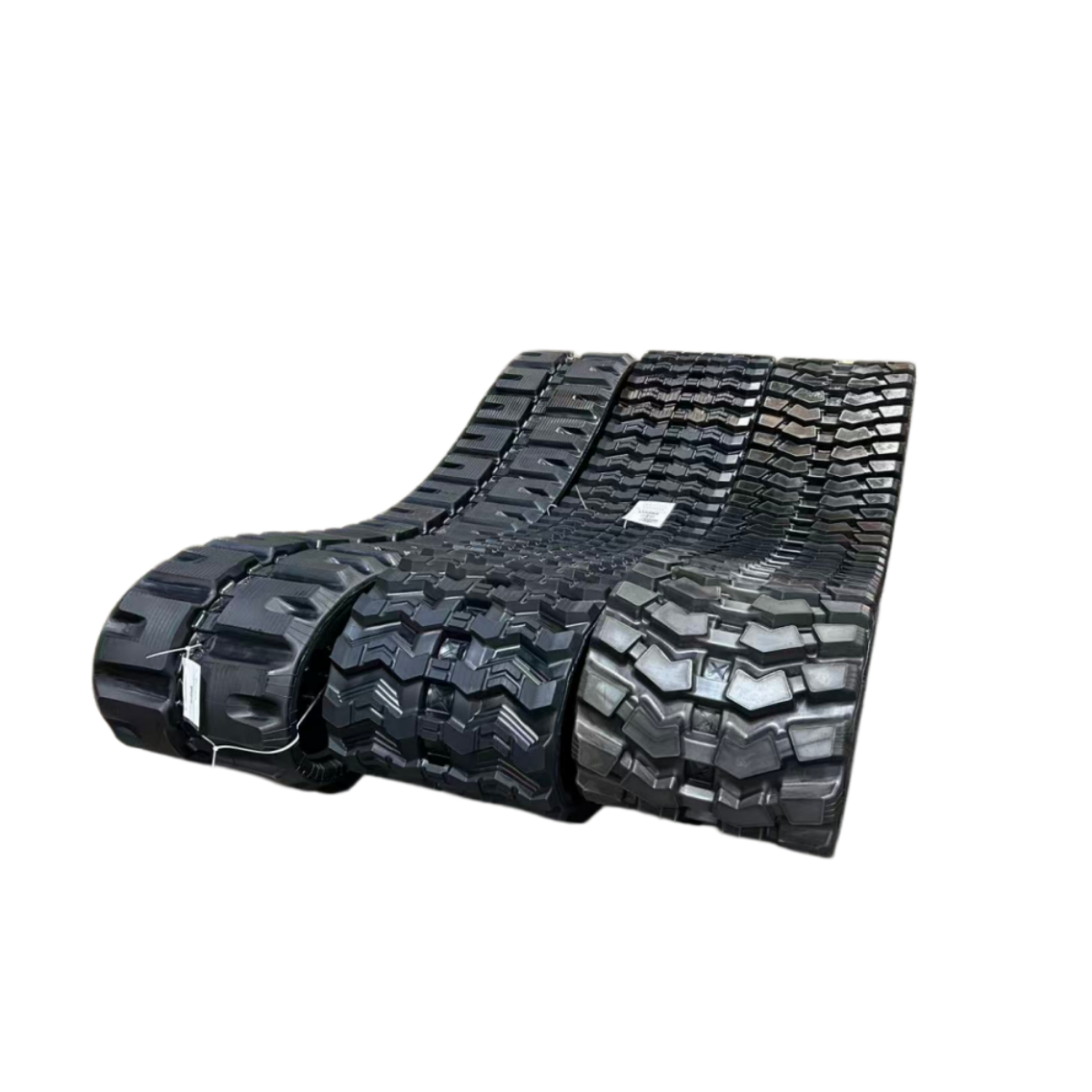
When assessing earthmoving and material handling operations, the choice of undercarriage components directly dictates project efficiency. It is important to understand that DV450x86 is a dimensional class—denoting a 450 mm width and an 86 mm pitch—rather than a single proprietary SKU. While commonly referred to in industry shorthand as “skid steer loader tracks,” these continuous rubber tracks are specifically designed for compact track loaders (CTLs). This article covers the compatibility, terrain performance, and maintenance protocols for these tracks, which offer a robust foundation for high-torque machinery operating under heavy loads.
Key Benefits and Use Cases
Standard tracks often struggle under the weight of larger compact track loaders. The DV450x86 footprint is engineered specifically for equipment in the 4,000 to 5,500 kg operating weight class. This substantial 450mm width maximizes ground contact, which is essential for heavy lifting and aggressive grading tasks.
Common use cases include commercial landscaping, large-scale residential construction, and forestry applications where debris and uneven ground pose constant threats to undercarriage integrity. Furthermore, premium variants of these tracks incorporate continuous steel cord technology, which drastically reduces the risk of snapping under high-tension loads.
However, operators must also consider the limitations of a 450mm width. Compared to narrower 320mm or 400mm alternatives, these wider tracks can increase the machine’s overall transport width and slightly reduce maneuverability in tight spaces. They also elevate edge-loading stress on sharp, rocky terrain where a narrower track might navigate more effectively.
Cost, Downtime, and Productivity Factors
Evaluating the financial impact of an undercarriage requires looking beyond the initial purchase price to concrete total-cost-of-ownership (TCO) variables. TCO is heavily influenced by regional part costs, local labor rates for installation, lifespan, and unplanned downtime. High-quality Skid Steer Loader Tracks built to the DV450x86 specification typically yield approximately 1,000 to 1,500 operating hours, depending on machine weight and application, provided they are not subjected to constant abuse on abrasive surfaces like asphalt.
When a track fails prematurely, the resulting downtime can cost operations significant hourly losses in productivity and idle labor, with exact financial impacts varying widely by machine, region, and application. Investing in a track with a reinforced carcass minimizes these catastrophic failures, ensuring that productivity metrics remain stable throughout the construction season.
How DV450x86 Tracks Perform Across Terrain
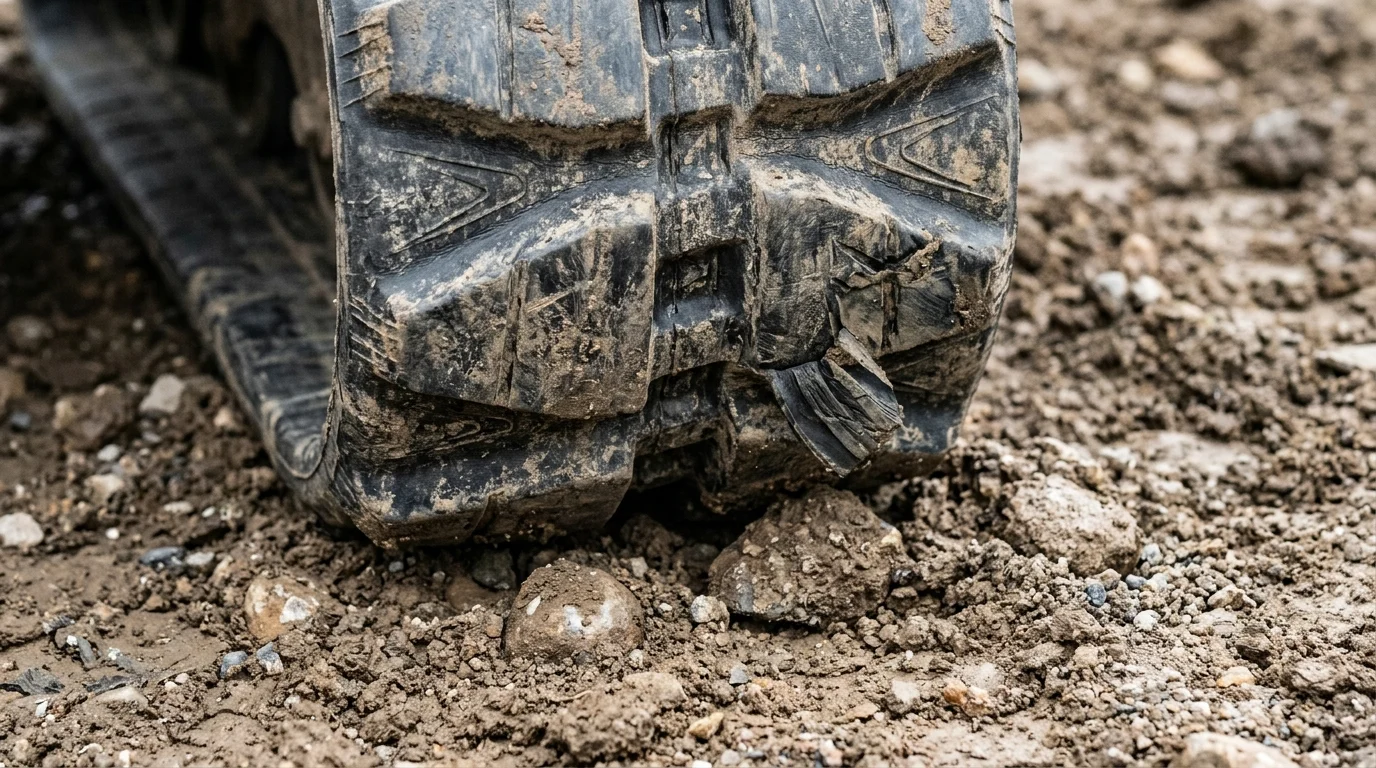
Terrain variability is the true test of any undercarriage system. Because job sites rarely offer uniform ground conditions, evaluating how the 450mm width interacts with different soils, moisture levels, and inclines is necessary to ensure optimal machine performance.
Traction, Flotation, and Stability
Building on the broad benefits of a wider footprint, the primary mechanical advantage of the 450mm profile is its exceptional flotation. By distributing the machine’s weight over a larger surface area, ground pressure can be reduced to a range of approximately 4.0 to 5.5 PSI, heavily dependent on the specific machine’s operating weight and the track’s total ground contact length. This low metric prevents heavy loaders from sinking into deep mud, loose sand, or soft topsoil, thereby minimizing turf damage and eliminating the need for constant winching or towing.
Stability is also vastly improved on side-slopes. The wide stance anchors the machine, allowing operators to safely lift heavy pallets or bucket loads on steep gradients—subject to specific OEM documentation and limits—without risking a rollover, assuming proper load management protocols are followed.
Terrain and Tread Pattern Comparison
While the DV450x86 dimensions provide the foundation, the specific tread pattern dictates traction efficiency. The tread design must be matched to the primary operating environment to maximize traction and minimize vibration.
| Tread Pattern | Ideal Terrain | Key Performance Characteristic | Approximate Depth |
|---|---|---|---|
| Block Pattern | Hard dirt, gravel, asphalt | Smooth ride, low vibration on hard surfaces | ~25mm |
| C-Lug Pattern | Mud, clay, varied dirt | Excellent self-cleaning, aggressive bite | ~28mm |
| Zig-Zag Pattern | Snow, ice, soft mud | Lateral stability, prevents side-slipping | ~30mm |
Selecting a C-Lug pattern for a site dominated by wet clay ensures the tracks self-clean with every rotation, maintaining grip. Conversely, running deep C-Lugs on concrete will accelerate wear significantly, making the Block pattern a more economical choice for urban environments. It is also important to note that overall traction performance depends heavily on rubber compound hardness and carcass construction, not solely on tread geometry.
How to Choose, Install, and Maintain DV450x86 Tracks
Proper procurement and maintenance are just as critical as selecting the right specifications. To maximize the return on investment for DV450x86 tracks, strict compatibility checks must be adhered to and proactive maintenance schedules implemented.
Compatibility and Sourcing Checklist
Sourcing the correct track requires verifying critical dimensions: width, pitch, and link count. While the width (450mm) and pitch (86mm) are standard for this class, the link count can vary based on the specific compact track loader model, typically ranging from 52 to 60 links. Installing a track with an incorrect link count will result in either a track that will not mount or one that derails immediately. Beyond these basics, buyers must also confirm compatibility with the sprocket tooth profile, guide lug dimensions, and roller path requirements, since tracks with identical primary dimensions can still be incompatible across different OEM undercarriages.
Consulting the original equipment manufacturer (OEM) manual and physically measuring the existing track is highly recommended before purchasing. Additionally, evaluate the supplier’s warranty terms; a standard industry benchmark is a 12-month or 1,000-hour pro-rated warranty against manufacturing defects.
Installation, Maintenance, and Buying Criteria
Once installed, proper tensioning is the most critical factor in extending track life. A sag of 1 to 1.5 inches should be maintained between the track and the middle roller when the machine is lifted off the ground. Over-tensioning places immense stress on the drive motor bearings and idlers, while under-tensioning leads to frequent derailments and drive lug damage.
Furthermore, operators must establish a strict cleaning protocol.
Key Takeaways
- Confirm that DV450x86 matches both the machine and undercarriage because it describes a 450 mm width and 86 mm pitch, not a universal SKU.
- Use DV450x86 tracks primarily on compact track loaders in the 4,000 to 5,500 kg class where flotation, stability, and load support are priorities.
- Expect quality DV450x86 rubber tracks to last about 1,000 to 1,500 operating hours when used on appropriate terrain and maintained correctly.
- Choose the 450 mm footprint for soft or uneven ground because it can reduce ground pressure to roughly 4.0 to 5.5 PSI depending on machine weight and contact length.
- Avoid treating wider tracks as a universal upgrade because they can reduce tight-space maneuverability and increase edge stress on sharp rocky terrain.
- Factor downtime, installation labor, part quality, and reinforced carcass construction into total cost of ownership rather than comparing purchase price alone.
Frequently Asked Questions
What does DV450x86 mean for skid steer rubber tracks?
DV450x86 refers to a track dimensional class: 450 mm track width and 86 mm pitch. It is not a single proprietary SKU, so operators should confirm machine compatibility before purchase.
Are DV450x86 tracks best for skid steers or compact track loaders?
Although often called skid steer loader tracks, DV450x86 rubber tracks are typically designed for compact track loaders operating under heavier loads and higher torque.
What machine weight range suits DV450x86 tracks?
These tracks are commonly suited to larger compact track loaders in the 4,000 to 5,500 kg operating weight class, especially for grading, lifting, landscaping, construction, and forestry work.
How long do DV450x86 tracks typically last?
High-quality DV450x86 tracks often deliver about 1,000 to 1,500 operating hours, depending on machine weight, terrain, operator habits, maintenance, and exposure to abrasive surfaces.
Why choose a 450 mm wide track?
A 450 mm track increases ground contact, improves flotation, and can reduce ground pressure to roughly 4.0 to 5.5 PSI, helping machines stay stable on soft or uneven terrain.
Post time: Jul-23-2026