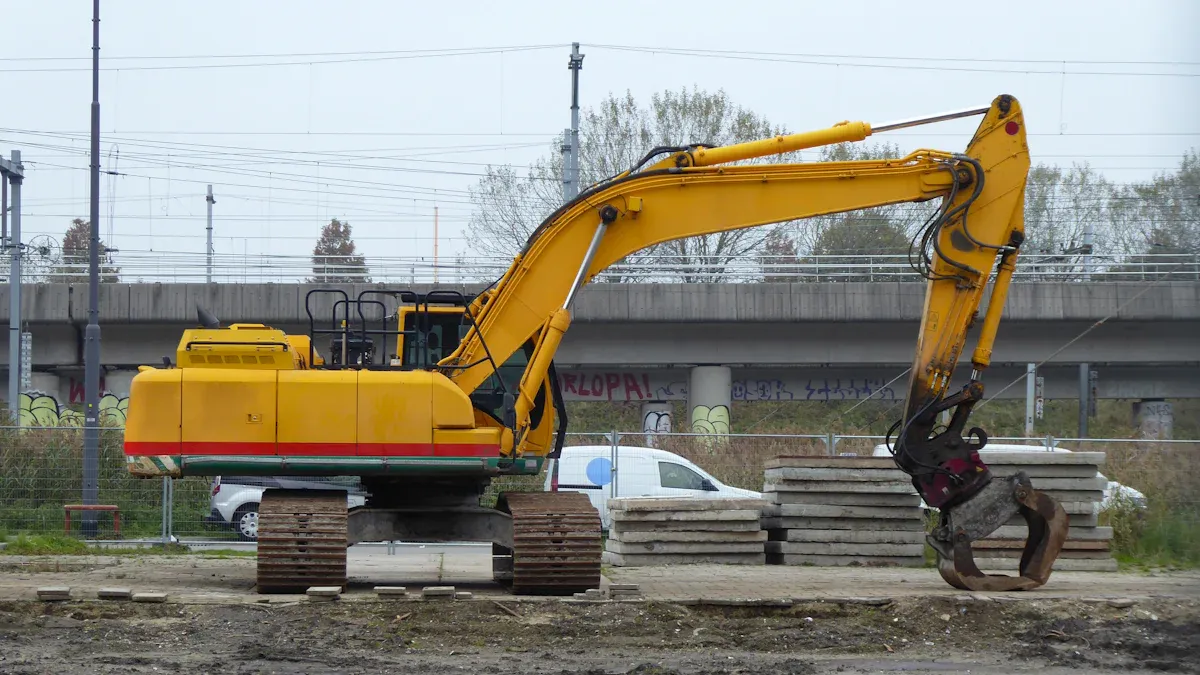
Rubber Excavator Tracks revolutionize the performance of excavators by reducing downtime and increasing efficiency. They lower maintenance needs thanks to their durability and resilience. Features like weight distribution across a larger surface area and abrasion-resistant rubber compounds ensure smoother operation. These Excavator Tracks also outperform steel alternatives in noise reduction and ease of replacement, saving valuable time.
Key Takeaways
- Rubber tracks last longer and resist damage, helping excavators work more.
- Buying good rubber tracks saves money by needing fewer repairs.
- Checking tracks often and fixing tension helps them last longer and keeps work on time.
Why Downtime Matters for Excavator Tracks
Downtime can be a major headache for excavator operators. When machines sit idle, projects slow down, costs rise, and deadlines get pushed back. Understanding why downtime matters is the first step toward finding solutions that keep excavators running smoothly.
Impact on Productivity and Project Timelines
Every minute an excavator isn’t working is a minute lost on the job site. Whether it’s a construction project or a landscaping task, delays can quickly pile up. For instance, if an excavator breaks down during a critical phase, the entire team might have to pause until repairs are complete. This not only disrupts the workflow but also affects project timelines.
Studies show that downtime significantly reduces machinery effectiveness. Both planned and unplanned interruptions can throw off schedules and make it harder to meet deadlines. For industries like mining or construction, where timing is everything, minimizing downtime is crucial. Reliable Excavator Tracks play a key role here, ensuring machines stay operational and projects stay on track.
Financial Implications of Equipment Downtime
Downtime doesn’t just cost time—it costs money too. Repairs, replacement parts, and labor expenses can quickly add up. On top of that, idle equipment means lost revenue. For businesses that rely on excavators daily, even a short period of downtime can impact the bottom line.
Imagine a contractor who has to rent additional equipment because their excavator is out of service. That’s an expense they didn’t plan for. By investing in durable Excavator Rubber Tracks, operators can reduce the risk of breakdowns and avoid these unexpected costs. It’s a smart way to protect both productivity and profits.
The Need for Reliable Track Solutions
Given the high stakes, reliable track solutions are more important than ever. Tracks that wear out quickly or fail under pressure can lead to frequent downtime. This is why many operators are turning to advanced rubber tracks like the Rubber Tracks 400X72.5W from Gator Track Co., Ltd. These tracks are designed to handle tough conditions while maintaining their shape and performance.
Durable tracks not only reduce the likelihood of breakdowns but also improve overall efficiency. They allow excavators to work across various terrains without compromising stability or safety. For operators, this means fewer interruptions and more time spent getting the job done.
How Rubber Tracks Reduce Downtime
Durability and Resistance to Wear
Rubber tracks are built to last. Their unique rubber compound resists cuts and abrasions, making them ideal for heavy-duty tasks. Unlike steel tracks, which can corrode or crack under pressure, rubber tracks maintain their integrity even in tough conditions. This durability means fewer replacements and repairs, keeping excavators operational for longer periods.
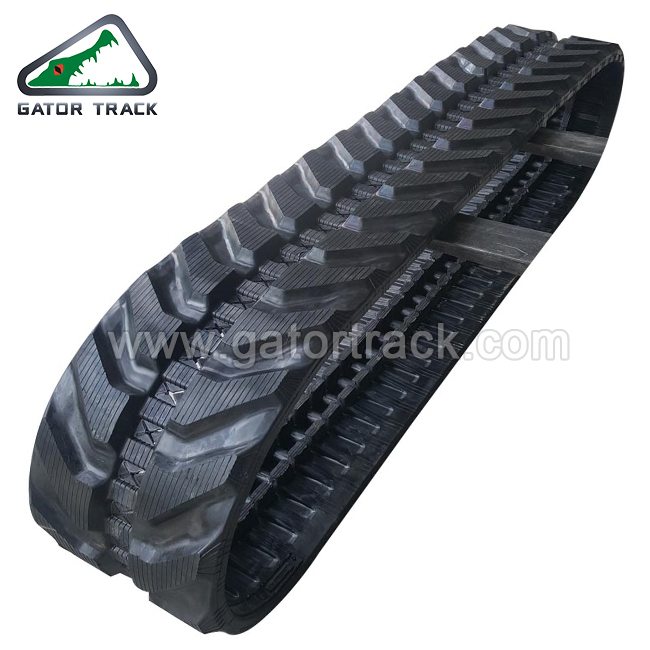
The Rubber Tracks 400X72.5W from Gator Track Co., Ltd exemplify this durability. With dual continuous copper-coated steel wires embedded in the rubber, these tracks offer enhanced tensile strength. This design ensures they can withstand heavy loads without deforming. Operators can rely on these tracks to perform consistently, reducing downtime caused by wear and tear.
Versatility Across Various Terrains
Rubber tracks shine when it comes to versatility. They adapt to different terrains, whether it’s muddy construction sites, rocky landscapes, or paved roads. Their ability to distribute weight evenly prevents damage to delicate surfaces, making them suitable for urban projects. Steel tracks, on the other hand, often struggle with terrain adaptability, causing disruptions in operations.
Excavator operators benefit from the flexibility of rubber tracks. They can transition between tasks without worrying about track performance. The Rubber Tracks 400X72.5W are designed to handle diverse environments, ensuring smooth operation across all types of job sites. This versatility minimizes downtime caused by terrain-related challenges, keeping projects on schedule.
Reduced Maintenance Compared to Steel Tracks
Rubber tracks require less maintenance than steel tracks, saving operators time and effort. Steel tracks have multiple moving parts that need regular checks and lubrication. This maintenance can be labor-intensive and costly. Rubber tracks, on the other hand, focus on simple inspections for damage, eliminating the need for extensive upkeep.
- Rubber tracks avoid metal-on-metal wear, reducing the need for frequent repairs.
- Steel tracks demand constant attention to components like pins and bushings.
- Rubber tracks simplify maintenance, allowing operators to focus on productivity.
The Rubber Tracks 400X72.5W further reduce maintenance needs with their one-piece metal insert. This innovative feature prevents lateral deformation, ensuring the tracks stay in shape. Operators can spend less time on maintenance and more time on the job, maximizing efficiency and minimizing downtime.
Maximizing the Benefits of Rubber Excavator Tracks
Key Advantages: Cost Savings, Noise Reduction, and Comfort
Rubber tracks offer several advantages that make them a smart choice for excavator operators. One of the biggest benefits is cost savings. Their durability reduces the need for frequent replacements, which helps operators save money over time. Rubber tracks also absorb shocks better than steel tracks, protecting the machine from damage and lowering repair costs.
Another advantage is noise reduction. Rubber tracks operate much more quietly than steel tracks, making them ideal for urban projects or noise-sensitive areas. This quieter performance creates a more comfortable working environment for operators and nearby workers.
Comfort is another key factor. Rubber tracks provide smoother rides by reducing vibrations. This makes long hours on the job less tiring for operators, improving productivity and overall job satisfaction.
Maintenance Tips: Inspections, Tension Adjustments, and Terrain Management
Proper maintenance is essential to get the most out of rubber tracks. Operators should follow these tips:
- Perform daily and monthly inspections to check for missing, leaking, or damaged components.
- Adjust track tension weekly based on the manufacturer’s specifications to ensure proper sag.
- Avoid traveling on steep grades to reduce wear and tear on the tracks.
- Conduct in-depth examinations every two to four months to check alignment and tension.
- Address any issues immediately to prevent further damage.
By following these practices, operators can extend the lifespan of their tracks and minimize downtime.
Long-Term Cost-Effectiveness and ROI
Investing in high-quality rubber tracks pays off in the long run. Premium tracks reduce downtime by minimizing failures and breakdowns. Their enhanced grip and traction improve efficiency, allowing operators to complete tasks faster. The longer lifespan of rubber tracks also means fewer replacements, saving money on maintenance.
Rubber tracks protect excavators with their shock-absorbing features, which lowers repair costs. They also reduce the risk of accidents, potentially saving operators from legal expenses. Over time, these benefits add up, delivering a strong return on investment for businesses.
Rubber tracks simplify excavation work by reducing downtime and boosting efficiency. Their durability and adaptability make them a smart choice for operators. Regular maintenance, like tension adjustments and inspections, helps extend their lifespan. By using rubber tracks, operators can save money and keep projects on schedule.
Tip: Investing in high-quality tracks ensures long-term reliability and productivity.
FAQ
What makes rubber tracks better than steel tracks?
Rubber tracks are quieter, lighter, and require less maintenance. They also adapt to various terrains, making them ideal for urban and sensitive environments.
How often should rubber tracks be inspected?
Operators should inspect rubber tracks daily for damage and monthly for alignment and tension. Regular checks help extend their lifespan and prevent downtime.
Can rubber tracks handle heavy loads?
Yes, premium rubber tracks like the Rubber Tracks 400X72.5W feature reinforced steel wires and durable compounds, ensuring they perform well under heavy loads without deforming.
Post time: May-29-2025