
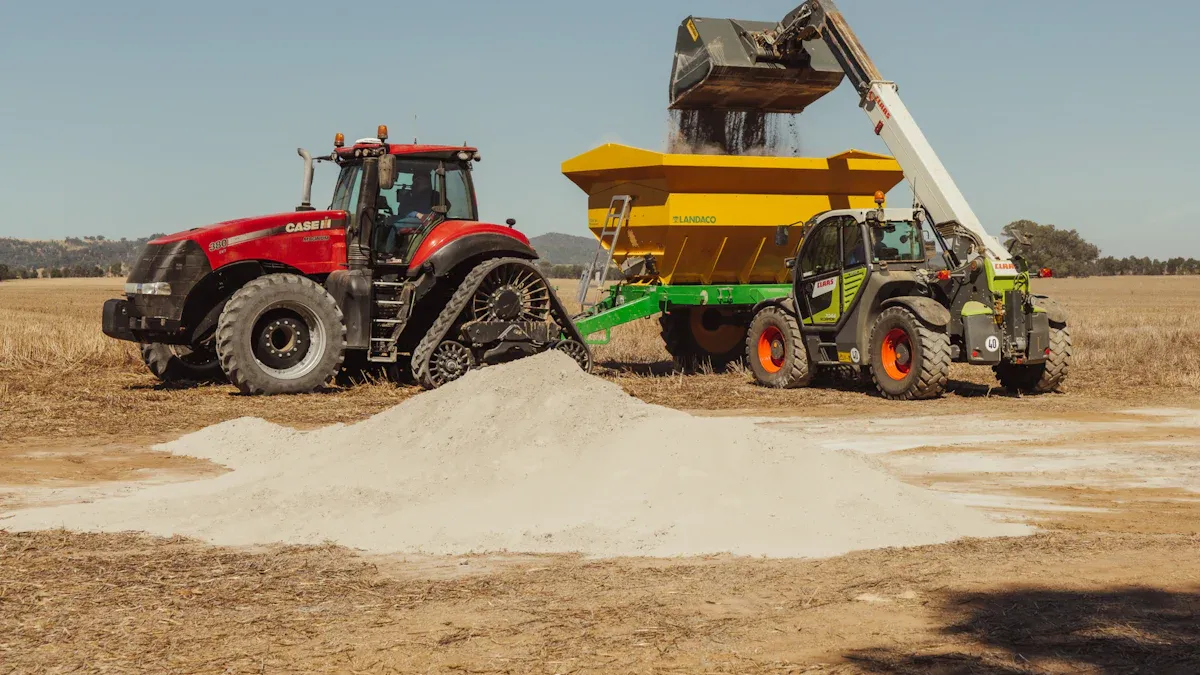
Farmers are always on the hunt for tools that make their work easier and smarter. Agricultural tracks stand out as a game-changer, offering unmatched performance across challenging terrains. They distribute weight evenly, reducing soil pressure to as low as 4 psi. For comparison:
- A car exerts up to 33 psi on the ground.
- The M1 Abrams tank? Just over 15 psi.
Tracks glide over muddy fields like butter on bread, boosting efficiency and leaving the soil healthier for crops. With less slippage—around 5%—they save fuel and prevent ruts. Farmers swear by their ability to tackle wet conditions without breaking a sweat.
Key Takeaways
- Farm tracks give better grip on all surfaces. They help farmers work well in mud, rocks, or sand.
- Using farm tracks lowers soil pressure. This helps crops grow better and lets water soak in, leading to more harvest.
- Tracks can fit many farm machines. They are useful for many jobs during the farming season.
Benefits of Agricultural Tracks
Superior Traction for All Terrains
Agricultural tracks excel at gripping the ground, no matter the terrain. Whether it’s a muddy field, a rocky slope, or a sandy patch, these tracks deliver consistent performance. Unlike traditional wheels, which often struggle in slippery or uneven conditions, tracks spread the load evenly across a larger surface area. This design minimizes slippage and maximizes traction.
A study by Shmulevich & Osetinsky demonstrated the effectiveness of rubber tracks in agricultural soils. Field experiments confirmed their ability to generate strong traction and resist slipping forces. This makes them a reliable choice for farmers who face unpredictable weather and challenging landscapes.
| Study Title | Key Findings |
|---|---|
| An empirical model for tractive performance of rubber-tracks in agricultural soils | The model by Shmulevich & Osetinsky has been verified by field experiments, demonstrating effective traction and resistance forces in agricultural contexts. |
Farmers often describe tracks as their “all-terrain heroes.” They allow tractors and other machinery to move confidently, even in conditions that would leave wheeled vehicles spinning helplessly. With agricultural tracks, every inch of the field becomes accessible, ensuring no part of the land goes to waste.
Reduced Soil Compaction for Healthier Crops
Healthy soil is the foundation of a thriving farm. Agricultural tracks play a crucial role in preserving this vital resource. By distributing the weight of heavy machinery over a larger area, tracks significantly reduce soil compaction. This keeps the soil loose and aerated, allowing roots to grow freely and water to penetrate deeply.
Research comparing tracks and wheels highlights this benefit. Lightweight tractors equipped with low-pressure tracks cause minimal soil disturbance. In contrast, wheeled tractors often compact the soil, reducing its porosity and bulk density. This can lead to poor drainage and stunted crop growth.
- Tracked tractors show less impact on soil moisture conditions.
- Wheeled tractors on moist soil significantly affect soil bulk density and porosity.
Farmers who switch to tracks often notice a visible improvement in their crops. Plants grow taller, roots spread wider, and yields increase. It’s a win-win for both the farmer and the environment.
Versatility Across Farming Equipment
Agricultural tracks aren’t just for tractors. Their versatility extends to a wide range of farming equipment, including loaders, dumpers, and even specialized machinery like snowmobiles and robots. This adaptability makes them an invaluable asset for modern farms.
Changzhou Hutai Rubber Track Co., Ltd. offers a diverse selection of tracks to meet these needs. With brand-new tooling for excavator tracks, loader tracks, dumper tracks, ASV tracks, and rubber pads, the company ensures top-notch quality and performance. Recently, they introduced production lines for snowmobile and robot tracks, further expanding their offerings.
“Tracks are like the Swiss Army knife of farming equipment,” one farmer quipped. “They fit everywhere and do everything.”
This versatility allows farmers to tackle a variety of tasks with ease. From planting and harvesting to transporting heavy loads, agricultural tracks prove their worth time and again.
Practical Applications of Agricultural Tracks
Performance in Wet and Muddy Conditions
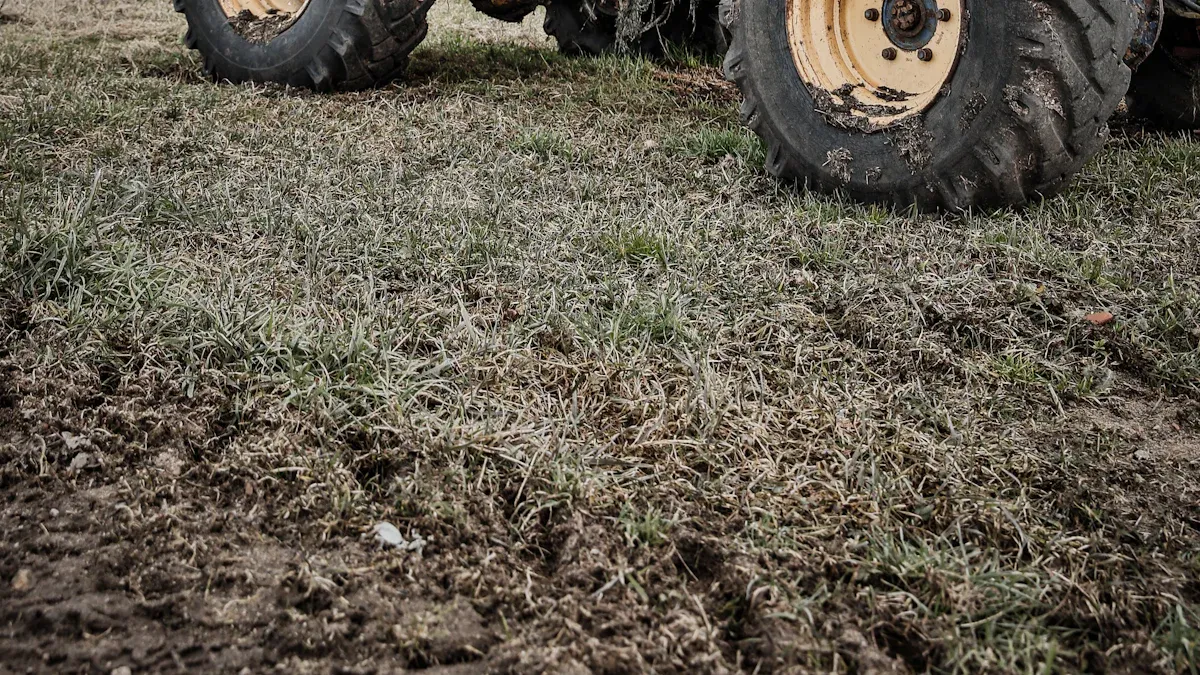
When the skies open up and fields turn into muddy swamps, agricultural tracks shine. Their design distributes weight evenly across a larger surface area, preventing machinery from sinking into the muck. Farmers often marvel at how tracks glide over wet soil, maintaining mobility where tires would spin helplessly.
Rubber tracks offer a flotation advantage that makes them ideal for soggy conditions. By spreading the load, they reduce the risk of getting stuck and ensure consistent traction. This feature proves invaluable during rainy seasons or in areas with naturally soft soil. Tracks outperform tires in these scenarios, keeping operations running smoothly even when the weather refuses to cooperate.
“Tracks are like the lifeboats of farming,” one farmer joked. “They keep you afloat when the ground tries to swallow you whole.”
Field studies highlight the effectiveness of tracks in muddy environments. Their ability to minimize soil compaction while maintaining grip ensures that farmers can navigate their fields without damaging the land. Whether planting, harvesting, or transporting goods, agricultural tracks make wet conditions manageable.
Efficiency in Heavy-Duty Farming Operations
Heavy-duty farming demands equipment that can handle the load without breaking a sweat. Agricultural tracks rise to the challenge, offering superior traction and pulling power. Machines equipped with tracks can haul wider and heavier implements, making them a favorite for large-scale operations.
Tracks boast a lower slip ratio—around 5%—compared to tires, which can slip as much as 20%. This efficiency translates to better fuel economy and faster work completion. The larger contact patch of tracks enhances grip, especially in loose soil, ensuring that machinery stays steady even under demanding conditions.
Farmers often describe tracks as the “workhorses” of their operations. They tackle tasks that would leave wheeled systems struggling, from plowing vast fields to transporting heavy loads. With agricultural tracks, productivity soars, and downtime plummets.
Adaptability for Seasonal and Crop-Specific Needs
Agricultural tracks adapt to the ever-changing demands of farming. Whether it’s planting in spring, harvesting in fall, or navigating snow-covered fields in winter, tracks prove their versatility. Their ability to perform across all seasons makes them an indispensable tool for farmers.
Crop-specific needs also benefit from the adaptability of tracks. For delicate crops that require minimal soil disturbance, tracks provide a gentle touch. For robust crops that demand heavy-duty machinery, tracks deliver the power needed to get the job done.
Statistics validate this adaptability, with tracks scoring high in seasonal specificity and timeliness. Farmers appreciate how tracks adjust to their unique requirements, ensuring that every season and crop receives the care it deserves.
“Tracks are like the Swiss Army knife of farming,” one farmer said. “They handle everything, no matter the season or the crop.”
Changzhou Hutai Rubber Track Co., Ltd. offers a wide range of agricultural tracks designed to meet these diverse needs. With new production lines for snowmobile and robot tracks, the company continues to innovate, ensuring farmers have the tools they need to succeed year-round.
Technological Features of Agricultural Tracks
Advanced Tread Designs for Enhanced Grip
Agricultural tracks owe much of their superior performance to advanced tread designs. These treads are engineered to maximize grip and minimize slippage, even on the most challenging terrains. By increasing the contact area with the ground, they ensure better traction and stability. Farmers often describe these tracks as “sticky boots” for their machinery, gripping the earth with unmatched precision.
A comparison of tread designs highlights their impact on performance:
| Tire Model | Key Features | Benefits |
|---|---|---|
| TM1000 ProgressiveTraction® | Tread designed to increase transmission power and efficiency | Minimizes soil compaction through a ‘wing effect’ on the tire design. |
| TM150 | 5 to 8% larger footprint compared to standard tires | Enhances crop yields due to better weight distribution. |
| TM3000 | Advanced carcass design for load capacity at low inflation pressure | Preserves soil and organic components while limiting mechanical damage from compaction. |
These innovative designs not only improve traction but also contribute to healthier soil and higher crop yields. With such features, agricultural tracks become an indispensable tool for modern farming.
Durable Materials for Longevity
Durability is a hallmark of high-quality agricultural tracks. Manufacturers now use advanced materials like enhanced carbon black compounds and reinforced steel cords to create tracks that withstand the rigors of farming. These materials resist wear and tear, reducing the need for frequent replacements and saving farmers money in the long run.
Recent advancements in rubber track technology have further improved their lifespan. High-performance synthetic materials now play a key role in enhancing durability. These innovations not only meet the demands of challenging agricultural environments but also align with the growing need for sustainable farming equipment. Farmers can rely on these tracks to perform consistently, season after season.
Innovations in Track Systems for Improved Efficiency
Modern agricultural tracks are more than just durable and grippy—they’re smart. Innovations in track systems have revolutionized how farming equipment operates. Features like self-cleaning treads and adjustable tension systems ensure optimal performance in all conditions. These advancements reduce downtime and maintenance, allowing farmers to focus on their work.
Changzhou Hutai Rubber Track Co., Ltd. leads the way in track system innovation. With new production lines for snowmobile and robot tracks, the company continues to push the boundaries of what’s possible. Their commitment to quality and innovation ensures that farmers have access to the best tools for their trade.
“Tracks today are like the smartphones of farming equipment,” one farmer joked. “They do everything except make calls!”
These technological features make agricultural tracks a game-changer, combining durability, efficiency, and adaptability to meet the diverse needs of modern agriculture.
Addressing Misconceptions About Agricultural Tracks
Cost vs. Long-Term Value
Many farmers hesitate to invest in agricultural tracks, thinking they cost too much. However, the long-term value they provide often outweighs the initial expense. Tracks reduce fuel consumption by minimizing slippage, saving money over time. They also extend the lifespan of farming equipment by reducing wear and tear caused by uneven terrain.
Farmers who switch to tracks often notice fewer repairs and replacements. This translates to lower maintenance costs. Additionally, the increased efficiency and productivity gained from using tracks lead to higher crop yields. Over several seasons, these benefits add up, making tracks a smart financial decision.
“Think of tracks as a long-term partner,” one farmer said. “They might cost more upfront, but they pay you back every single day.”
Speed and Maneuverability Benefits
A common misconception is that tracks slow down farming operations. In reality, they enhance maneuverability and maintain consistent speeds, even on challenging terrains. Tracks allow machinery to glide over muddy fields or rocky slopes without losing traction. This ensures that farmers can complete tasks faster, regardless of the conditions.
Tracks also improve turning capabilities. Their design distributes weight evenly, preventing machinery from sinking into soft soil during sharp turns. This makes them ideal for navigating tight spaces or working in fields with irregular layouts.
“Tracks are like the sports cars of farming equipment,” a farmer joked. “They handle curves and corners like a dream!”
Maintenance and Reliability Insights
Some believe tracks require constant maintenance, but modern designs prove otherwise. Predictive maintenance technology now monitors track performance and identifies potential issues before breakdowns occur. Farms using this approach have reduced repair costs by 30% and downtime by 25%.
Key performance indicators (KPIs) like Mean Time Between Failures (MTBF) and Mean Time to Repair (MTTR) highlight the reliability of agricultural tracks. These metrics show how long equipment operates without failure and how quickly repairs are completed. Tracks consistently score high in both areas, ensuring dependable performance.
- Maintenance KPIs include:
- MTBF: Measures the average time between failures.
- MTTR: Tracks the time needed to repair equipment.
- Predictive maintenance reduces downtime and enhances reliability.
Farmers trust tracks to keep their operations running smoothly. With fewer breakdowns and better resource management, tracks prove to be a reliable choice for modern agriculture.
Agricultural tracks redefine farming efficiency. Their ability to boost productivity while protecting soil health makes them indispensable. The global market for rubber tracks is set to double by 2032, driven by their superior performance. Changzhou Hutai Rubber Track Co., Ltd. leads this innovation, offering top-tier tracks for every farming need.
Post time: May-08-2025