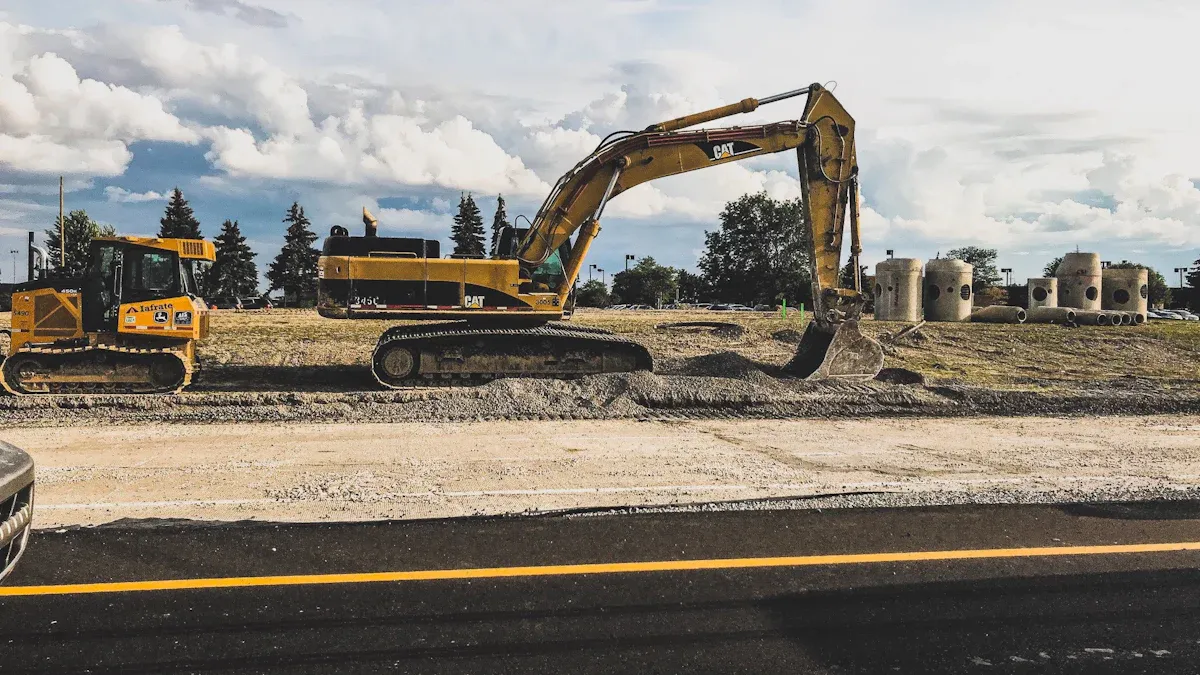
Excavator tracks play a crucial role in enhancing construction efficiency. They directly influence project safety and overall performance. Selecting the right tracks ensures that construction teams can navigate various terrains effectively. Informed decisions regarding excavator tracks lead to optimal outcomes, minimizing risks and maximizing productivity.
Key Takeaways
- Choosing the right excavator tracks enhances mobility and stability, allowing for efficient navigation across various terrains.
- Wider tracks improve load-bearing capacity by distributing weight evenly, which prevents balance issues on uneven ground.
- Regular inspections and proper maintenance of excavator tracks can significantly extend their lifespan and reduce repair costs.
The Role of Excavator Tracks in Performance
Impact on Mobility and Maneuverability
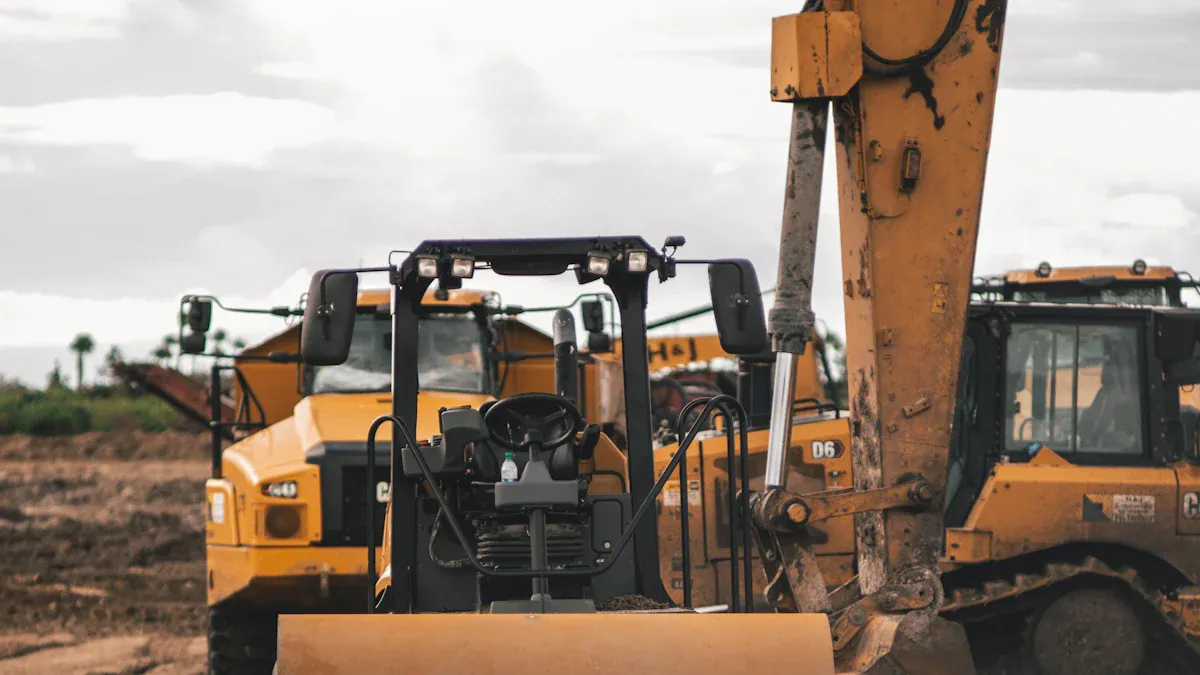
Excavator tracks significantly enhance the mobility and maneuverability of construction equipment. They help reduce ground pressure, which improves stability for heavy machinery. This stability allows operators to navigate various terrains with ease. The right choice of tracks can greatly enhance the performance of construction equipment, making it more efficient on the job site.
- Rubber tracks provide superior traction on different surfaces, leading to smoother movement.
- Increased stability from rubber tracks enhances maneuverability, especially in challenging terrains.
For instance, mini excavators and compact excavators are designed with features that optimize their ability to turn and navigate tight spaces. Their reduced tail-swing design allows for tighter turns, while a variable width undercarriage enables them to maneuver in confined areas effectively. This makes them an excellent choice for both commercial and residential projects.
| Excavator Type | Maneuverability Features | Pros | Cons |
|---|---|---|---|
| Mini Excavators | Smaller size, reduced tail-swing, designed for tight spaces | Fits into tight spaces, usable indoors | Limited load capacity |
| Compact Excavators | Variable width undercarriage, excellent for navigating confined job sites | Ideal for commercial/residential projects | May not handle larger tasks |
Influence on Load-Bearing Capacity
The design of excavator tracks plays a crucial role in determining the load-bearing capacity of construction machinery. The undercarriage is vital for lifting heavy loads, and the design and width of the tracks contribute significantly to the machine’s stability and support. This stability is essential for safely handling heavy loads.
Excavator track shoes are made of steel, providing high tensile strength and wear resistance, ensuring durability in complex working environments.
Wider tracks distribute the machine’s weight evenly across a larger surface area. This design prevents the excavator from losing balance on uneven terrain. A wider track width improves stability during lifting tasks, directly impacting the load-bearing capacity of the excavator.
- Tracks distribute the machine’s weight evenly across a larger surface area.
- This design prevents the excavator from losing balance on uneven terrain.
- A wider track width improves stability during lifting tasks, enhancing load-bearing capacity.
Safety Considerations with Excavator Tracks
Stability and Ground Pressure
Stability is a critical factor when operating excavators. The design of excavator tracks directly influences ground pressure and overall stability. Properly selected tracks can enhance flotation and reduce ground pressure, which minimizes damage to the terrain.
“Track loaders are suited for most any application,” says Coleman. “The advantages that they provide are increased flotation/decreased ground pressure—whichever way you want to look at that, greater traction, they cause less damage to the terrain, and have higher capacities.”
When excavators operate on soft or uneven ground, the right tracks can prevent sinking and maintain balance. Here are some key benefits of using appropriate excavator tracks:
- Increased flotation
- Decreased ground pressure
- Greater traction
- Less damage to terrain
- Higher capacities
These advantages not only improve the performance of the machinery but also enhance safety for operators and workers on-site.
Risk of Equipment Damage and Operator Safety
Improper track selection can lead to significant risks, including equipment damage and safety hazards for operators. Common causes of equipment damage include:
- Driving on uneven roads can lead to local pressure increases, causing damage to the tracks.
- Improper operation during turns can strain the tracks, especially if one side gets stuck.
- Long operational hours without breaks can cause excessive wear on the tracks.
- Failure to clean gravel from the tracks can lead to loosening and eventual breakage.
- Parking on uneven ground can create stress concentrations, leading to cracks or breaks.
The choice of excavator tracks also impacts operator safety. Differences in undercarriage design can influence a machine’s durability and stability. Robust designs enhance stability, potentially reducing accident risks. For instance, the contact collision between pedestrian workers and equipment is a significant contributor to accidents in the construction industry. Additionally, operators must remain vigilant to detect hazards, as failure to do so is a leading cause of accidents related to equipment operation.
Selecting the Right Excavator Tracks for Specific Applications
Choosing the right excavator tracks is essential for maximizing performance in various construction scenarios. Different terrains require specific track types to ensure optimal efficiency and safety.
Matching Tracks to Terrain Types
When selecting tracks, consider the terrain type where the excavator will operate. Here are some key factors to evaluate:
| Factor | Description |
|---|---|
| Terrain Type | Choose track type based on common working conditions: mud, pavement, rocky, hilly, etc. |
| Machine Weight and Application | Different tracks provide varying support and traction based on machine size and conditions. |
| Cost vs. Performance | Rubber tracks are cheaper but may wear out faster; steel tracks last longer but cost more. |
| Fuel Efficiency | Track weight affects fuel consumption; lighter tracks improve efficiency on smooth surfaces. |
| Environmental Conditions | Consider mud, snow, and temperature extremes when selecting tread patterns. |
| Surface Protection Requirements | Some jobs require minimal disturbance, necessitating smooth patterns despite traction trade-offs. |
Understanding Track Materials and Designs
Excavator tracks come in various materials and designs, each suited for specific applications.
- Steel Tracks: Best for heavy-duty applications like demolition and quarry work due to their durability and traction on uneven surfaces.
- Rubber Tracks: Ideal for operations on sensitive surfaces such as lawns and pavements to minimize damage, providing a smoother ride and better operator comfort.
- Hybrid Tracks: Combine the durability of steel with the comfort of rubber, offering better traction without damaging the ground.
Selecting the right track material can significantly impact performance and longevity. For example, advancements in track design, such as smooth, one-piece track frames and optimized idler wheel diameters, enhance durability and reduce maintenance costs.
By carefully matching excavator tracks to specific applications, construction teams can ensure efficient operations and minimize wear and tear on equipment.
Maintenance Tips for Excavator Tracks
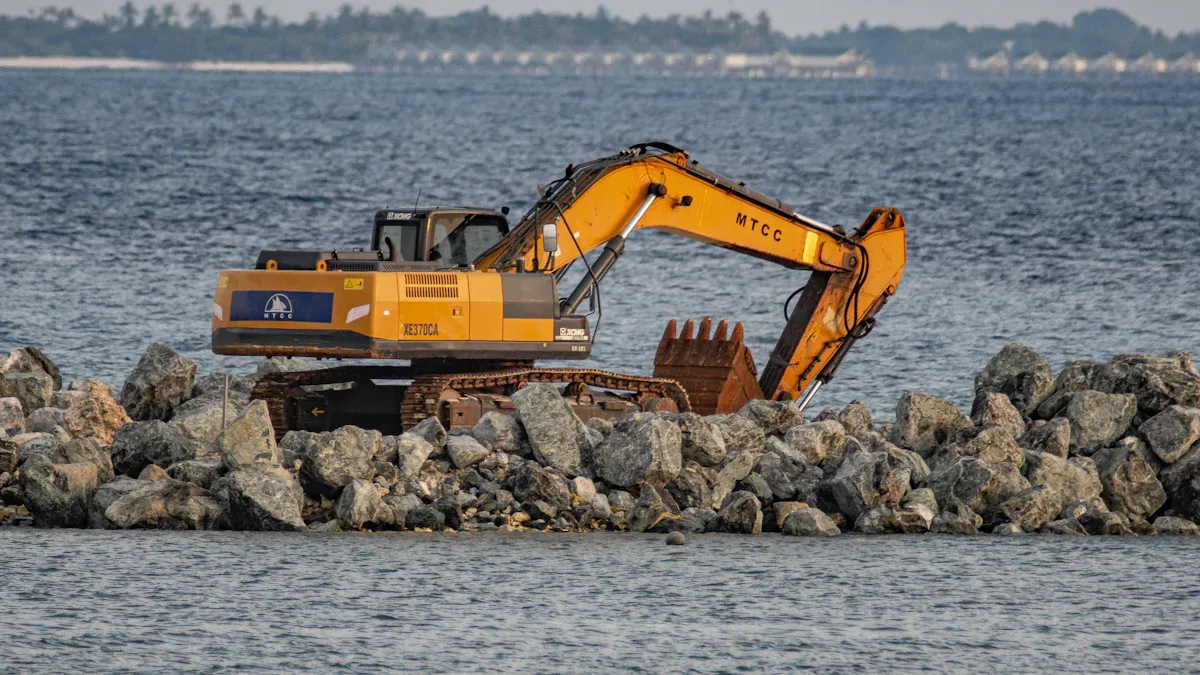
Maintaining excavator tracks is essential for ensuring optimal performance and longevity. Regular inspections and proper care can prevent costly repairs and downtime.
Regular Inspection Practices
Regular inspections help identify potential issues before they escalate. Industry standards recommend specific intervals for inspecting excavator tracks. Here’s a summary of the recommended tasks based on operating hours:
| Interval (Hours) | Recommended Tasks |
|---|---|
| 250 | Change engine oil and filter, inspect the hydraulic system for leaks, and clean the air filters. |
| 500 | Replace hydraulic oil filter, check and lubricate moving parts, and inspect undercarriage components. |
| 1,000 | Service the fuel filter, inspect the electrical system, and check the swing bearing and drive sprockets for wear. |
| 2,000 | Replace hydraulic fluid, service the cooling system, and inspect the boom, stick, and bucket for structural integrity. |
Common issues identified during inspections include abnormal wear (42%), bearing damage (28%), and seal failure (19%). Addressing these problems promptly can enhance the lifespan of excavator tracks.
Best Practices for Track Care
Implementing best practices for track care can significantly extend the life of excavator tracks. Here are some key recommendations:
- Maintain proper track tension.
- Regularly clean the tracks to remove debris.
- Ensure proper storage of the excavator.
Proper tension adjustment is crucial. Maintaining tension within ±5% of specifications can lead to an average undercarriage life of 8,200 hours and a 29% reduction in annual repair costs.
By following these maintenance tips, construction teams can keep their excavator tracks in excellent condition, ensuring safety and efficiency on the job site.
Understanding excavator tracks is vital for successful construction projects. Proper track selection and maintenance enhance performance and safety. Consider these benefits:
- Improved grip and traction for navigating challenging terrains.
- High-quality tracks lead to smoother operations and reduced task completion time.
- Eco-friendly options promote fuel efficiency and lower environmental impact.
Informed decisions in track management yield long-term advantages, ensuring efficiency and safety on every job site.
FAQ
What are the benefits of using rubber tracks on excavators?
Rubber tracks offer superior traction, reduce ground pressure, and minimize damage to sensitive surfaces, making them ideal for various construction applications.
How often should I inspect excavator tracks?
Inspect excavator tracks regularly, ideally every 250 hours of operation, to identify wear and prevent costly repairs.
Can I use the same tracks for different terrains?
No, different terrains require specific track types. Matching tracks to terrain ensures optimal performance and safety during operations.

Post time: Sep-05-2025