
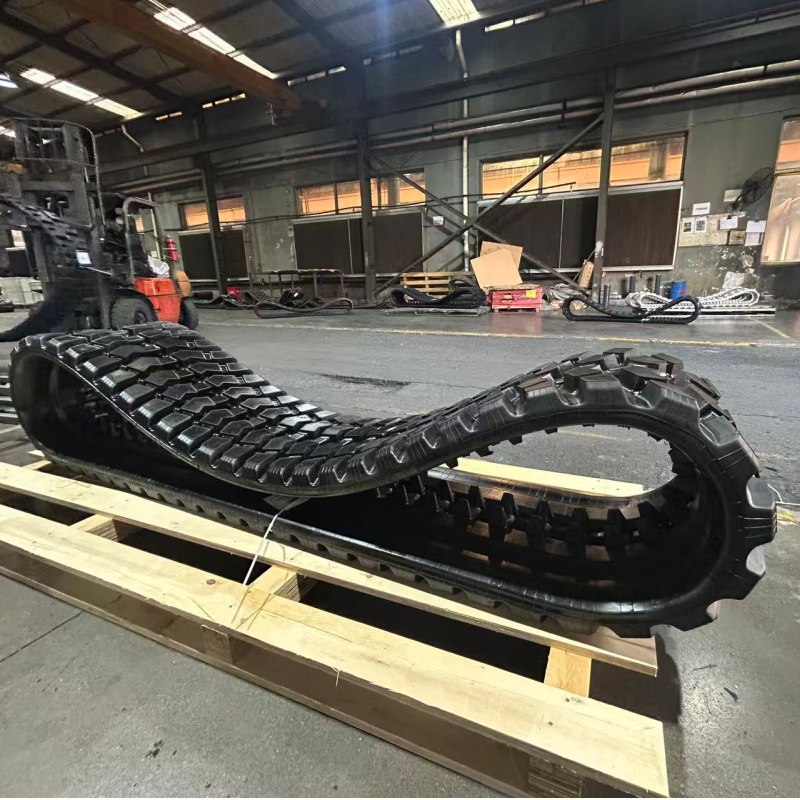
Why DV450x86 Skid Steer Loader Tracks Matter
For fleet operations, maximizing heavy equipment uptime is a daily priority. While the industry uses the broad term “skid steer tracks,” the DV450x86 Skid Steer Loader Tracks designation refers to a proprietary line of rubber tracks specifically engineered for dedicated compact track loaders (CTLs). This article serves as an overview of the DV product line while providing essential procurement guidance for the broader 450×86 size class. The tracks chosen directly impact machine performance, fuel efficiency, and operator comfort. For mid-to-large frame CTLs, this size is a standard specification in heavy-duty applications. Understanding precise dimensions and optimal jobsite applications helps procurement teams reduce premature wear and ensure earthmoving equipment performs reliably under demanding loads.
What the DV450x86 Track Size Means
Specifying a track as DV450x86 communicates both a specific product line and precise dimensional requirements to suppliers. The “DV” prefix denotes the manufacturer’s proprietary series or tread line, while the “450″ designates a track width of 450 millimeters (approximately 17.7 inches). This wide footprint is essential for distributing the weight of heavier compact track loaders. The “86″ refers to the pitch, meaning there is exactly 86 millimeters between each embedded metal core or drive lug. Depending on the specific machine model, this width and pitch typically pair with a link count ranging from 52 to 60 links. Ensuring this exact dimensional match is non-negotiable. Buyers must also verify that the guide lug profile, roller path width, and inner circumference match the undercarriage, as identical 450×86 codes can still be incompatible across different equipment brands. While common CTL models like the Bobcat T750/T770, Kubota SVL90/SVL95, and Caterpillar 299D frequently utilize the 450×86 size, these fitments are not universally interchangeable. Buyers must treat this data with caution, verifying exact link counts, roller path widths, and sprocket compatibility for their specific machine’s model-year and series exceptions.
Best Jobsite Conditions for DV450x86 Rubber Tracks
Machines equipped with 450mm wide tracks are primarily deployed in environments where flotation and traction are critical. Because the 450mm width expands the surface area in contact with the ground, it significantly reduces the machine’s ground pressure. Note that actual ground-pressure PSI depends heavily on the machine’s operating weight, but the wider footprint generally makes the DV450x86 configuration exceptional for working in deep mud, soft clay, and loose sand without bogging down. However, this width introduces trade-offs. The increased ground resistance and friction from a wider track can slightly reduce the machine’s effective breakout force during heavy digging, and it also increases the transport width on trailers. It is best to avoid using these wider tracks on highly abrasive surfaces like demolition rubble or excessive asphalt, where the increased surface area can lead to accelerated chunking of the rubber compound. For landscaping, grading, and agricultural sites, this track size provides a strong balance of minimal turf disruption and maximum pushing power.
How to Compare DV450x86 Track Options
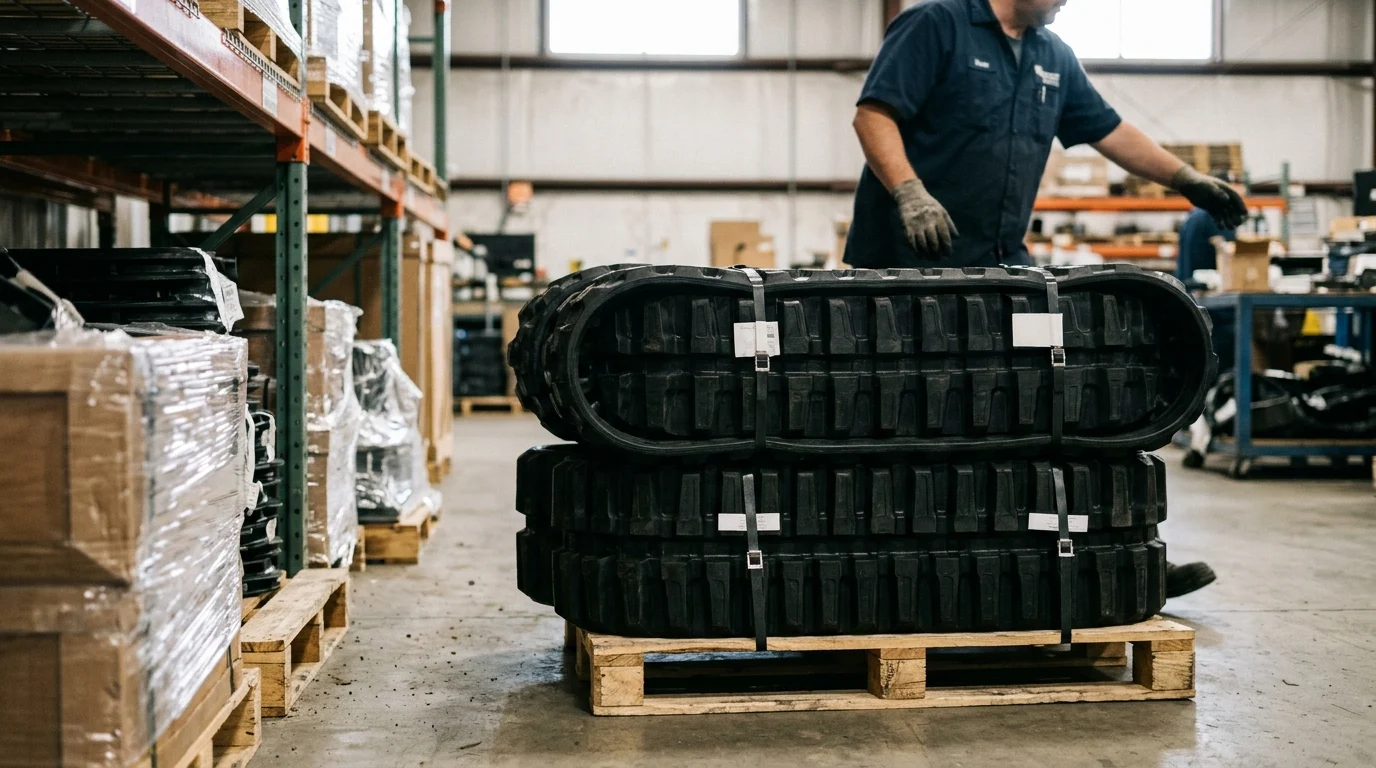
When evaluating replacement rubber tracks, it becomes clear that tracks sharing the same size designation can vary wildly in build quality. To maximize return on investment, fleet managers must rigorously compare internal specifications, tread designs, and the backing of the manufacturer. Fleet managers must also note important caveats regarding OEM warranty restrictions; substituting aftermarket tracks can sometimes impact dealer support policies on the undercarriage, making it essential to verify these details before issuing a purchase order.
Key Specifications and Tread Patterns to Review
The external tread pattern and internal construction dictate how a track will perform in the field. Internally, tracks manufactured with continuously wound steel cords are often marketed as superior to those with overlapping joints. While continuous cords can offer high tensile strength to help reduce the risk of track snapping, overall durability ultimately depends on the broader track design and compound chemistry rather than a single construction variable. Tracks can still fail from lug shear, rubber debonding, or severe impact loading. Evaluating the steel core thickness is also important for durability. Externally, the tread pattern must match the primary applications.
| Tread Pattern | Primary Application | Wear Life Rating | Traction Profile |
|---|---|---|---|
| C-Lug | Dirt, Mud, General Construction | High | Excellent forward/reverse traction |
| Block (Staggered) | Hard surfaces, Asphalt, Gravel | Very High | Smooth ride, moderate traction |
| Zig-Zag | Snow, Ice, Slippery slopes | Medium | Aggressive lateral grip |
| Multi-Bar | Turf, Landscaping, Fine grading | Medium | Minimal ground disturbance |
Note: Wear life ratings are relative benchmarks; actual life depends on compound quality and jobsite abrasiveness.
Supplier Documentation, Warranty, and Fitment Checks
Beyond the physical product, buyers should review the supplier’s documentation and warranty terms carefully. A reliable manufacturer should provide clear spec sheets detailing the durometer (hardness) of the rubber compound. While 60 to 65 Shore A is often cited as a baseline, optimal hardness actually depends on climate, application, and compound chemistry. Surface chunking and tear-resistance tests serve as more reliable field indicators of durability. A robust warranty is also essential; industry standards for premium rubber tracks typically cover 12 to 18 months or 1,000 to 1,500 operating hours against manufacturing defects. Before finalizing any bulk purchase, maintenance teams must conduct strict fitment checks. Verifying that the track pitch and drive lugs mate perfectly with OEM sprockets is critical; even a slight pitch mismatch can cause sprocket skipping, leading to catastrophic undercarriage failure, efficiency loss, and costly repairs.
How Fleet Managers Should Buy and Manage DV450x86 Tracks
Managing an inventory of heavy-duty rubber tracks requires a strategic approach to procurement and lifecycle tracking. For fleet managers, the goal is to transition from reactive replacements to proactive undercarriage management, thereby controlling the total cost of ownership and maximizing machine availability.
Inspection and Replacement Planning
To prevent unexpected downtime, strict inspection protocols are mandatory for all tracks in a fleet.
Key Takeaways
- Verify width, pitch, link count, guide lug profile, roller path, and sprocket compatibility before purchasing any 450×86 replacement track.
- Use 450 mm wide tracks when flotation and traction matter most, especially in mud, soft clay, loose sand, landscaping, grading, and agricultural work.
- Expect wider tracks to reduce ground pressure, but remember that actual PSI depends on the machine’s operating weight and jobsite conditions.
- Avoid prolonged operation on asphalt, demolition rubble, and sharp abrasive surfaces to reduce rubber chunking and premature track failure.
- Confirm fitment by machine model, year, and series because common CTL models using 450×86 tracks are not always interchangeable.
Frequently Asked Questions
What does the 450×86 track size mean?
The 450 indicates a 450 mm track width, while 86 refers to the 86 mm pitch between embedded metal cores or drive lugs. Link count, guide lug shape, and roller path must still be verified.
Are all 450×86 skid steer tracks interchangeable?
No. Tracks with the same 450×86 size code can differ by link count, guide lug profile, roller path width, sprocket fit, and machine model-year requirements.
Which machines commonly use 450×86 rubber tracks?
Some Bobcat T750/T770, Kubota SVL90/SVL95, and Caterpillar 299D models may use this size, but fitment must always be confirmed by exact machine model, year, and undercarriage specifications.
What jobs are DV450x86 tracks best suited for?
They are well suited for soft ground applications such as mud, clay, sand, grading, landscaping, and agricultural work where flotation, traction, and reduced ground pressure are priorities.
When should fleets avoid wider 450 mm tracks?
Avoid extended use on demolition rubble, sharp aggregate, and excessive asphalt because abrasive surfaces can accelerate rubber chunking and premature wear.
Post time: Jul-30-2026