How Skid Steer Loader Tracks Affect Jobsite Performance
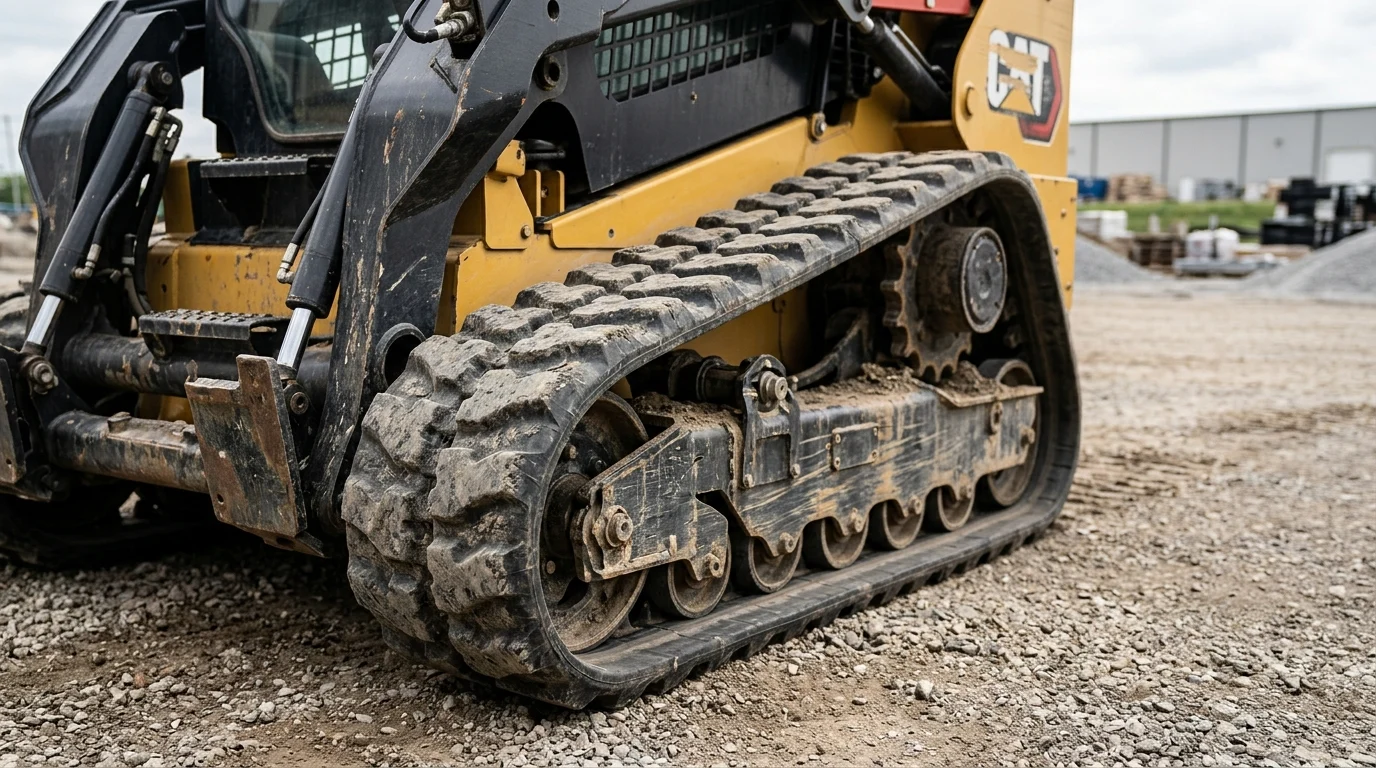
Selecting the optimal undercarriage components for compact equipment significantly impacts machine productivity, operator comfort, and site accessibility. Skid steer loader tracks—whether utilized as dedicated continuous rubber tracks on compact track loaders (CTLs) or as over-the-tire (OTT) additions for wheeled units—serve as the critical interface between the machine’s drivetrain and the substrate. Proper track selection improves traction and flotation, converting available engine power into productive work more effectively—often increasing pushing force by 20% to 30% in soft conditions across varying topographies.
Key Metrics for Evaluating Track Performance
Evaluating track performance requires analyzing specific engineering metrics, primarily ground bearing pressure, tractive effort, and vibration dampening. Ground pressure dictates a machine’s flotation capabilities in soft substrates. While a standard wheeled skid steer equipped with pneumatic tires typically exerts 35 to 50 psi of ground pressure, equipping a machine with dedicated rubber tracks can distribute that weight to achieve a footprint pressure as low as 4 to 6 psi. This substantial decrease in ground pressure prevents rutting and allows operators to navigate deep mud or loose sand without sinking.
Furthermore, tractive effort is directly correlated to the track’s footprint and tread design. Maximizing the contact patch enhances the machine’s pushing force, which is essential for heavy grading or excavation. Vibration reduction, often assessed by measuring vibration amplitude or acceleration (m/s²) transmitted to the cab, is another critical metric; specialized anti-vibration track cores can improve ride quality, reducing whole-body vibration closer to the ISO 2631-1 action limit of 0.5 m/s², which reduces operator fatigue and minimizes cyclical stress on the machine’s undercarriage components.
Impact of Ground Conditions, Duty Cycle, and Machine Weight
A track’s operational lifespan—typically ranging from 1,000 to 1,500 hours—and daily performance are heavily dictated by the interaction between ground conditions, the machine’s duty cycle, and its operating weight. Hard, abrasive surfaces such as asphalt, concrete, and recycled demolition debris generate high friction and rapid material degradation. Soft surfaces like loam, clay, and snow offer the benefit of reduced abrasion, acting as natural lubricants. However, these soft environments also carry distinct risks, as they often hide abrasive debris or undergo freeze-thaw cycles that degrade rubber compounds, requiring aggressive tread depths (often 30 mm or more) for adequate grip.
Machine weight amplifies these environmental effects. Operating a heavy-duty loader on 100% abrasive concrete will significantly accelerate tread wear, potentially reducing track life to under 600 hours compared to a mixed dirt and gravel duty cycle. High-torque applications, such as cold planing or continuous heavy lifting, also place immense torsional stress on the internal track cables. Operators must match the track compound and internal tensile strength to the specific weight class and primary application of the loader to avoid premature cable snapping or lug delamination. Additionally, selecting the appropriate track width is vital: wider tracks (e.g., 400 mm to 450 mm) maximize soft-ground flotation and stability, whereas narrower tracks (e.g., 300 mm to 320 mm) improve maneuverability and ensure the machine meets specific transport width restrictions.
Comparing Skid Steer Loader Track Types
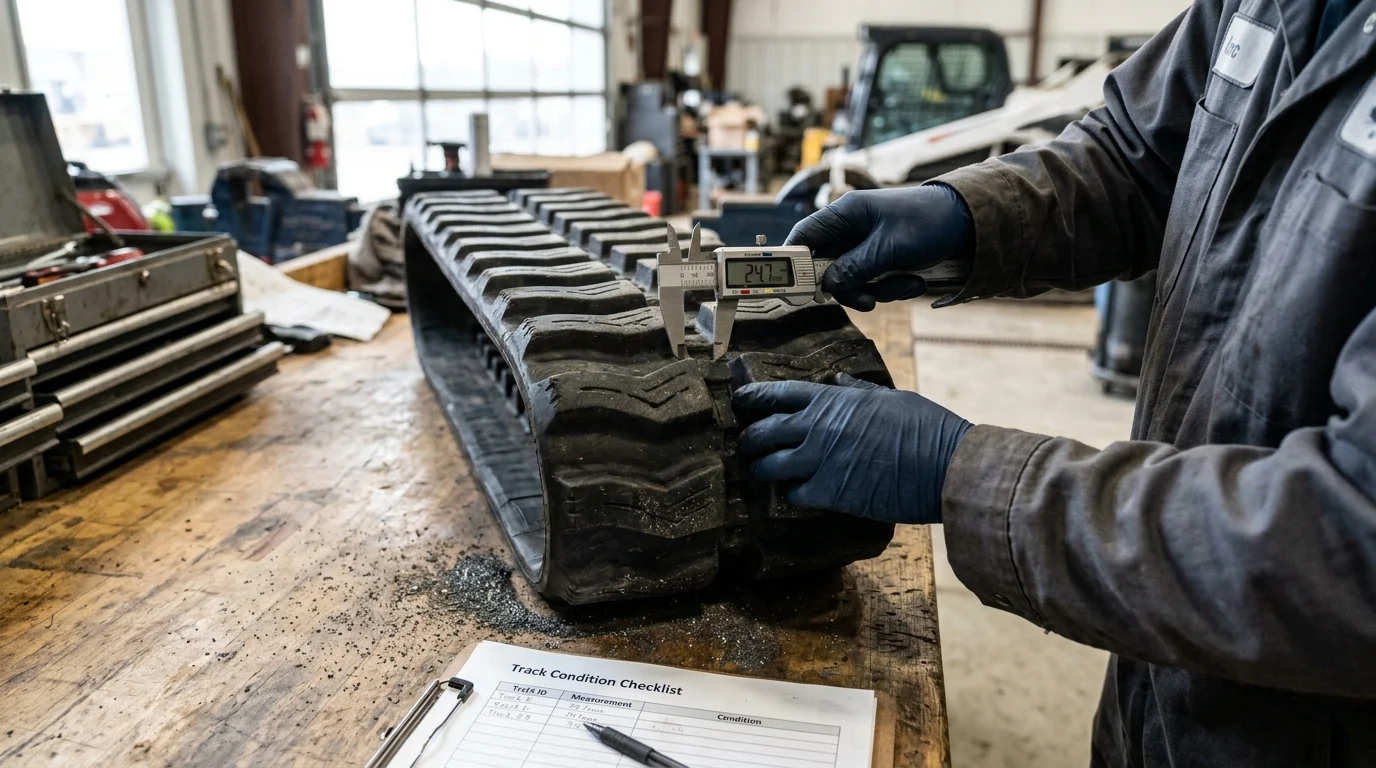
The industrial market offers a diverse array of track architectures designed to accommodate specific operational demands. Understanding the structural differences between these track types and their tread configurations is essential for optimizing equipment utilization and avoiding premature undercarriage wear in the field.
Rubber Tracks, Steel Tracks, and Over-the-Tire Tracks
Continuous rubber tracks are the industry standard for purpose-built compact track loaders, offering a balance of high flotation and minimal surface disturbance. While they typically trade top travel speed (usually capped at 5 to 7 mph) for superior traction and flotation compared to wheeled units (which often reach 10 to 12 mph), they excel in demanding terrain. These tracks utilize a rubber carcass reinforced with internal steel cabling and forged metal links. For extreme environments, such as scrap yards or heavy demolition sites, steel-embedded rubber tracks or steel over-the-tire (OTT) options provide unparalleled puncture resistance against jagged rebar or crushed concrete. Dedicated solid steel tracks are rarely used on standard CTLs because they can severely damage paved surfaces and reduce ride quality.
Over-the-tire (OTT) tracks present a hybrid solution for standard wheeled skid steers. These systems wrap around the existing pneumatic or solid tires, converting a wheeled machine into a tracked asset. Rather than a quick, temporary swap, OTT systems are semi-permanent installations that require significant downtime to mount (typically 45 to 90 minutes), and they alter axle loading and machine clearance. Installing an OTT system adds extended utility to a wheeled skid steer by allowing it to operate in soft-ground conditions during wet seasons. However, contractors must be aware of practical caveats: OTT conversions can alter the machine’s tipping load, increase stress on wheel motors and axles by adding 800 to 1,200 lbs of unsprung weight, and potentially conflict with OEM warranties. When considering OTT systems, operators must verify adequate frame and wheel clearance (typically a minimum of 2 to 3 inches) prior to installation to prevent machine damage.
Tread Pattern and Material Comparison
Beyond the core material, the external tread pattern dictates the track’s traction profile and ride quality. Block or staggered pad patterns provide a smooth ride on hard surfaces and maximize surface area to reduce wear. C-lug patterns feature a notched design that acts like a paddle, offering aggressive traction in deep mud or clay but resulting in a rougher ride on concrete. Zig-zag patterns offer a multi-directional grip that excels in snow and on side-slopes. Finally, bar or multi-bar patterns provide a versatile balance, delivering good traction in snow and loose gravel while maintaining a relatively smooth ride.
Internal construction materials also vary. Premium tracks utilize continuous wound steel cables without overlapping joints, eliminating the weakest point where tracks typically snap under tension, which can reduce premature failure rates to below 1%.
| Tread Pattern | Optimal Ground Condition | Ride Quality | Wear Resistance on Hard Surfaces | Typical Tread Depth | Est. |
|---|
Choosing Skid Steer Loader Tracks for Lifecycle Value
Maximizing jobsite return on investment (ROI) requires evaluating skid steer loader tracks through the lens of total cost of ownership (TCO) rather than initial acquisition expenses. High-quality rubber tracks engineered with premium compounds reduce unexpected downtime, ultimately driving long-term lifecycle value for heavy equipment fleets.
Practical Selection Steps for Contractors
Fleet managers must align track specifications with operational demands to prevent premature wear and mechanical failure.
- Analyze Substrate Conditions: Hard surfaces like asphalt and concrete require staggered block treads to minimize vibration and track wear. Conversely, muddy or uneven terrains demand C-lug or bar patterns for optimal traction and self-cleaning capabilities.
- Verify Internal Construction: Premium skid steer loader tracks utilize continuous steel cord technology. By eliminating overlapping joints, this construction method significantly reduces the risk of track snapping under heavy torque or high-load conditions.
- Assess Rubber Compound Quality: Industrial standards dictate that tracks manufactured with an optimized blend of natural and synthetic rubber provide superior resistance to chunking, gouging, and tearing in highly abrasive environments.
Balancing Purchase Price, Durability, and Operating Cost
Procurement decisions often weigh upfront capital against operational longevity. While standard-duty tracks offer a lower purchase price, heavy-duty alternatives consistently yield a lower cost-per-hour in aggressive applications such as demolition, forestry, or recycling. Because equipment downtime directly inflates operating costs, investing in durable tracks minimizes labor loss and frequent maintenance interventions.
| Track Classification | Relative Purchase Price | Expected Lifespan (Hours) | Ideal Application Environment |
|---|---|---|---|
| Standard Duty | Low | 600 – 800 | Landscaping, light dirt work, soft soil |
| Heavy Duty | Medium to High | 1,000 – 1,500+ | Demolition, recycling, abrasive gravel, rock |
By calculating the expected hourly operating cost—factoring in both the projected lifespan of the rubber and the anticipated machine downtime for replacements—contractors can select skid steer loader tracks that deliver the highest verifiable ROI for their specific operational profile.
Key Takeaways
- Match skid loader tracks to ground conditions because soft soil rewards flotation, while concrete, asphalt, and demolition debris demand abrasion resistance.
- Use rubber tracks to lower ground pressure from about 35–50 psi on pneumatic tires to as low as 4–6 psi on suitable tracked configurations.
- Expect rubber track life of roughly 1,000–1,500 hours in balanced use, but budget for faster replacement when operating mainly on abrasive hard surfaces.
- Choose wider 400 mm to 450 mm tracks for soft-ground stability, but consider narrower options when maneuverability and reduced side stress matter more.
- Inspect tension, tread depth, lugs, and internal cable condition regularly to prevent avoidable failures such as delamination, uneven wear, and cable damage.
- Select a track compound and internal strength rating that matches machine weight, attachment torque, and duty cycle rather than buying on price alone.
Frequently Asked Questions
What is the best skid steer loader track for soft ground?
For mud, loam, sand, or snow, choose wider rubber tracks with deeper tread and strong flotation. Widths around 400 mm to 450 mm can reduce ground pressure and help prevent sinking, while aggressive tread improves forward bite.
How much can rubber tracks reduce ground pressure?
A wheeled skid steer may exert about 35 to 50 psi, while a dedicated rubber track setup can reduce footprint pressure to roughly 4 to 6 psi, depending on machine weight, track width, and undercarriage design.
How long do skid steer rubber tracks usually last?
Many rubber tracks last about 1,000 to 1,500 hours in balanced conditions. Heavy use on concrete, asphalt, demolition debris, or high-torque attachments can shorten service life significantly, sometimes to under 600 hours.
Are wider skid steer tracks always better?
No. Wider tracks improve flotation and stability on soft ground, but they can increase side stress on hard surfaces and during sharp turns. Narrower tracks may be better for abrasive jobsites, tighter access, and reduced undercarriage strain.
What causes premature rubber track failure?
Common causes include running on abrasive surfaces, improper tension, frequent counter-rotation, overloaded machines, hidden debris, and mismatched track compounds. Cable snapping, lug delamination, and uneven tread wear often point to application or maintenance issues.
Post time: Aug-26-2026