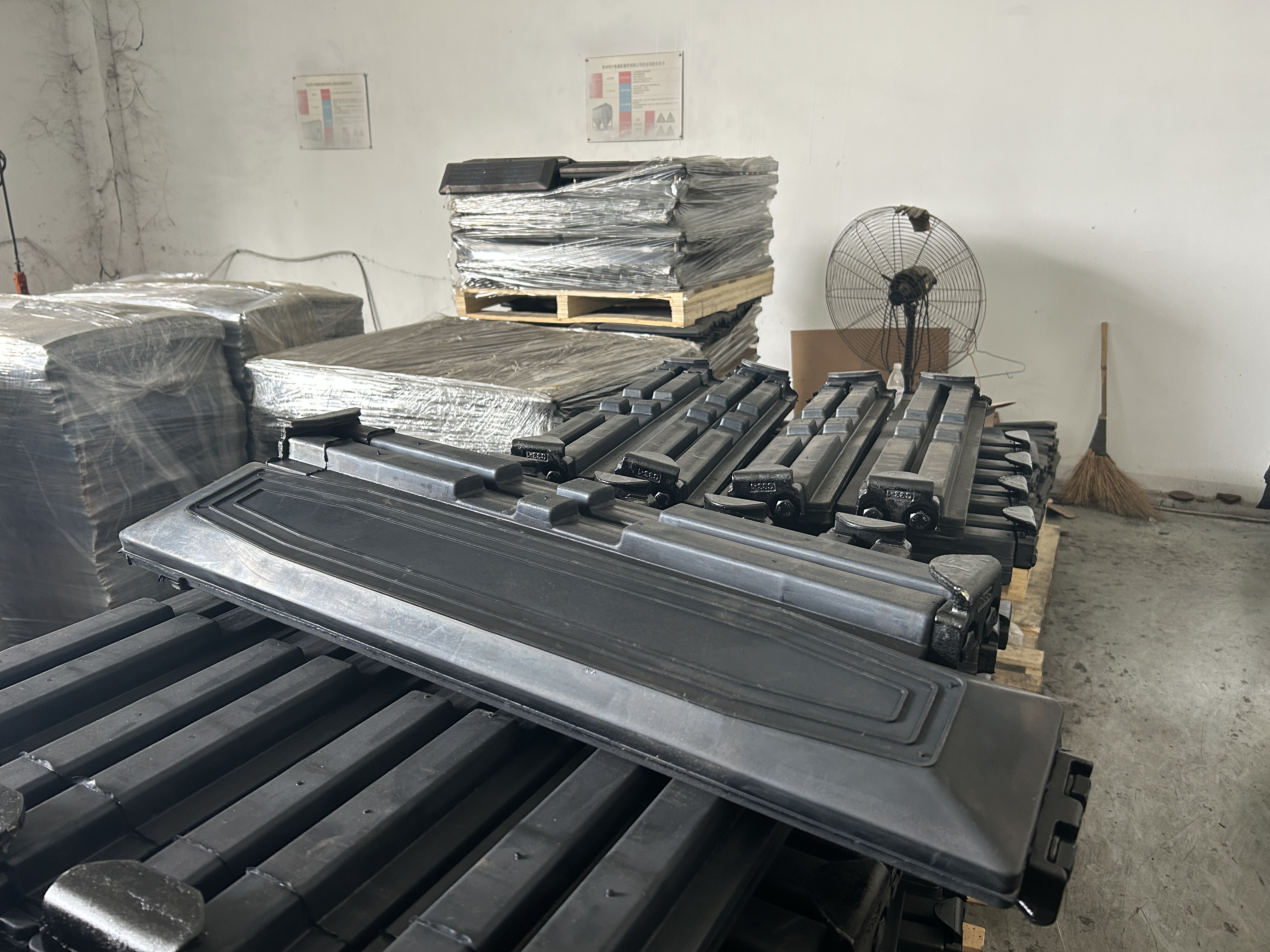
Defining 700mm Excavator Rubber Pads
When operating mid-to-large excavators in urban environments or on finished surfaces, bare steel tracks pose a massive risk to infrastructure. To mitigate this, operators rely on heavy-duty rubber track pads. Specifically, pads measuring 700mm in width offer an optimal balance of ground contact area and maneuverability for machinery in the 15- to 25-ton operating weight class. However, a 700mm width alone does not guarantee fitment; it is critical to explicitly verify comprehensive undercarriage dimensions with the OEM or pad supplier prior to procurement.
Key Specifications and Performance Requirements
To ensure equipment can withstand rigorous daily operations, the technical specifications of the rubber compounds utilized must be carefully scrutinized. High-quality 700mm pads typically feature a natural and synthetic rubber blend with a representative Shore A hardness rating between 70 and 80. While this specific hardness band generally ensures the material is yielding enough to grip smooth concrete yet tough enough to resist tearing from sharp debris, it serves as an industry benchmark rather than a universal constant.
Furthermore, thermal stability is required; pads should perform reliably in an operating temperature range spanning from -25°C to 65°C without turning brittle in the winter or overly soft under the summer sun. Tensile strength is another critical metric, with premium pads often cited as exceeding 15 MPa to prevent structural failure under the immense shearing forces generated during counter-rotations. All numerical specifications should be cross-referenced with manufacturer data sheets for the specific operating environment.
Machine, Track Shoe, and Application Compatibility
Compatibility extends beyond just matching the 700mm width; the pad must also align with the specific steel track shoe and the machine’s overall undercarriage geometry. When sourcing components, integrating specialized rubber pads requires confirming exact measurements, including bolt hole spacing, thread pitch, grouser height, and chain pitch. The pitch of the track chain—commonly 190mm or 216mm for this weight class—dictates how the pads articulate around the idlers and sprockets.
If the bolt hole spacing deviates even by a few millimeters on the steel grouser shoes, installation becomes impossible. The pad profile must also match the application: thicker, block-tread profiles are selected for waste management sites, while smoother, flatter profiles are chosen for delicate asphalt paving projects.
Comparing Mounting Styles and Durability
Selecting the correct attachment method and understanding wear dynamics are vital steps in optimizing an operational budget. Evaluating how the pads mount to the undercarriage is necessary, as this directly impacts both maintenance downtime and the structural integrity of the track system over time.
Bolt-On, Clip-On, and Chain-On Pad Options
There are three primary attachment styles commonly encountered in the field: bolt-on, clip-on, and chain-on. Bolt-on pads are fastened directly through pre-drilled holes in the steel shoe, offering the most secure fit but requiring compatible steel tracks. Clip-on pads utilize metal brackets that wrap around the edges of a standard steel shoe, which is ideal for machines lacking pre-drilled holes. Chain-on pads (also known as Roadliners) bolt directly to the track chain, entirely replacing the steel shoe.
| Mounting Style | Installation Time (per pad)* | Securement Level | Best Application Scenario |
|---|---|---|---|
| Bolt-On | 4 – 6 minutes | Very High | Permanent urban construction setups |
| Clip-On | 2 – 3 minutes | Moderate | Temporary jobs on finished surfaces |
| Chain-On | 5 – 8 minutes | Maximum | Dedicated roadwork / paving machines |
*Note: Installation times are illustrative estimates; actual timing depends heavily on crew experience and available tooling.
Crews frequently prefer bolt-on configurations for long-term projects because they eliminate the risk of the pad slipping off the shoe during aggressive side-loading maneuvers.
Wear Resistance, Traction, and Surface Protection
The primary justification for investing in rubber pads is surface protection, but traction and wear resistance are equally important. By expanding the footprint to 700mm, the machine’s overall ground bearing pressure can be reduced by up to 30% compared to standard bare steel shoes of a narrower width. However, actual pressure reduction depends heavily on total machine weight and specific undercarriage geometry. This reduction is critical when navigating over underground utilities or fresh pavement.
To maximize wear resistance, the rubber matrix is often reinforced with internal steel plates that prevent the pad from flexing excessively. This rigidity minimizes internal heat generation and prevents chunking. In terms of traction, the chamfered edges and deep grooved patterns channel water and mud away from the contact patch. This water-channeling benefit improves grip on slick surfaces, helping to keep 20-ton excavators stable on wet gradients (often cited up to 25 degrees under ideal conditions, though actual performance depends heavily on the reference surface and machine weight).
Sourcing, Installing, and Evaluating Pads
The final phase of integrating rubber pads into a fleet involves strategic procurement and rigorous installation protocols. Suppliers must be carefully vetted, and decisions between standard and premium tiers should align with project timelines and financial constraints.
Supplier Qualification and Installation Steps
When qualifying a new supplier, production capacity and quality assurance metrics are key indicators. For a fleet-wide upgrade, buyers might encounter illustrative terms such as a Minimum Order Quantity (MOQ) of 50 to 100 units, with lead times averaging 3 to 5 weeks for bulk international shipments. These figures serve only as examples, as actual supplier terms vary widely by region and manufacturer.
Once the pads arrive, maintenance teams must follow strict installation procedures. For bolt-on variants, ensuring the correct torque is non-negotiable; a torque specification often ranging from 120 to 150 Nm is applied to the fastening bolts, but operators must consult their machine’s specific service manual for exact values. Under-torquing leads to vibration-induced loosening, while over-torquing can fracture the internal steel core of the pad. A mandatory re-torquing inspection after the first 50 hours of operation is highly recommended to account for any initial seating and material compression.
Premium vs Standard Pad Selection
The decision between standard and premium pads ultimately comes
Key Takeaways
- Confirm more than the 700mm width by checking bolt spacing, thread pitch, grouser height, chain pitch, and OEM undercarriage data before purchase.
- Choose pads with rubber compounds suited to heavy work, such as Shore A hardness around 70 to 80 and tensile strength above 15 MPa where specified.
- Match the mounting style to the machine: bolt-on pads need pre-drilled shoes, while clip-on pads suit standard steel shoes without mounting holes.
- Select tread profiles by application, using thicker block patterns for abrasive sites and flatter profiles for asphalt, concrete, or finished surfaces.
- Verify temperature performance for local conditions, as quality pads should resist brittleness in cold weather and softening under high heat.
Frequently Asked Questions
What machines typically use 700mm excavator rubber pads?
They are commonly used on mid-to-large excavators in the 15- to 25-ton class, especially where steel tracks could damage asphalt, concrete, or finished surfaces.
Is 700mm width enough to confirm pad fitment?
No. You must also verify bolt hole spacing, thread pitch, grouser height, chain pitch, steel shoe profile, and OEM undercarriage specifications before ordering.
What rubber hardness is suitable for heavy-duty 700mm pads?
Many premium pads use a natural and synthetic rubber blend with a Shore A hardness around 70 to 80, balancing surface grip with tear resistance.
Which mounting style is most secure for 700mm rubber pads?
Bolt-on pads generally provide the most secure fit because they fasten directly through pre-drilled steel shoes, but they require compatible track shoes.
When should clip-on rubber pads be used?
Clip-on pads are useful when steel shoes do not have pre-drilled mounting holes, as their brackets wrap around the shoe edges for installation.
Post time: Aug-10-2026