Define Low Ground Pressure ASV Tracks
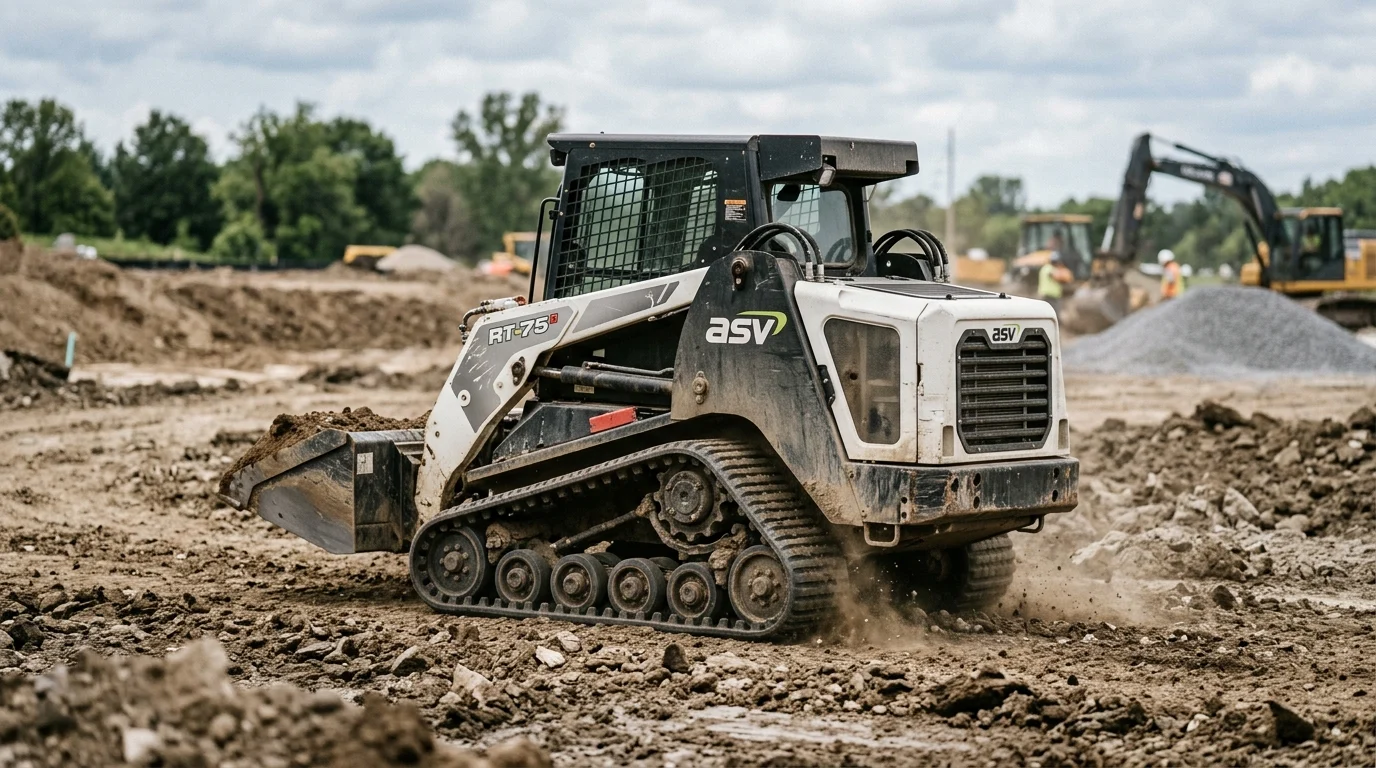
In heavy equipment operations, maximizing machine utilization across challenging terrains fundamentally relies on proper undercarriage configuration. When evaluating compact track loaders (CTLs) for sensitive or unstable surfaces, achieving a low ground pressure (LGP) footprint—typically between 2.5 and 4.5 psi for machines weighing 6,000 to 12,000 lbs—is a primary objective. It is important to distinguish between OEM tracks manufactured specifically for ASV machines—a specific OEM brand renowned for its Posi-Track undercarriage systems—and aftermarket tracks compatible with ASV undercarriages. Neither are generic upgrades applicable to any CTL fleet; they are machine-specific components designed to integrate with specialized suspension systems.
By distributing the machine’s operating weight evenly over a broader contact area, these specialized tracks can achieve exceptionally low ground bearing pressures (often under 3.5 psi), keeping machinery afloat on surfaces where standard equipment might sink or cause ecological rutting. Keep in mind that actual ground pressure calculations depend entirely on the specific machine’s operating weight and load distribution, not just the track width itself.
Track Design Factors That Improve Flotation
The superior flotation of these tracks stems directly from their internal engineering and the unique ASV Posi-Track single-rail suspended undercarriage. This open-rail architecture is the core reason ASV tracks are machine-specific and utilize an all-rubber and composite fiber construction rather than traditional steel cords. Unlike standard CTL tracks that are embedded with heavy steel, OEM ASV tracks—and premium aftermarket equivalents—are constructed with continuous aramid or Kevlar cords. This non-metal composite architecture eliminates significant unsprung weight from the undercarriage, often reducing track weight by 15% to 20% compared to steel-embedded equivalents.
While upgrading to a wider track profile (e.g., moving from a standard 15-inch to an 18-inch or 20-inch LGP width) expands the ground contact patch and reduces the pounds per square inch (psi) exerted on the soil, it is not an unqualified upgrade. Operators must account for specific operational trade-offs with extreme LGP widths. For example, while the machine’s rated hydraulic bucket breakout force remains a fixed specification, wider tracks can reduce effective traction or pushing grip during a dig cycle. Additionally, extreme LGP widths can reduce side-slope stability and increase tipping risk, which is a critical safety caveat for operators working on uneven terrain. Transport width restrictions on trailers (often capped at 80 to 84 inches without special permits) and potential frame interference must also be considered before upgrading.
Furthermore, the flexibility of the rubber compound and the absence of a rigid steel core allow the track to contour precisely to uneven terrain. Combined with specialized undercarriage suspension, this pliability ensures the track surface remains engaged with the ground, preventing the high-pressure point loading (which can exceed 6.0 psi on standard tracks) that typically fractures fragile topsoil or breaks through thin crusts of mud.
Operating Conditions That Require Low Ground Pressure
LGP track configurations are specified primarily when operating conditions strictly limit surface disturbance or demand extreme traction in saturated environments. Turf management, golf course construction, and residential landscaping require machines to traverse established lawns without tearing the root zones. In these applications, keeping ground pressure minimized prevents irreversible soil compaction. Conversely, it is important to note that these all-rubber and fiber ASV tracks are generally less suitable than steel-cord tracks for severe demolition or highly abrasive, rocky environments, where the risk of severing the composite cords increases, potentially reducing the typical 1,000- to 1,500-hour track lifespan by 30% to 50%.
Additionally, these tracks are highly effective in forestry, peat bogs, and snow clearing operations. In saturated mud or deep snow, tracks with higher ground pressures (typically 5.0+ psi) tend to dig downward, which can eventually cause the machine to high-center on its belly pan. The LGP design shifts machine behavior from digging in to floating over soft terrain, ensuring continuous forward momentum in challenging environments.
Compare ASV Track Options
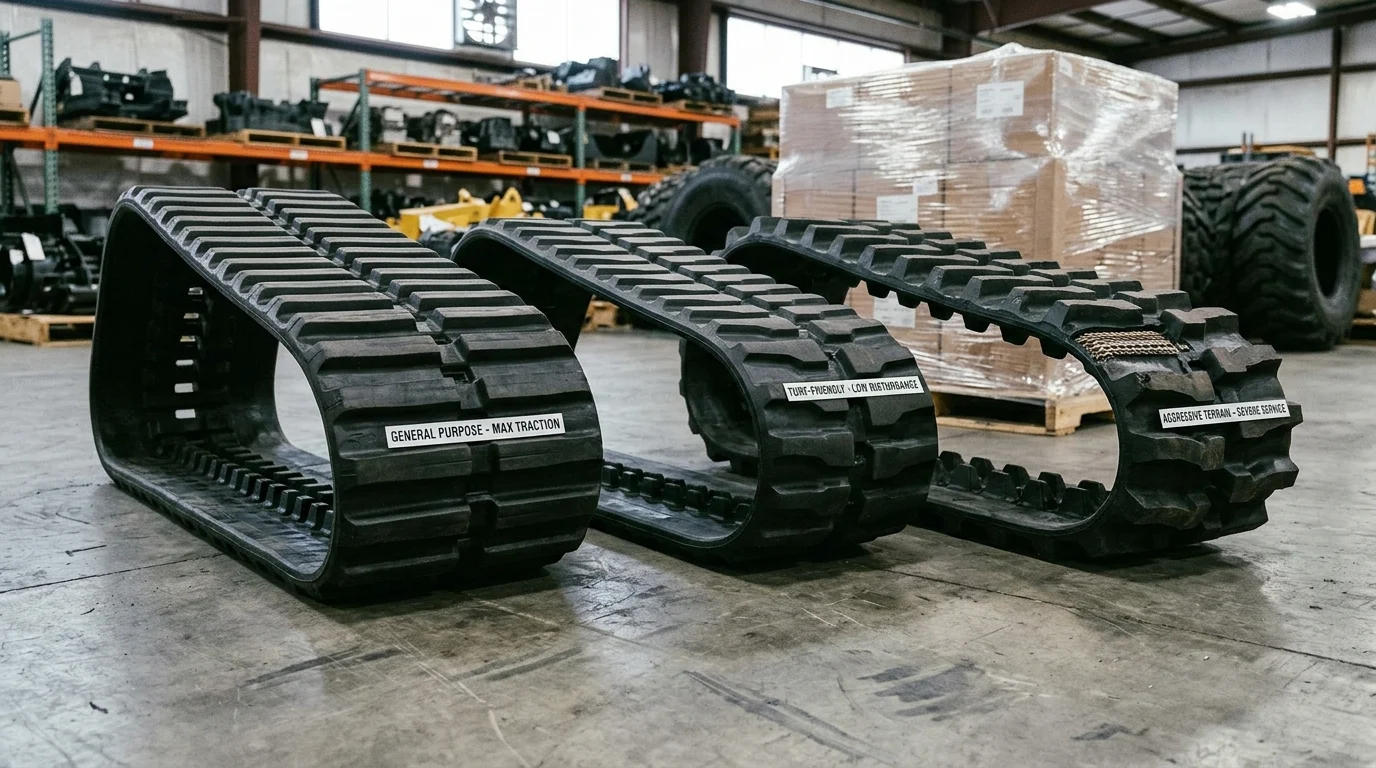
When it is time to replace undercarriage wear parts on compatible loaders, comparing available commercial offerings requires a rigorous evaluation of technical specifications. For instance, when sourcing from aftermarket suppliers offering ASV Tracks, equipment managers must balance upfront procurement costs against projected lifecycle hours (commonly 1,000 to 2,000 hours depending on application), ensuring that the chosen track aligns perfectly with the machine’s primary operating environment.
Key Specs: Pressure, Tread, Durability, and Fitment
To make informed purchasing decisions, evaluate four critical specifications: ground pressure metrics, tread pattern, structural durability, and exact fitment tolerances. Tread depth directly influences both traction and turf disturbance; a shallower block pattern (typically 15–20mm deep) minimizes tearing on sensitive turf, while a deeper bar pattern (25–35mm deep) maximizes grip in deep mud.
Because ground pressure is entirely dependent on machine operating weight, equipment managers should consult model-specific data rather than relying on universal baselines. Below is an illustrative comparison of how track configurations generally shift metrics for a given 8,000-lb machine:
| Track Configuration | Typical Width | Est. Ground Pressure (PSI) | Core Material | Est. Lifespan (Hours) | Primary Application |
|---|---|---|---|---|---|
| Standard CTL Track | 11–15 in | 4.5–6.0+ | Steel Cord | 1,000–1,500 | Gravel, Asphalt, Demolition |
| Premium LGP Track | 15–18 in | 3.0–4.5 | Kevlar / Aramid | 1,200–2,000 | Turf, Snow, Saturated Soil |
| Extreme LGP Track | 18–20 in | 2.5–3.0 | Kevlar / Aramid | 1,000–1,500 | Peat Bogs, Swamps |
Fitment is equally critical. The drive lug geometry must perfectly match the machine’s sprocket rollers to prevent derailment and minimize friction-induced wear. Buyers must verify exact ASV model series and production year compatibility before installation, as track lug geometry and undercarriage tolerances vary significantly across machine generations.
Aftermarket vs. OEM ASV Tracks
The debate between aftermarket and Original Equipment Manufacturer (OEM) tracks often dictates maintenance budgets. OEM tracks are engineered to the precise tolerances of the factory undercarriage, guaranteeing seamless integration and predictable wear rates. However, premium aftermarket options have advanced significantly in the past decade.
High-tier aftermarket tracks utilize
Source, Install, and Maintain ASV Tracks
In my years of managing heavy equipment procurement, I have found that sourcing high-quality ASV tracks is only half the battle. Maximizing their lifespan in demanding low ground pressure applications requires strict adherence to installation and maintenance protocols.
Inspection, Tensioning, Break-In, and Cleaning
Proper maintenance of ASV tracks directly dictates their operational ROI. Based on my field experience, I mandate a strict four-step maintenance protocol for all compact track loaders:
- Inspection: Daily checks must target the drive lugs and internal belting. I specifically look for premature rubber chunking or exposed cords, which indicate undercarriage misalignment.
- Tensioning: ASV undercarriages are highly sensitive to track tension. I always adhere to the manufacturer’s specified sag—typically around 1 to 1.5 inches at the center roller when the machine is elevated. Over-tensioning shreds drive sprockets, while under-tensioning inevitably leads to derailment.
- Break-In: New ASV tracks require a careful break-in period of approximately 50 hours. I advise operators to make gradual, sweeping turns rather than aggressive counter-rotations. This allows the fresh rubber compounds to condition properly against the undercarriage components.
- Cleaning: Debris buildup in the open-design undercarriage can physically stretch the track. Power-washing the roller frames daily prevents mud from drying, hardening, and expanding track tolerances.
Final ASV Track Selection Checklist
Before finalizing a purchase order for replacement ASV tracks, I run through a rigorous checklist to ensure compatibility with specific low ground pressure requirements:
- Pitch and Link Count: Verify the exact OEM dimensional specifications. A mismatched pitch will rapidly destroy the drive sprocket.
- Tread Pattern: Select a turf-friendly or all-season bar pattern based on the primary operating surface to balance necessary traction with minimal ground disturbance.
- Core Material: Confirm the presence of continuous Kevlar or specialized non-stretch polyester cording to prevent catastrophic snapping under heavy torque.
- Warranty Terms: Ensure the supplier provides a prorated warranty covering at least 1,000 hours of operation against structural manufacturing defects.
Key Takeaways
- Match ASV tracks to the exact machine and undercarriage design because they are not universal compact track loader upgrades.
- Use low ground pressure ASV track configurations when working on turf, wetlands, mud, or other sensitive surfaces where rutting and sinking must be minimized.
- Calculate ground pressure from machine operating weight, load distribution, and contact area rather than assuming track width alone determines flotation.
- Consider 18-inch or 20-inch LGP track widths for better flotation, but evaluate trade-offs in traction, side-slope stability, transport width, and frame clearance.
- Choose ASV-style tracks with flexible rubber and composite cord construction when reduced unsprung weight and terrain conformity are important performance factors.
Frequently Asked Questions
What makes ASV tracks suitable for low ground pressure applications?
ASV-style tracks spread machine weight across a larger contact area and work with the Posi-Track suspended undercarriage, helping keep ground pressure commonly in the 2.5 to 4.5 psi range on suitable machines.
Are ASV tracks compatible with any compact track loader?
No. ASV tracks are machine-specific components designed for ASV undercarriages or compatible ASV-style systems. They are not generic upgrades for all compact track loaders.
Do wider ASV tracks always improve performance?
Not always. Wider tracks can improve flotation, but they may reduce effective digging grip, affect side-slope stability, create transport-width issues, or cause frame interference if not matched to the machine.
How do ASV tracks reduce soil damage?
They use a broad, flexible rubber contact patch to distribute weight more evenly, reducing high-pressure point loading that can rut turf, fracture topsoil, or sink into saturated ground.
Why do many ASV tracks use aramid or Kevlar cords instead of steel?
Composite cords reduce undercarriage weight and improve flexibility compared with steel-embedded tracks, helping the track conform to uneven terrain and support low ground pressure performance.
Post time: Aug-18-2026