Why All-Rubber ASV Tracks Matter for Fleet Uptime
The operational efficiency of compact track loaders relies heavily on the integrity of their undercarriage systems. For machines utilizing specialized suspension systems, the transition toward all-rubber ASV tracks represents a significant leap in maximizing fleet availability and reducing total cost of ownership. By eliminating heavy, rigid components, these advanced tracks redefine how equipment interacts with challenging terrain.
ASV Tracks as uptime-critical components
Track integrity directly dictates machine availability. Fleet managers recognize that undercarriage components, particularly the tracks themselves, can account for up to 20% of a compact track loader’s lifetime operating expenses. When a track fails prematurely, operations face immediate halts, often resulting in 24 to 48 hours of unplanned downtime while replacement units are sourced and installed.
Furthermore, the logistical overhead of dispatching field service technicians to remote sites compounds the financial penalty of track failures. Utilizing advanced ASV tracks engineered specifically for high-speed, low-impact operations ensures that structural fatigue is minimized, thereby stabilizing project timelines and protecting profit margins.
All-rubber tracks versus steel-embedded alternatives
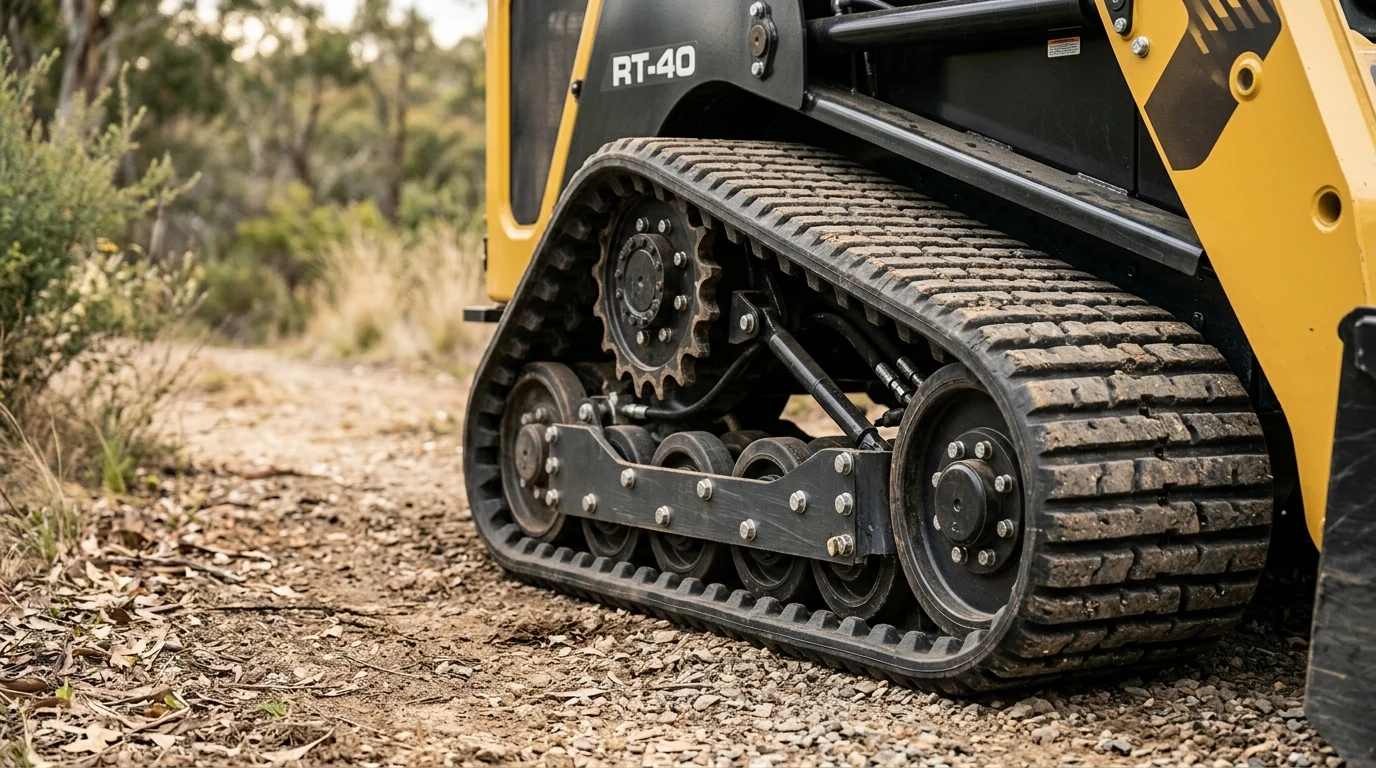
Traditional compact equipment relies heavily on steel-embedded tracks, which utilize metal cores to maintain rigidity. In contrast, all-rubber ASV tracks replace these rigid steel cores with advanced synthetic reinforcements. This fundamental architectural shift yields substantial benefits in weight reduction and ground disturbance.
Steel-embedded tracks typically weigh up to 30% more and exert ground pressures hovering between 4.5 and 5.5 psi. Conversely, purpose-built all-rubber ASV tracks distribute machine weight more effectively, achieving ground pressures as low as 3.0 psi. This lower metric is critical for accessing environmentally sensitive work sites, operating on turf without causing shear damage, and extending the operational window during wet weather conditions where heavier tracks would sink or cause rutting. The reduction in unsprung mass not only improves fuel economy but also reduces strain on the hydrostatic drive motors, extending the intervals between major powertrain overhauls.
Key Design Factors in ASV Track Performance

Optimizing compact track loaders for diverse environments requires a deep understanding of track architecture. The performance differential between standard aftermarket tracks and premium ASV tracks stems from rigorous engineering applied to the tread pattern, the internal carcass, and the material chemistry.
Tread geometry, rubber compound, and carcass construction
The structural foundation of an all-rubber track abandons traditional steel in favor of high-tensile synthetic materials. Premium ASV tracks utilize multiple layers of advanced poly-cords or aramid fibers, which provide exceptional longitudinal strength without the vulnerability to rust that plagues steel cords when the outer rubber is compromised. These synthetic reinforcements achieve tensile strengths exceeding 15,000 pounds per inch of width.
Surrounding this synthetic carcass is a highly specialized rubber compound. Manufacturers blend natural rubber for tear resistance with synthetic polymers designed to withstand UV degradation and chemical exposure. This precise chemical engineering ensures the track retains its specified durometer rating across extreme temperature fluctuations, preventing brittle cracking in winter and excessive softening during peak summer operations.
Comfort, traction, durability, and cost comparisons
The absence of a rigid steel core drastically alters the machine’s dynamic performance, directly influencing both operator well-being and mechanical longevity. All-rubber construction allows the track to flex seamlessly around the undercarriage rollers, absorbing kinetic energy rather than transmitting it to the chassis. This flexibility reduces operator vibration by up to 40%, a critical ergonomic factor that limits fatigue during standard 10-hour operating shifts.
| Specification | All-Rubber ASV Tracks | Steel-Embedded Tracks |
|---|---|---|
| Core Material | High-tensile poly-cord / Aramid | Steel links and cords |
| Ground Pressure | ~3.0 – 3.5 psi | ~4.5 – 5.5 psi |
| Vibration Transfer | Low (High shock absorption) | High (Rigid impact) |
| Corrosion Risk | Zero | High (if rubber tears) |
| Initial Procurement Cost | Premium (+15-20%) | Standard Base Cost |
While the initial procurement cost for specialized all-rubber ASV tracks may carry a 15% to 20% premium over conventional steel-embedded alternatives, the investment is offset by a reduction in undercarriage wear and extended service intervals. Traction is also enhanced, as the pliable rubber conforms to micro-irregularities in hardscapes, generating superior grip without the abrasive damage associated with rigid steel tracks.
How to Specify, Source, and Maintain ASV Tracks
Maximizing the return on investment for undercarriage components requires strategic procurement and stringent operational oversight. Fleet operators must align track specifications with anticipated terrain profiles while implementing rigorous preventative maintenance schedules.
Matching track selection to terrain and machine usage
Selecting the optimal ASV tracks involves evaluating the primary operational environment and analyzing historical wear data. Tread geometry dictates both traction capabilities and wear rates across different surfaces. For instance, aggressive bar-style tread patterns increase traction in mud and loose dirt by approximately 25%, making them ideal for heavy excavation, landscaping, or forestry applications.
However, operating these aggressive profiles on abrasive hardscapes like concrete or asphalt accelerates wear, potentially reducing the track’s lifespan by 15% to 20% compared to a block-pattern tread. Block patterns maximize the surface area in contact with the ground, ensuring smoother operation and extended durability on paved surfaces. Fleet managers must audit their equipment utilization ratios to specify the correct tread geometry for their specific application mix.
Supplier qualification and maintenance best practices
Procurement strategy and routine maintenance are equally vital to long-term undercarriage performance. When sourcing ASV tracks, fleet managers should qualify suppliers based on warranty terms, compound transparency, and logistical reliability. Supplier qualification should mandate rigorous batch testing for rubber compound consistency, as variations in durometer hardness directly impact field performance. Commercial lead times for bulk procurement typically range from 4 to 6 weeks, necessitating accurate inventory forecasting to avoid costly stockouts.
Once installed, operational longevity depends heavily on maintaining correct track tension. Operators must ensure tension levels allow for approximately 1.0 to 1.5 inches of sag at the center roller.
Key Takeaways
- Treat ASV tracks as uptime-critical components because undercarriage parts can account for up to 20% of a compact track loader’s lifetime operating costs.
- Choose all-rubber ASV tracks when lower ground pressure matters, as they can reduce pressure to about 3.0 psi compared with 4.5 to 5.5 psi for many steel-embedded alternatives.
- Use synthetic-reinforced track construction to avoid rust-related cord damage and support tensile strengths exceeding 15,000 pounds per inch of width.
- Match tread geometry and rubber compound to the jobsite to improve traction, ride comfort, and resistance to tearing, UV exposure, chemicals, and temperature swings.
- Plan replacements before failure because a premature track breakdown can stop production for 24 to 48 hours while parts and service support are arranged.
Frequently Asked Questions
Why are all-rubber ASV tracks important for compact track loader uptime?
Tracks directly affect machine availability, and undercarriage parts can represent up to 20% of lifetime operating costs. Durable all-rubber ASV tracks help reduce premature failures, unplanned downtime, and costly field service calls.
How do all-rubber ASV tracks differ from steel-embedded tracks?
All-rubber ASV tracks replace rigid steel cores with synthetic reinforcements such as poly-cords or aramid fibers. This reduces weight, lowers ground pressure, resists rust-related damage, and improves ride comfort on sensitive or uneven terrain.
What ground pressure advantage can all-rubber ASV tracks provide?
Steel-embedded tracks often exert about 4.5 to 5.5 psi, while purpose-built all-rubber ASV tracks can achieve ground pressures as low as 3.0 psi. Lower ground pressure helps reduce rutting and turf damage.
Can better ASV rubber tracks help reduce drivetrain stress?
Yes. Lighter all-rubber construction reduces unsprung mass, which can ease strain on hydrostatic drive motors. That may support better fuel efficiency and longer intervals between major powertrain service events.
What materials improve ASV track durability?
Premium ASV tracks use layered synthetic reinforcement for tensile strength, plus rubber compounds blended for tear resistance, UV stability, chemical resistance, and consistent durometer performance across hot and cold operating conditions.

Post time: Jun-25-2026