
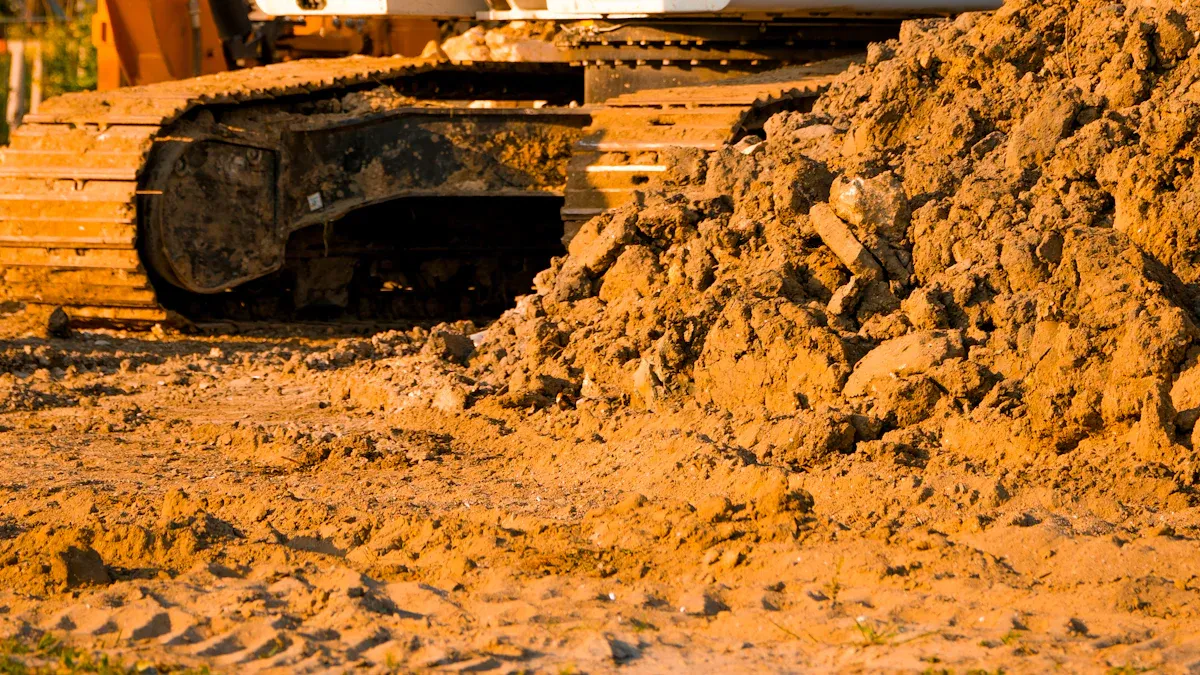
An excavator is a powerful construction machine. It performs digging, demolition, and material handling tasks efficiently. Its main components include the undercarriage, house, and workgroup. The undercarriage provides stability and mobility, featuring robust excavator tracks for navigating various terrains.
Key Takeaways
- An excavator has three main parts: the undercarriage, the house, and the workgroup. Each part helps the machine do different jobs.
- The undercarriage helps the excavator move and stay steady. The house holds the engine and the driver’s cab. The workgroup does the digging and lifting.
- New excavators in 2025 use smart technology. This helps them dig better and work more quietly. It also helps them be better for the environment.
The Foundation: Undercarriage and Excavator Tracks
Understanding Excavator Tracks
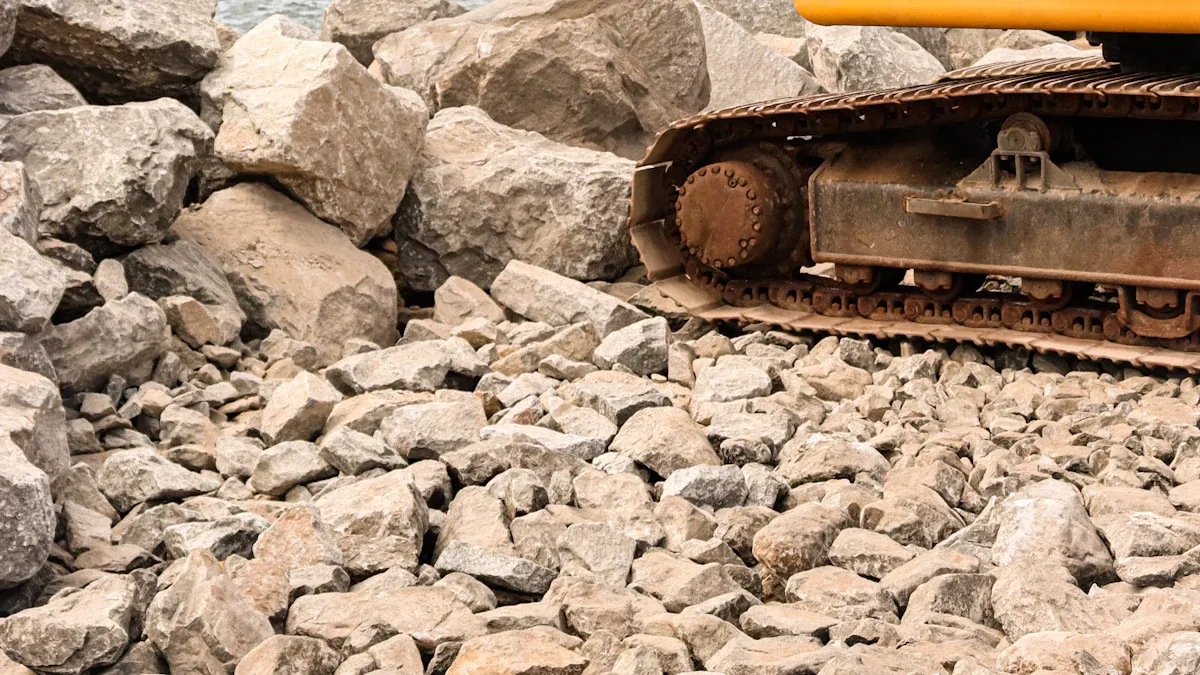
Excavator tracks are essential for machine movement. They provide excellent traction across diverse terrains. These tracks distribute the excavator’s substantial weight. This prevents the machine from sinking into soft ground. Operators choose between different types of excavator tracks. Steel tracks offer superior durability for harsh, rocky environments. Rubber tracks are suitable for sensitive surfaces like asphalt or concrete. They also reduce noise and vibration during operation.
Track Frame and Components
The track frame forms the robust foundation of the undercarriage. It supports the entire track system. Several critical components attach to this frame. Idlers are at the front of the track frame. They guide the track chain smoothly. Sprockets are at the rear. They drive the track chain forward or backward. Upper rollers support the top portion of the track. Lower rollers support the bottom portion. These lower rollers carry the machine’s heavy weight. Track links connect to form the continuous track chain. Track shoes bolt onto these links. These shoes make direct contact with the ground. Proper alignment and maintenance of these parts ensure the longevity of the excavator tracks.
Drive System and Mobility
The drive system powers the excavator’s movement. A hydraulic motor drives the sprocket. This motor connects to a final drive assembly. The final drive multiplies torque. It then turns the sprocket. The sprocket engages the track links. This action moves the entire set of excavator tracks. Operators control the machine’s speed and direction. This system allows precise maneuvering in tight spaces. Regular maintenance of the drive system is crucial. It ensures reliable mobility and efficient operation on any job site.
The Core: House, Engine, and Operator’s Cab
The excavator’s house sits on top of the undercarriage. It contains the engine, hydraulic system, and operator’s cab. This section forms the machine’s operational heart. It allows the excavator to perform its various tasks.
The Rotating House and Swing Drive
The house is the main body of the excavator. It houses all the critical operational components. This entire structure rotates 360 degrees. A powerful swing drive system makes this rotation possible. The swing drive consists of a hydraulic motor and a gearbox. This system connects to a large gear ring. The gear ring sits on the undercarriage. The swing drive allows the operator to position the workgroup precisely. Operators can dig, lift, and dump materials without moving the entire machine. This feature greatly increases efficiency on the job site.
Engine and Hydraulic Systems
The engine is the excavator’s power source. Most excavators use a diesel engine. This engine generates the necessary power for all machine functions. It drives a hydraulic pump. The hydraulic pump is a crucial component. It creates high-pressure hydraulic fluid. This fluid travels through a network of hoses and valves. The hydraulic system then converts this fluid pressure into mechanical force. It powers the boom, arm, bucket, and tracks. It also operates the swing drive. Modern excavators feature advanced hydraulic systems. These systems offer better fuel efficiency and precise control. They also reduce emissions.
Operator’s Cab and Controls
The operator’s cab is the command center. It provides a safe and comfortable environment for the operator. Modern cabs feature ergonomic designs. They include air conditioning and heating. They also have advanced display screens. These screens show vital machine information. The operator uses joysticks and foot pedals to control the excavator.
- Joysticks: Operators use these to control the boom, arm, bucket, and swing functions.
- Foot Pedals: These control the track movement and other auxiliary functions.
The cab also contains various switches and buttons. These manage lights, wipers, and other machine settings. Good visibility is essential. Large windows and rearview cameras help the operator see the work area clearly. This ensures safe and efficient operation.
Tip: Regular cleaning and inspection of the cab’s controls prevent malfunctions. This keeps the operator safe and productive.
The Working End: Boom, Arm, and Attachments in 2025
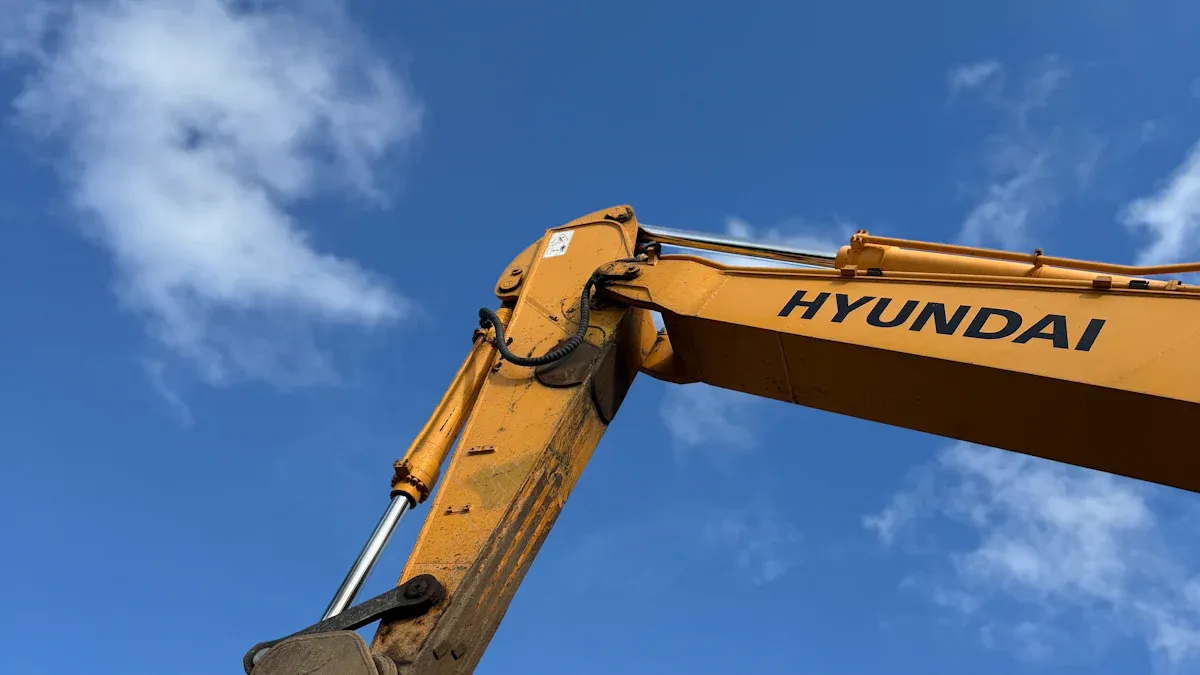
The workgroup is the part of the excavator that performs the actual digging and lifting. It connects to the house and moves materials. This section includes the boom, arm, and various attachments.
Boom and Arm Assemblies
The boom is the large, primary arm that extends from the excavator’s house. It provides the main reach. The arm, also called the dipper stick, connects to the end of the boom. It offers additional reach and digging depth. Hydraulic cylinders control the movement of both the boom and the arm. These cylinders push and pull, allowing precise positioning. Operators use these components to lift heavy loads and dig deep trenches. Strong steel construction ensures durability for tough jobs.
Buckets and Specialized Attachments
Excavators use many different attachments. The bucket is the most common. Operators choose buckets based on the task.
- Digging buckets: These have sharp teeth for breaking ground.
- Trenching buckets: They are narrow for digging precise trenches.
- Grading buckets: These are wider for leveling surfaces.
Beyond buckets, specialized attachments expand an excavator’s capabilities.
Example: A hydraulic hammer breaks concrete or rock. A grapple handles demolition debris or logs. An auger drills holes for foundations. These tools make excavators highly versatile machines.
2025 Innovations in Workgroup Technology
Innovations in 2025 focus on smarter and more efficient workgroups. Manufacturers integrate advanced sensors into booms and arms. These sensors provide real-time data on digging depth and angle. This helps operators achieve greater accuracy. Automated grading systems are becoming standard. They guide the bucket to exact specifications. Electric and hybrid attachments also gain popularity. They reduce emissions and noise on job sites. These advancements improve productivity and environmental performance.
Understanding excavator parts is essential for efficient operation and proper maintenance. Modern advancements in 2025 enhance machine performance, safety, and sustainability. Operators should continuously learn about new technologies. This ensures they use excavators to their full potential.
FAQ
What are the three main parts of an excavator?
An excavator has three main parts. These include the undercarriage, the house, and the workgroup. Each part performs specific functions for the machine.
Why do excavators have different types of tracks?
Excavators use different tracks for various terrains. Steel tracks work best on rough ground. Rubber tracks protect sensitive surfaces and reduce noise. Operators choose tracks based on the job site.
What is the purpose of the excavator’s swing drive?
The swing drive allows the excavator’s house to rotate 360 degrees. This helps the operator position the boom and arm precisely. It increases efficiency by letting the machine dig and dump without moving the entire unit.

Post time: Oct-29-2025