Rubber Track Pads in Predictive Maintenance
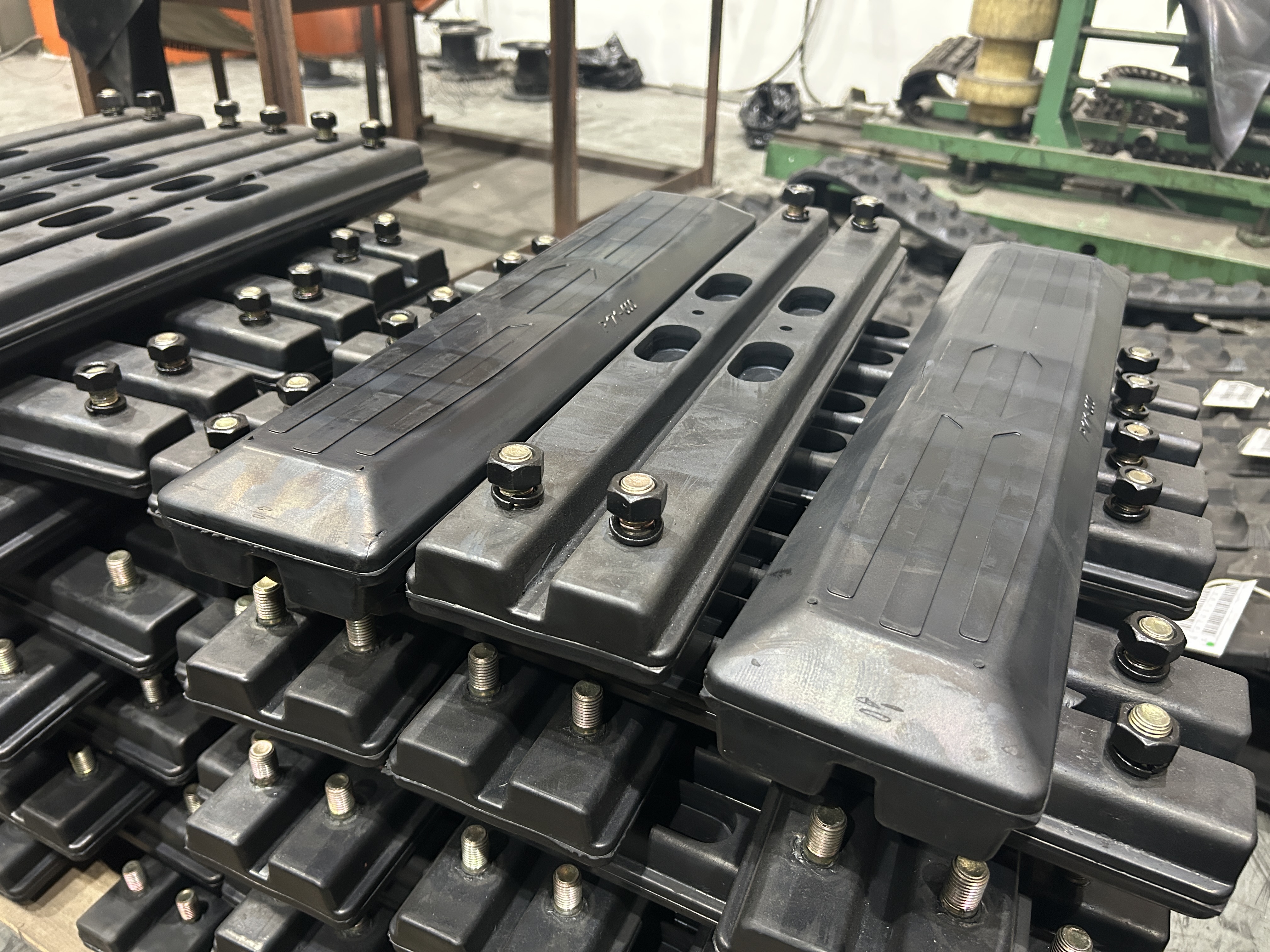
When managing heavy equipment fleets, undercarriage maintenance can represent a significant portion—often estimated at up to 50%—of total maintenance costs for tracked machinery. The sheer cost of replacing sprockets, idlers, and chains makes shifting from reactive repairs to predictive maintenance essential for preserving profit margins. Integrating high-quality rubber track pads into compact-to-mid-size excavators provides a critical protective buffer for urban and paving applications. (It should be noted that large mining or dozer fleets operate under different predictive models where steel grousers dominate.) For applicable machines, these pads safeguard both the costly internal components and finished surfaces prone to damage. While rubber wear serves as a highly visible diagnostic tool that reveals wear patterns long before catastrophic failure occurs, it is only one input in a broader predictive maintenance framework. Track tension, alignment, and contamination remain primary drivers of internal undercarriage wear independent of pad condition.
How Rubber Track Pads Affect Wear Management
When evaluating undercarriage longevity, a primary focus is on shock absorption. Bare steel tracks transfer intense, high-frequency shockwaves directly into the track rollers, idlers, and final drive gears. By outfitting machinery with engineered rubber pads, operators can dampen these destructive vibrations significantly. Some unverified fleet estimates suggest a reduction in peak vibration amplitude by up to 40%, though this metric varies widely based on machine weight, terrain, and OEM specifications. This mechanical dampening drastically slows the degradation of internal seals and bearings. Consequently, the maintenance strategy shifts from mitigating fatigue failure in steel undercarriage components to monitoring the gradual degradation of the rubber compound, which typically lasts 1,000 to 1,500 operating hours in standard applications.
Crucially, as the rubber tread thickness decreases over time, shock transmission to the rollers and idlers increases. By plotting this external wear rate, fleet managers can forecast internal component fatigue and schedule maintenance before internal damage occurs. Additionally, reducing vibration significantly lowers operator fatigue, leading to safer and more efficient daily operations.
However, certain limitations must be weighed to properly assess applicability and adjust maintenance plans accordingly:
- Traction Loss: Reduced off-road grip in deep mud or loose soil requires more frequent tread depth inspections before wet-season deployments.
- Thermal Degradation: Accelerated wear or compound breakdown in high-heat environments forces shortened inspection intervals to catch premature hardening.
- Hardware Incompatibility: Potential fitment issues with specific grouser profiles necessitate strict baseline torque checks immediately after installation.
Early Failure Signals to Monitor
Predictive maintenance relies on catching physical anomalies early. Field technicians should be trained to identify three primary failure signals: chunking, edge tearing, and delamination. Chunking occurs when fragments detach after encountering sharp debris, while delamination points to a failure in the vulcanized steel-to-rubber bond. Establishing internal operational thresholds provides recommended baselines. As an illustrative example from a specific fleet policy, a unit might be flagged if more than 20% of a single pad’s surface area is missing, or if the primary tread depth drops below a 10-millimeter safety limit. While these are helpful illustrative guidelines, they must always be validated against the equipment’s OEM manual and industry-agnostic ranges. Catching these signals early allows for targeted replacements, preventing exposed steel cores from damaging paved client sites or accelerating wear on the underlying grousers.
Key Rubber Track Pad Specifications
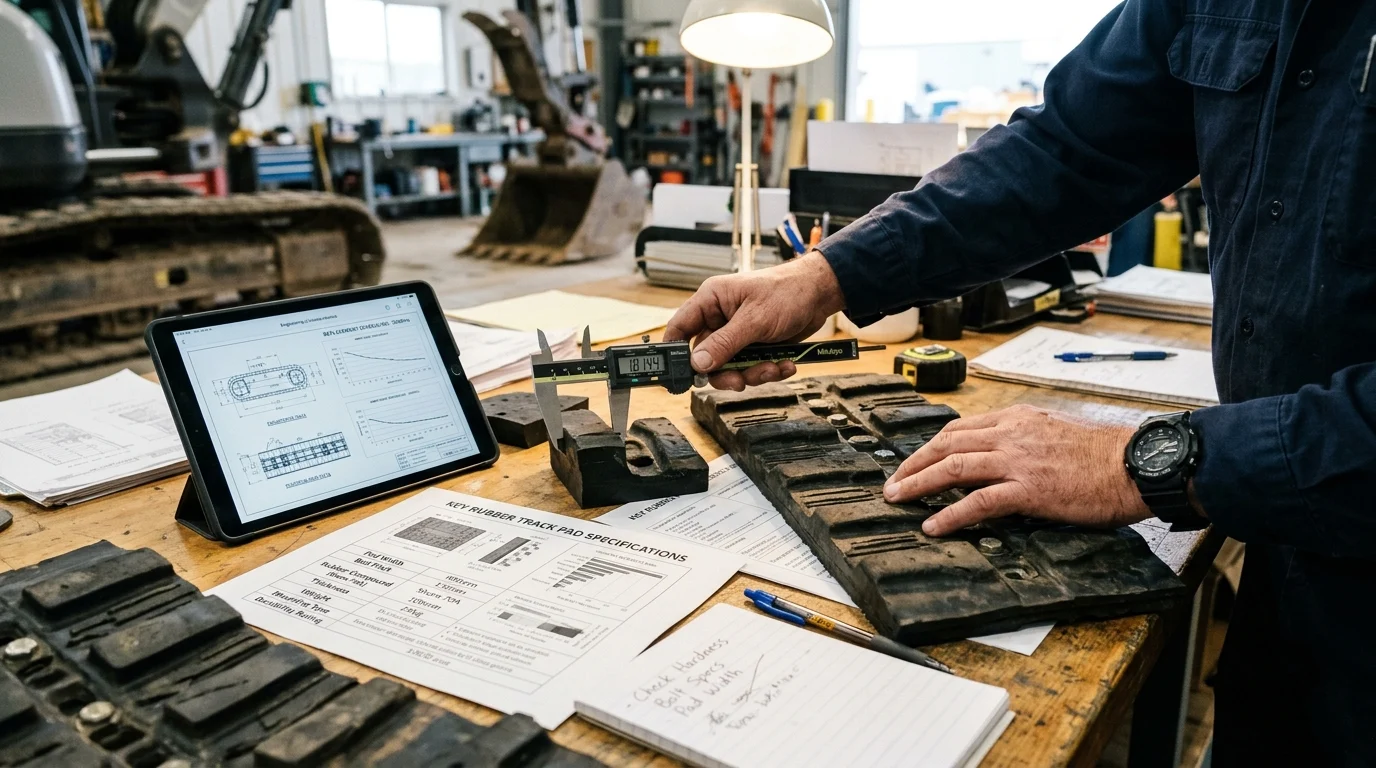
To maximize the predictability of maintenance cycles, specifying the correct pad design and material composition from the beginning is essential. Selecting an inappropriate specification can skew lifecycle forecasts and increase the risk of premature failure.
Bolt-On, Clip-On, and Chain-On Pad Comparison
Fleet managers typically choose between three primary mounting configurations based on operational demands: bolt-on, clip-on, and chain-on. Each style presents a unique profile for installation efficiency and retention reliability.
| Pad Type | Estimated Installation (per pad)* | Optimal Fleet Application | Retention Characteristics* |
|---|---|---|---|
| Bolt-On | 4–6 minutes | Pre-drilled steel grouser shoes | Excellent (Resists high-torque lateral shear) |
| Clip-On | 1–3 minutes | Temporary urban use on steel tracks | Moderate (Prone to shifting under heavy side-loads) |
| Chain-On | 6–8 minutes | Direct mounting to the track chain | High (Direct mount minimizes slippage) |
*Note: Installation times and retention characteristics are fleet-specific observations based on standard shop conditions and may vary by machine size, technician experience, and operating environment.
For long-term predictive models in consistent environments, bolt-on pads are heavily favored. Although clip-on variants save upfront labor time, bolt-on pads offer superior retention. This stability minimizes the unpredictable variable of pads slipping or dislodging during high-torque lateral maneuvers, ensuring wear data remains highly consistent across the machine’s operational lifespan. However, bolt-on pads are not a universal solution. Clip-on pads are objectively superior for fleets that frequently transition between urban asphalt and raw dirt; their rapid removal prevents the pads from being destroyed in off-road conditions where they aren’t needed, preserving the integrity of the predictive model. Similarly, chain-on pads configurations are optimal for dedicated machines where steel grousers are entirely unnecessary, providing a highly consistent wear profile without grouser interference.
Material, Hardness, Tread, and Bonding Quality
Beyond the mounting style, rigorously evaluating the physical properties of the pad is critical. The rubber compound must strike a precise balance between abrasion resistance and structural flexibility. As an illustrative internal standard for a specific fleet, manufacturing partners are often required to supply pads with a verified Shore A hardness rating between 75 and 85. Softer compounds wear out prematurely on highly abrasive asphalt, whereas harder compounds become brittle and susceptible to chunking in sub-zero climates. Furthermore, a sample fleet baseline typically targets a minimum tensile strength of 15 MPa, though ideal metrics will always vary by climate and OEM. Demanding a forged steel core subjected to specialized adhesive vulcanization reduces the likelihood of the rubber shearing off when a 20-ton excavator pivots on an incline.
Rubber Track Pad Inspection and Replacement Plan
Even the highest-specification materials require a structured auditing protocol to yield actionable data.
Key Takeaways
- Track undercarriage maintenance can account for up to 50% of total maintenance costs, so replacing reactive repairs with predictive inspections can protect fleet margins.
- Measure rubber tread depth regularly because thinning pads transfer more shock to rollers, idlers, seals, bearings, and final drive components.
- Use 1,000 to 1,500 operating hours as a planning range for rubber track pad life, then adjust intervals based on terrain, heat, machine weight, and operator behavior.
- Train technicians to document chunking, edge tearing, and delamination because these visible defects often appear before major internal undercarriage failure.
- Set clear replacement triggers, such as more than 20% missing pad surface or tread depth below 10 millimeters, to standardize maintenance decisions.
- Verify fitment and baseline torque after installation because hardware incompatibility and loose fasteners can shorten pad life and distort wear data.
Frequently Asked Questions
How do rubber track pads support predictive maintenance?
They make wear easier to see and measure. By tracking tread depth, chunking, tearing, and delamination over time, fleet managers can forecast when undercarriage components may face higher shock loads and schedule service before costly failures occur.
How long do rubber track pads typically last?
In standard applications, rubber track pads often last about 1,000 to 1,500 operating hours. Actual service life depends on machine weight, terrain, heat exposure, operator habits, and whether track tension and alignment are maintained correctly.
What are the main failure signs to inspect?
Technicians should look for chunking, edge tearing, delamination, uneven tread wear, and thinning tread depth. These signs can indicate sharp-debris impact, bond failure, misalignment, or increasing shock transfer to rollers, idlers, and other undercarriage parts.
Can rubber track pads reduce undercarriage wear?
Yes, they can help absorb vibration and reduce direct shock transfer from steel tracks to rollers, idlers, bearings, and final drive components. However, they do not replace proper tension checks, alignment inspections, and contamination control.
When should a worn pad be flagged for replacement?
Fleet policies vary, but one practical baseline is to flag a pad when more than 20% of its surface is missing or when tread depth falls below about 10 millimeters. Thresholds should be adjusted for machine type and jobsite risk.
Post time: Aug-14-2026