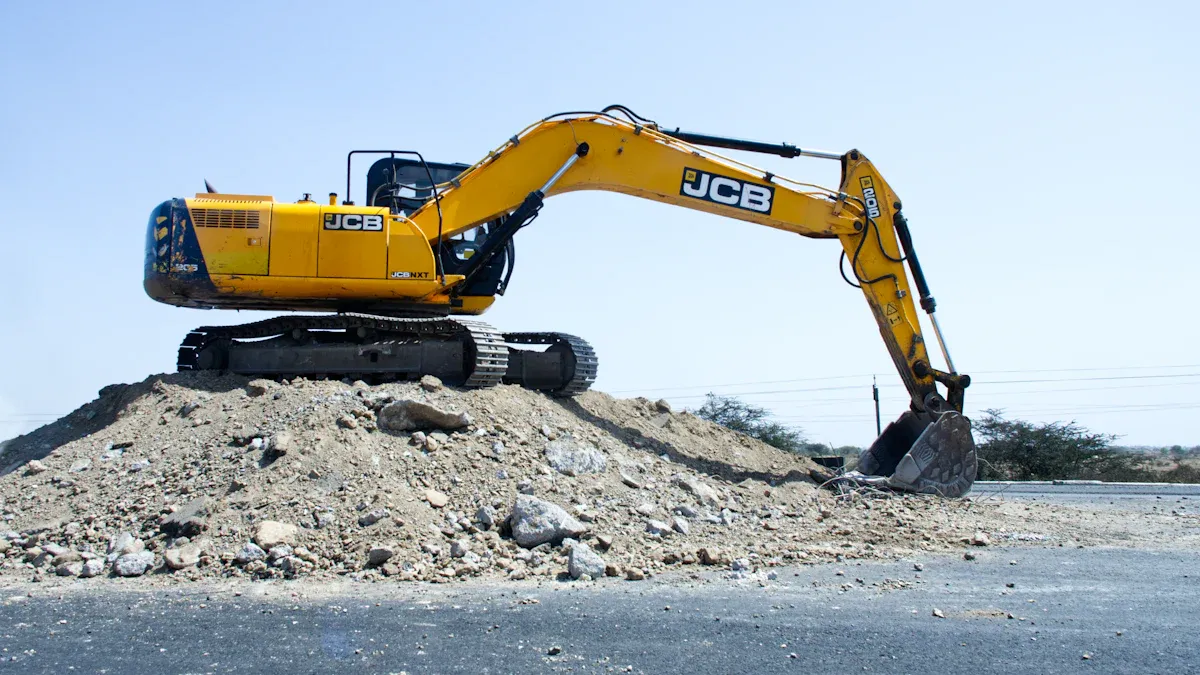
I have observed that incorrect track tension is a primary reason excavator tracks come off. Worn or damaged undercarriage components frequently lead to excavator tracks de-tracking. Improper operating techniques also significantly contribute to Excavator rubber tracks coming off. I understand addressing these critical factors helps maintain operational efficiency.
Key Takeaways
- Proper track tension is very important. Too loose or too tight tracks cause problems. Always check your excavator’s manual for the right tension.
- Worn parts like idlers, sprockets, and rollers make tracks come off. Check these parts often for damage. Replace them when they are worn out.
- Operating an excavator carefully helps keep tracks on. Avoid rough terrain and sudden turns. Clean debris from the tracks regularly.
Understanding Excavator Tracks Tension Issues
I know proper track tension is crucial for excavator performance. Incorrect tension often leads to significant operational problems. I have seen firsthand how it impacts efficiency and component longevity.
The Dangers of Loose Excavator Tracks
I have observed that loose tracks present several serious hazards. A loose chain can easily detach from the guide wheel when the machine encounters obstacles or makes sharp turns. This causes derailment and requires significant downtime for troubleshooting. I also notice structural vibration. The constant hitting of the chain against the side plate creates stress concentration. This can lead to cracks in the chassis side plate over time.
On soft soil or slopes, a loose chain reduces grip. This leads to increased ‘slippage’ and decreases construction efficiency. I find unstable operation is another major issue. Loose tension causes the chain to ‘swing’. This results in the machine shaking. It significantly reduces the accuracy of the excavator arm. This can cause project delays, especially in fine construction work. Furthermore, improperly maintained or adjusted idlers can lead to loose tracks. This increases the likelihood of slippage. Loose tracks not only decrease productivity but also contribute to faster wear of the entire undercarriage system.
The Risks of Over-Tensioned Excavator Tracks
I have also seen the problems that arise from over-tensioned tracks. When tracks are too tight, they create excessive strain on critical components. This includes bushings and idlers. This condition also results in higher fuel consumption. I know adhering to manufacturer-recommended tension settings is crucial. This prevents these costly issues. Over-tensioning puts unnecessary stress on the undercarriage. This accelerates wear on sprockets, rollers, and track links. It can lead to premature component failure.
Achieving Optimal Excavator Tracks Tension
I believe achieving optimal track tension is essential for machine health and operational efficiency. I always recommend consulting the excavator’s operator manual first. This manual provides specifications tailored to the specific make and model of the machine. It ensures accurate tensioning. I also find contacting a local dealer can provide further assistance in determining the correct track tension. While specific manufacturer-specified tension ranges are not universally provided, a general guideline for rubber tracks suggests an ideal sag of 10-30 mm. However, this range depends on the specific excavator model. This reinforces the need to refer to the manufacturer’s guidelines for precise specifications.
I follow a clear procedure for measuring and adjusting track tension.
- Prepare the Excavator: I park the machine on a level surface. I engage the parking brake. I turn off the engine and allow it to cool. I also chock the wheels for safety.
- Locate the Track Adjustment Mechanism: I find the grease fitting and track adjuster cylinder on the undercarriage side. I refer to the operator’s manual for the exact location.
- Measure the Current Track Tension: I use a track tension gauge between the track and drive sprocket/idler. I take multiple measurements. I compare them with the recommended tension in the operator’s manual.
- Adjust the Track Tension:Recheck the Track Tension: After adjustments, I recheck with the gauge. I make further adjustments as needed.
- If the track is too loose, I add grease to the track adjuster cylinder with a grease gun. I continue until I reach the recommended tension. I use a wrench to turn the adjustment bolt. I turn it clockwise to increase tension.
- If the track is too tight, I slightly loosen the grease fitting. This releases grease until I reach the recommended tension.
- To decrease track tension, I loosen the bleed valve on the adjuster cylinder to release grease. I monitor the release and stop when I achieve the desired sag. I tighten the bleed valve when done.
- Test the Excavator: I lower the excavator. I remove the chocks. I start the engine. I test movement to ensure smooth operation without excessive noise or vibration.
For mini excavators, I measure track sag differently. For single flanged inner bottom rollers, I measure the track sag distance from the bottom of the roller to the inner ridge of the rubber track. For single flanged outer bottom rollers, I measure the track sag distance from the flange of the bottom roller to the rubber track surface. To adjust tension on mini excavators, I locate the grease valve access hole in the track frame and remove its cover. To loosen tracks, I turn the grease valve counterclockwise with a wrench or deep socket until grease comes out. To tighten tracks, I pump grease through the grease nipple with a grease gun. As a final step, I rotate the tracks forward and backward for 30 seconds. I then recheck the sag clearance. The process for adjusting tension on steel tracks is similar.
I know why proper track tension matters. Incorrect tension leads to premature wear on components like sprockets, idlers, and rollers. Loose tracks may derail. Overly tight tracks strain the undercarriage. Regular adjustment ensures smoother operation. It also maximizes track life.
Critical Undercarriage Components Affecting Digger Tracks
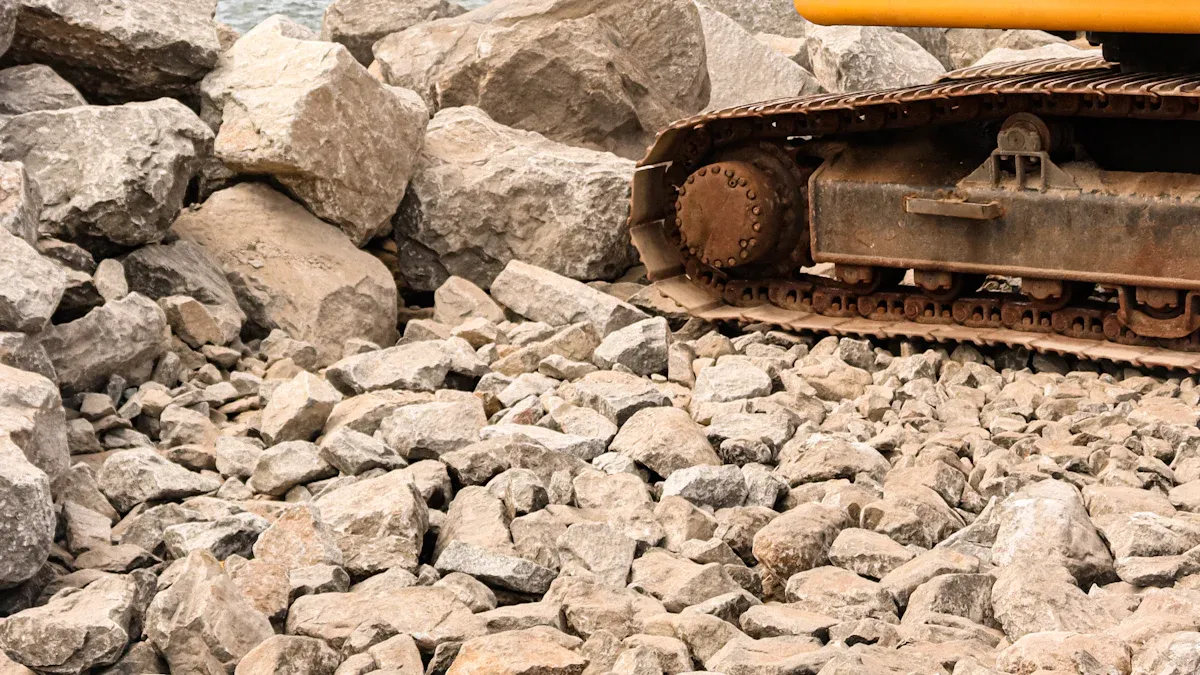
I know proper track tension is vital. However, even with perfect tension, worn or damaged undercarriage components can cause significant problems. I have learned these components are the backbone of the track system. Their condition directly impacts whether the tracks stay on.
Worn Idlers and Sprockets Impacting Excavator Tracks
I understand idlers and sprockets are crucial for guiding and driving the track. Worn idlers and sprockets are major culprits when tracks come off. I have seen how worn sprockets cause the track to skip off, especially when I reverse the excavator. Worn rollers or idlers also fail to guide the track effectively. This leads to misalignment. A worn idler with a compromised center guide flange or loose bushings can also cause de-tracking. The idler, located at the front of the track frame, guides and tensions the track. When idlers are worn or damaged, they create considerable play (space) between the track and the undercarriage. This increased play makes the track more susceptible to coming off.
I always look for specific signs of wear during my inspections. Grooving on the idler’s surface, where the track chain rides, indicates wear from constant friction. It often resembles a vinyl record. Visible cracks or pieces breaking off the idler signal it has reached its operational limit. I also check for cracks or excessive wear on the idler’s tread. A loose fit with the track chain is another clear sign. For sprockets, I look for sharp or hooked teeth. These indicate wear. Visible leaks or grease ejection around the idler suggest a failed bearing seal. This leads to lubrication loss or contamination. A wobbling or loose idler wheel also indicates internal bearing failure. It does not spin smoothly. Uneven track wear on the inner and outer edges of the track chain can also signal idler bearing problems. This causes misalignment. Damage to teeth, like cracks, chips, or excessive wear, is critical for sprockets. Worn or misaligned sprockets can cause excessive wear on chains, links, bearings, and tracks. Worn sprocket teeth prevent the chain from fitting properly. This leads to elongation or breakage. Damaged sprocket teeth also cause uneven track wear or damage.
Damaged Rollers and Their Effect on Excavator Rubber Tracks
Track rollers support the excavator’s weight. They keep the track in place, preventing deviation. They provide stability. This ensures the excavator travels smoothly, even on uneven ground. I know operating an excavator with damaged track rollers significantly compromises track stability. This is particularly true on slopes. Worn-down track rollers, especially if some are more worn than others, cause the machine’s frame to sit unevenly on the track assembly. This seemingly minor variation substantially alters the machine’s center of gravity. It makes the machine feel ‘tippy’ on gradients. It reduces its safe operating angle. A seized roller with a flat spot creates instability with each track revolution. This leads to lurching and rocking. This is dangerous when I lift heavy loads or work near personnel. This instability also leads to a bumpy ride. It replaces the smooth glide of a well-maintained undercarriage with jarring vibrations. This makes precise work nearly impossible. It causes constant stress and fatigue for me as the operator.
The Role of Track Links and Pins in Keeping Excavator Tracks On
Track links and pins form the backbone of the track chain. They connect the track shoes. They allow the track to articulate and move around the sprockets and idlers. Connecting pins are vital for firmly joining chain plates. They ensure the track’s flexible movement. They prevent breakage. These pins, along with chain plates, are susceptible to fatigue cracks. This happens due to long-term, high-intensity loads and continuous impacts. Over time, this causes the material to lose its toughness. Small cracks expand. This ultimately leads to breakage of the pins. Consequently, the track chain breaks.
I know the actual lifespan of excavator track links and pins depends heavily on how and where I use the machine. Operator habits and maintenance practices also play a role. For moderate service, I expect a typical lifespan of 4,000 to 6,000 hours. This involves work in mixed soils like dirt, clay, and some gravel. It includes a balance of digging and traveling. Good maintenance practices are followed in this scenario. However, one excavator in sandy, abrasive soil might only get 3,500 hours. Another in soft loam could exceed 7,000 hours. This variability shows the importance of considering the application and operator. Reusing a worn master pin is a ‘false economy’. It will fail prematurely. This failure can cause damage to connecting links. Critically, it leads to the entire track separating during operation. This creates a dangerous situation. It also causes potentially extensive damage. A new master pin is inexpensive. It is crucial for preventing such catastrophic failures.
Misaligned Track Frames and Excavator Tracks Stability
The track frame provides the structural support for the entire undercarriage. It houses the idlers, rollers, and sprockets. A misaligned track frame directly impacts the stability of the excavator tracks. If the frame is bent or twisted, it prevents the track from running straight. This causes uneven wear on components. It increases the likelihood of de-tracking. I often see misalignment caused by heavy impacts or prolonged operation on uneven ground. Regular inspections help me identify any signs of frame distortion. Addressing these issues promptly is crucial for maintaining track integrity and operational safety.
Operational and Environmental Factors Causing Excavator Tracks to Come Off
Debris Accumulation and Excavator Tracks De-tracking
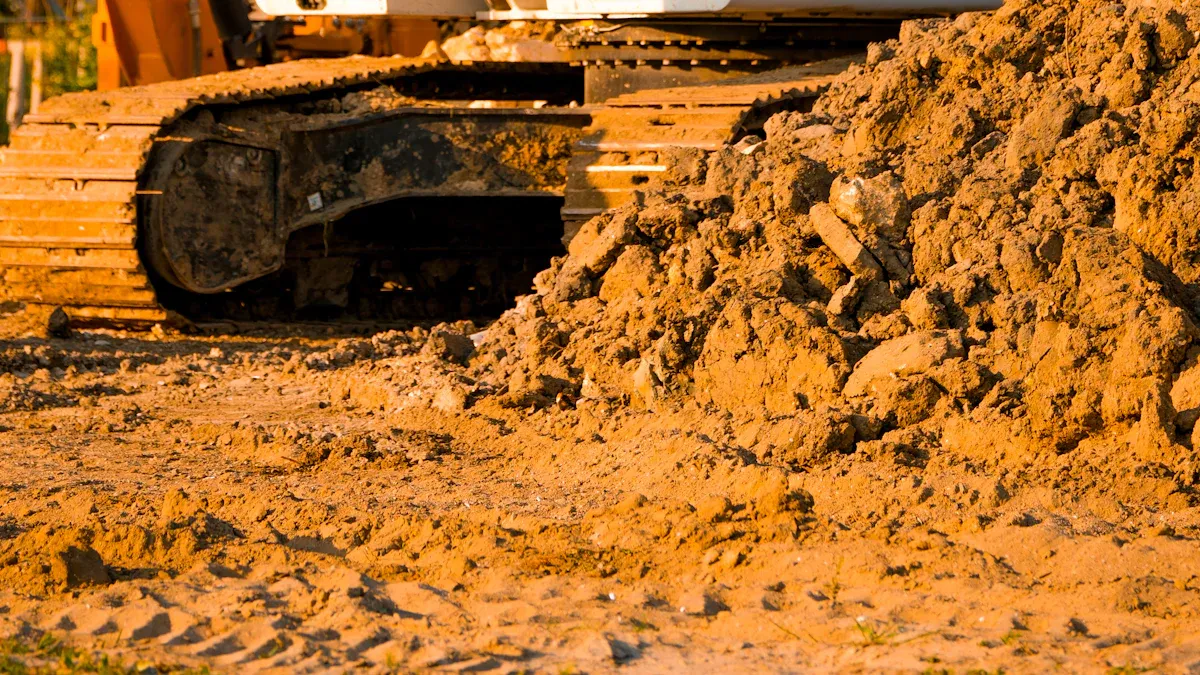
I have seen how debris accumulation significantly contributes to de-tracking. Material like mud, rocks, and wood can pack into the undercarriage. This creates pressure and forces the track off its path. I always emphasize frequent cleaning as a preventative measure. I inspect and clean the undercarriage at the start of each shift and whenever I enter the cab. Debris can damage components and affect performance.
Here are some preventative measures I follow to reduce debris accumulation:
- For sandy or dry dirt, I lift one track off the ground and rotate it forward and reverse. I then repeat this for the other track.
- For wet or compact material, I use a shovel for removal. More frequent cleaning may be necessary.
- I clean the undercarriage and tracks daily using a shovel for hard materials (wood, concrete, rocks) and a pressure washer for dirt and loose debris.
- Daily cleanings are crucial in cold temperatures to prevent mud and debris from freezing and causing damage.
- I frequently clean excavator tracks, especially after use, to remove accumulated sand, dirt, and other debris. I use a water-filled flushing device or a high-pressure water cannon, focusing on grooves and small areas, ensuring complete drying.
- I clean the undercarriage to prevent mud, dirt, and debris from freezing in colder climates, which can cause wear and reduce fuel economy.
- I utilize undercarriages designed for easier track carriage cleanout, allowing debris to fall to the ground instead of packing into the track system.
- I follow basic best practices during operation, such as making wider turns to minimize wear and de-tracking.
- I minimize time on slopes and ensure the drive motor is correctly positioned when operating on inclines.
- I avoid harsh environments like rough asphalt or concrete that can damage the tracks.
- I reduce unnecessary track spinning by training operators to make wide, less aggressive turns.
Operating on Challenging Terrain and Excavator Tracks
I know operating on challenging terrain significantly increases the risk of de-tracking. Steep slopes or uneven ground put immense stress on the undercarriage. Operating on side slopes particularly increases this risk. This is especially true if the spring tension is soft or the undercarriage is worn. Faulty tracks, such as those with broken internal cables, can cause excessive flexing. This leads the track to ride off the sprocket or idler. Lightweight, less rigid tracks, often found in cheaper alternatives, lack structural integrity. They struggle to remain straight when used in tough conditions like uneven ground. This increases de-tracking issues.
I employ specific techniques to maintain track integrity on such terrain:
- Bench Excavation: I create stepped platforms to prevent soil slides and provide stability for equipment on steep slopes.
- Terracing: I create horizontal steps across slopes to reduce erosion and control water runoff, stabilizing the slope.
- Top-Down Approach: I excavate from the top of the slope downwards. This helps maintain stability and allows for controlled management of excavated material.
- Managing Soil Erosion: I implement measures like silt fences, sediment traps, and temporary coverings to contain soil and prevent runoff.
- Slope Drainage Solutions: I install drainage systems such as culverts, ditches, or French drains to prevent water pooling and soil destabilization.
- Regular Maintenance: I perform frequent inspections of tires, tracks, and hydraulic systems. This is crucial to prevent breakdowns due to the additional strain of operating on slopes.
- Operator Training: I ensure specialized training for operators on sloped terrain. This ensures safe maneuvering and proper reaction to hazards.
- Stabilizing Accessories: I use outriggers, stabilizers, and counterweights to distribute load evenly and improve machine stability.
- I keep the bucket low to the ground for better balance, which lowers the center of gravity and increases stability.
- I drive slowly on uneven ground and check the surface to avoid tipping.
- I avoid steep slopes or loose dirt that could cause the machine to tip over.
- I drive at a steady speed to maintain control and prevent tipping.
Aggressive Maneuvering and Excavator Tracks Integrity
I have learned that aggressive maneuvering also compromises track integrity. Sudden, sharp turns, especially at high speeds, place extreme lateral forces on the track system. This can force the track off the idlers or sprockets. Rapid acceleration or deceleration also puts undue stress on the track links and pins. This accelerates wear. It can even lead to component failure. I always advocate for smooth, controlled movements. This minimizes stress on the undercarriage. It helps keep the tracks properly aligned. It also extends the lifespan of all components.
Impact Damage to Rubber Excavator Tracks
I know impact damage is another significant cause of de-tracking. Hitting obstacles like large rocks, stumps, or concrete debris can severely damage undercarriage components.
Common types of impact damage I have observed include:
- Misaligned Track Frame: An impact can bend or misalign the track frame, making it difficult for the track to stay on and causing it to veer off to one side.
- Misalignment: Impact damage can lead to a bent or warped track frame, or misaligned rollers and idlers, preventing the track from sitting correctly and increasing the likelihood of detachment.
- Undercarriage Damage: Impact can damage the undercarriage, which in turn leads to issues that cause track dislodgement.
After any potential impact, I perform a thorough inspection. I look for visible signs of wear or damage, including the undercarriage, tracks, and attachments.
Here are the key areas I inspect:
- Track Links: I inspect for wear and cracks.
- Track Rollers: I check for damage.
- Idler Wheels: I examine for wear.
- Sprockets: I inspect for tooth wear.
- Track Tension: I adjust to specification.
- Tracks: I check for damage or loose bolts. I look for small or deep cracks on the track surface, which can lead to breakage and loss of traction. I also check for missing track links, which reduce stability and performance, and excessive wear, indicated by uneven wear or thinning of the track surface, decreasing track life and traction.
- Rollers: I inspect for uneven wear, such as rollers that have lost their circular shape (oval shape), which causes uneven movement and accelerated wear. I also check for worn bushings, which reduce roller functionality and cause uneven track tension, and misalignment, leading to jerky movements and further damage.
- Sprockets: I look for damaged sprockets, specifically worn teeth that appear thinner or chipped, as this decreases track engagement and causes slippage. I check for visible fractures in the sprocket teeth, which can cause misalignment and track issues, and misalignment of sprockets with the tracks, leading to poor machine movement and wear.
- Idlers or Track Frames: I inspect for visible cracks in the idler or frame, which can lead to misalignment and frame failure. I also look for unusual wear patterns or loose parts, as these cause track misalignment and unstable movement.
Beyond visual checks, operational indicators can also signal undercarriage issues. If the machine exhibits uneven movement, hesitates during operation, or lacks power, these could be signs of problems with the undercarriage, such as worn rollers, misaligned sprockets, or damaged tracks. I always inspect tracks for wear, proper tension, or any irregularities.
I always prioritize regular inspection and maintenance. This ensures the longevity of your excavator tracks. I implement proper operating practices. This minimizes de-tracking risks. I address any issues promptly. This prevents costly repairs and reduces downtime.
FAQ
Why do excavator tracks frequently come off?
I find incorrect track tension is a primary culprit. Worn undercarriage components and improper operating techniques also significantly contribute to de-tracking.
How often should I check track tension?
I recommend checking track tension daily or before each shift. This ensures optimal performance and prevents premature wear.
What should I do if my excavator rubber track comes off?
I advise stopping operations immediately. Inspect the undercarriage for damage. Then, re-track the excavator carefully, following safety procedures.

Post time: Nov-18-2025