How Skid Steer Tracks Improve Jobsite Performance
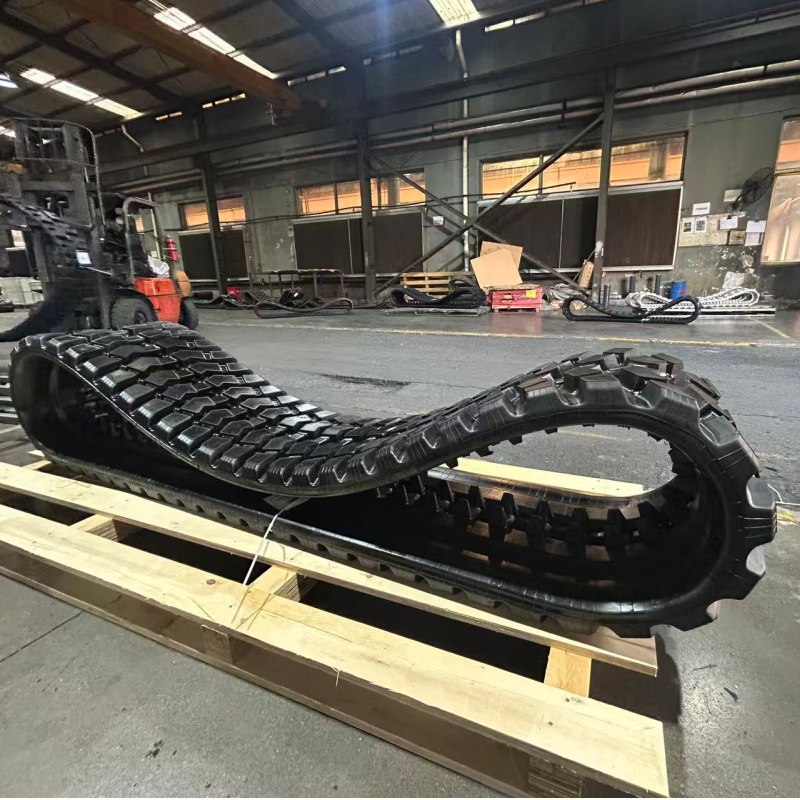
For fleet managers, maintaining machine utilization year-round is a practical necessity. When seasonal weather degrades terrain, standard pneumatic tires often lose traction, leading to project delays and idle labor. Adding over-the-tire (OTT) tracks—which mount directly over a skid steer’s existing pneumatic tires—addresses this operational bottleneck. This upgrade allows standard wheeled loaders to navigate deep mud, heavy snow, and loose gravel. Equipping a fleet with these specialized attachments can increase machine utilization rates during unpredictable winter and spring months, ensuring crews remain productive regardless of the forecast.
Skid Steer Tracks vs. Compact Track Loaders
When evaluating new equipment acquisitions, the debate frequently centers on whether to invest in a dedicated Compact Track Loader (CTL) or to retrofit existing wheeled skid steers with OTT tracks. A new CTL represents a significant capital expenditure and incurs higher long-term undercarriage maintenance costs due to complex idlers and bogie wheels. Conversely, integrating high-quality aftermarket OTT track systems requires a much lower initial investment. While a dedicated CTL offers superior pushing power in extreme grading scenarios, the OTT track solution provides valuable operational versatility. Depending on the system type and operator experience, crews can often remove the tracks in under an hour when the machine needs to return to hard surfaces like asphalt or concrete, where standard tires excel and tracks would suffer premature wear. However, frequent swapping can erode the time and cost advantages over a dedicated CTL.
Best Applications for Skid Steer Tracks
OTT tracks deliver the highest return on investment in environmentally sensitive or highly challenging environments. Applications involving deep mud, loose sand, or municipal snow removal benefit from the elongated, continuous footprint that tracks provide. In landscaping, forestry, or golf course construction, project specifications often demand minimal surface disruption. By distributing a mid-sized loader’s typical 7,000-pound operating weight over a substantially larger surface area, tracks prevent deep rutting and severe soil compaction. This ensures environmental impact remains within strict project compliance limits, reducing the need for post-project site remediation and turf repair.
Limitations and Trade-offs
While highly effective in these applications, operators and fleet managers must account for several trade-offs before deploying these systems. OTT tracks raise the machine’s center of gravity, accelerate wear on the underlying tires, and reduce travel speed and maneuverability on hard surfaces. Additionally, the added unsprung weight can increase fuel consumption and cause premature wear to the machine’s final drive motors, axles, or wheel bearings if not properly managed. The wider machine footprint may also introduce hauling and transport restrictions. Finally, installing aftermarket tracks can sometimes impact manufacturer warranties on drivetrain components, making it essential to verify terms before installation.
Key Performance and Cost Factors
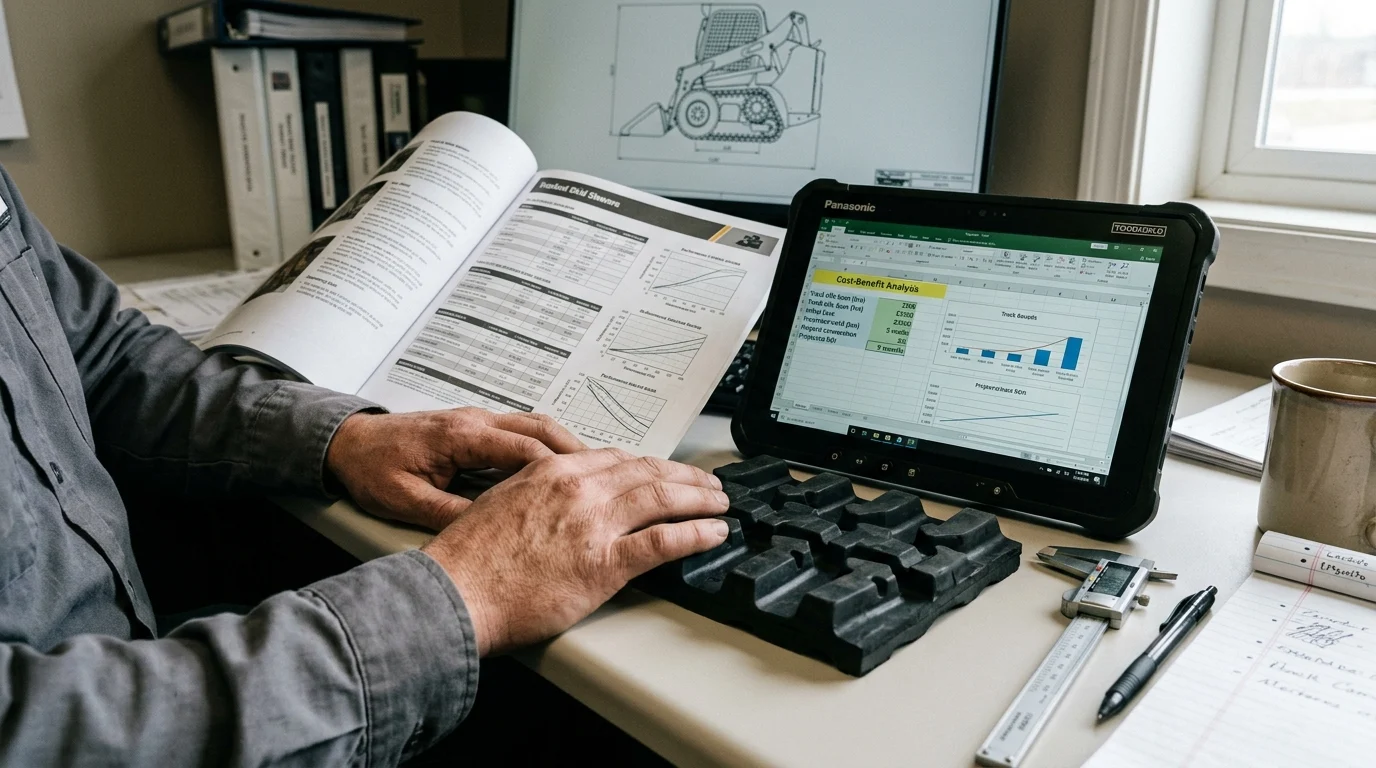
To maximize the lifespan and efficiency of any heavy equipment upgrade, fleet managers must carefully analyze the specific operational stresses the machines will encounter daily. The material composition, internal reinforcement, and tread design of the tracks dictate not only the initial procurement price but also the long-term cost per hour of operation. Standardizing selection helps accurately predict maintenance cycles and avoid unexpected field failures. The following technical comparison of standard track materials illustrates how to align track specifications with actual jobsite realities.
Rubber Tracks vs. Other Track Options
The industry primarily relies on three track material categories for OTT attachments: continuous rubber, steel, and polyurethane. It is important to note that while steel OTT options are less common than their rubber counterparts and distinct from dedicated CTL undercarriages, they offer aggressive traction and extreme durability for demolition, scrap yards, or rocky terrain. Depending on conditions and manufacturer specifications, steel tracks typically offer a broad estimated lifespan ranging from 1,500 to 2,500 hours. However, they will severely damage paved surfaces and generate significant operator fatigue due to vibration. Rubber tracks are the most frequently deployed choice for general construction and landscaping because they balance aggressive traction with surface protection. According to general industry benchmarks, high-grade continuous rubber tracks reinforced with steel cables can provide a service life of 1,000 to 1,500 operating hours, though this is highly dependent on operator habits and surface abrasiveness.
| Track Material | Estimated Lifespan (Hours)* | Surface Protection | Ideal Application |
|---|---|---|---|
| Continuous Rubber | 1,000 – 1,500 | High | Landscaping, Mud, Snow |
| Steel (OTT) | 1,500 – 2,500 | Low | Demolition, Rocky Terrain |
| Polyurethane | 800 – 1,200 | Very High | Concrete, Sensitive Paving |
*Lifespan estimates vary by manufacturer and operating conditions.
Polyurethane tracks, while generally rated by manufacturers for a shorter estimated lifespan of roughly 800 to 1,200 hours, remain indispensable for specialty indoor applications or when driving over sensitive decorative paving where scuffing is strictly prohibited.
Ground Pressure, Traction, and Durability
The primary mechanical advantage gained from implementing track systems is the dramatic reduction in ground bearing pressure. Depending on the tire size, inflation pressure, and overall machine weight, a standard wheeled skid steer in the mid-sized class can exert a concentrated ground-bearing pressure often estimated between 35 and 45 PSI, which easily breaks through soft topsoil or saturated clay. By installing continuous rubber tracks, the machine’s contact patch expands significantly. While dedicated compact track loaders often achieve a ground pressure of 5 to 10 PSI, OTT systems generally provide a less dramatic reduction because the pneumatic tires still carry much of the load. Nevertheless, this expanded contact patch prevents the loader from sinking into the mud and enhances the drawbar pull. This provides the vital traction required to push heavy loads up steep, slippery inclines without compromising the integrity of the track’s internal steel cords or stalling the hydraulic drive motors.
How to Choose and Implement Skid Steer Tracks
Transitioning a modern construction fleet to include track-equipped skid steers requires more than simply purchasing a set of treads from a supplier. Fleet managers must justify the capital expenditure through a clear, data-driven business case and a practical selection framework.
Key Takeaways
- Over-the-tire tracks can keep wheeled skid steer loaders productive during mud, snow, and spring thaw conditions that would otherwise sideline machines on pneumatic tires.
- Retrofitting skid steers with OTT tracks is often a lower-cost alternative to buying a compact track loader, but fleets should account for installation time, tire wear, and drivetrain stress.
- Tracks deliver the strongest return in mud, loose sand, snow removal, landscaping, forestry, golf course construction, and other applications where flotation and traction matter most.
- By spreading a roughly 7,000-pound loader over a larger footprint, tracks can reduce rutting, soil compaction, turf repair, and post-project remediation costs.
- Operators should avoid extended track use on asphalt or concrete because hard surfaces reduce maneuverability, accelerate wear, and can shorten track service life.
- Fleet managers should verify transport width, warranty terms, fuel impact, and component load limits before deploying aftermarket skid steer track systems.
Frequently Asked Questions
What are over-the-tire tracks for skid steer loaders?
Over-the-tire tracks are track systems that mount over a skid steer’s existing pneumatic tires, improving traction, flotation, and stability in mud, snow, sand, gravel, and soft soil.
Are skid steer tracks cheaper than buying a compact track loader?
In many cases, yes. OTT tracks typically require a lower upfront investment than purchasing a dedicated compact track loader, though frequent installation, removal, and tire wear should be included in the total cost calculation.
When should a fleet use skid steer tracks?
Use tracks when jobs involve deep mud, snow, loose sand, gravel, landscaping, forestry, golf course work, or other conditions where traction and reduced ground disturbance are priorities.
Can skid steer tracks reduce rutting and soil compaction?
Yes. Tracks spread the machine’s weight over a larger contact area, helping reduce rutting, turf damage, and soil compaction compared with standard tires on soft or sensitive ground.
What are the main drawbacks of adding tracks to a skid steer?
Tracks can reduce speed and maneuverability on hard surfaces, raise the center of gravity, increase fuel use, accelerate tire wear, and add stress to drivetrain components if used improperly.

Post time: Sep-04-2026