Choosing the Right Track Pad Type
Managing fleet operations requires a constant balancing act between protecting paved surfaces and maintaining excavator traction. To achieve this, fleet managers regularly rely on rubber track pads to convert aggressive steel tracks into surface-friendly machines. Selecting the correct pad configuration is critical not only for preventing infrastructure damage but also for optimizing operational uptime.
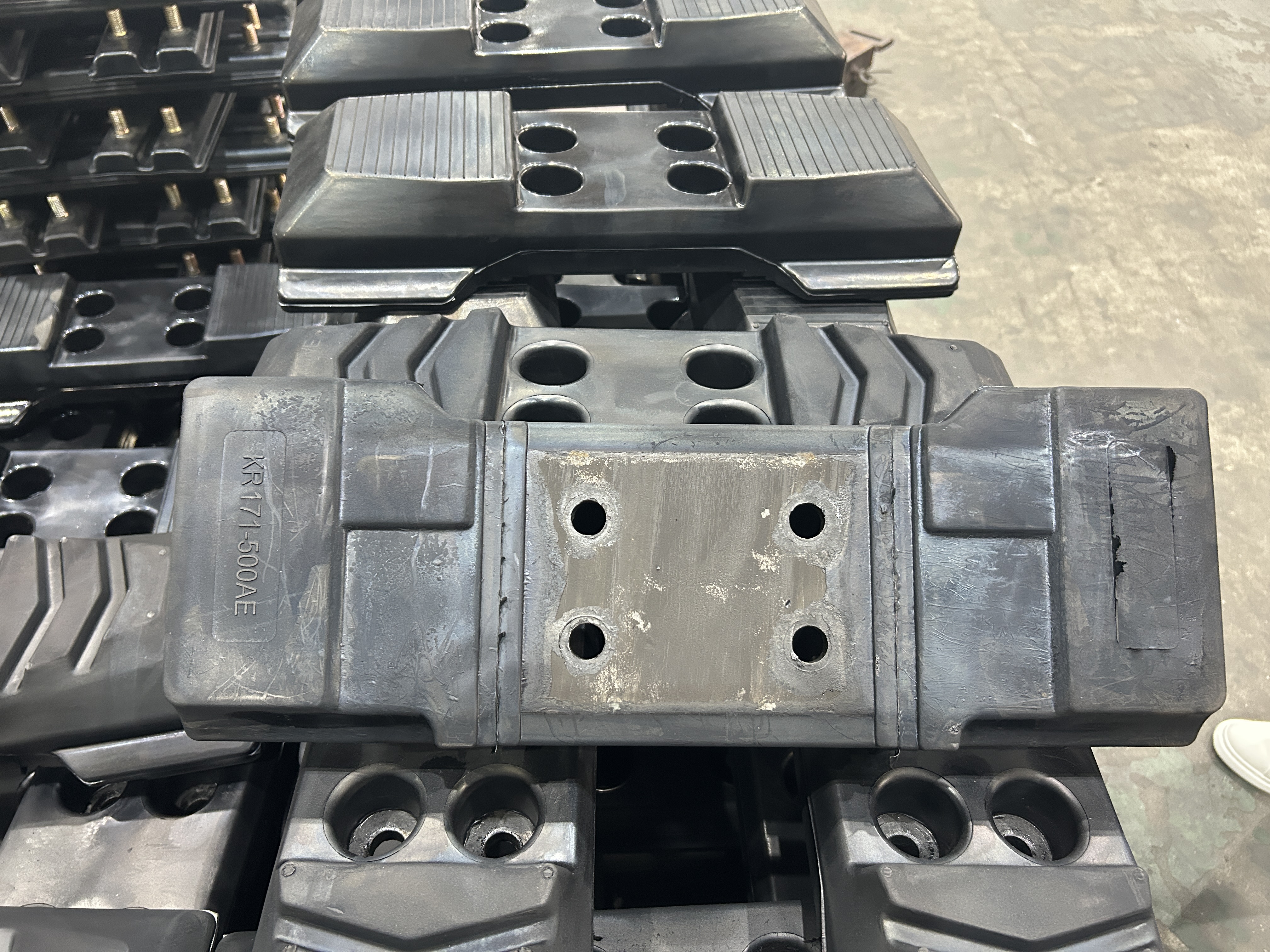
The heavy machinery industry primarily categorizes these rubber attachments into three distinct mounting styles: bolt-on pads, clip-on pads, and chain-on pads. Each style serves a specific operational requirement, and making the wrong choice can lead to premature wear, track derailment, or excessive maintenance costs.
Bolt-On vs Clip-On Pads
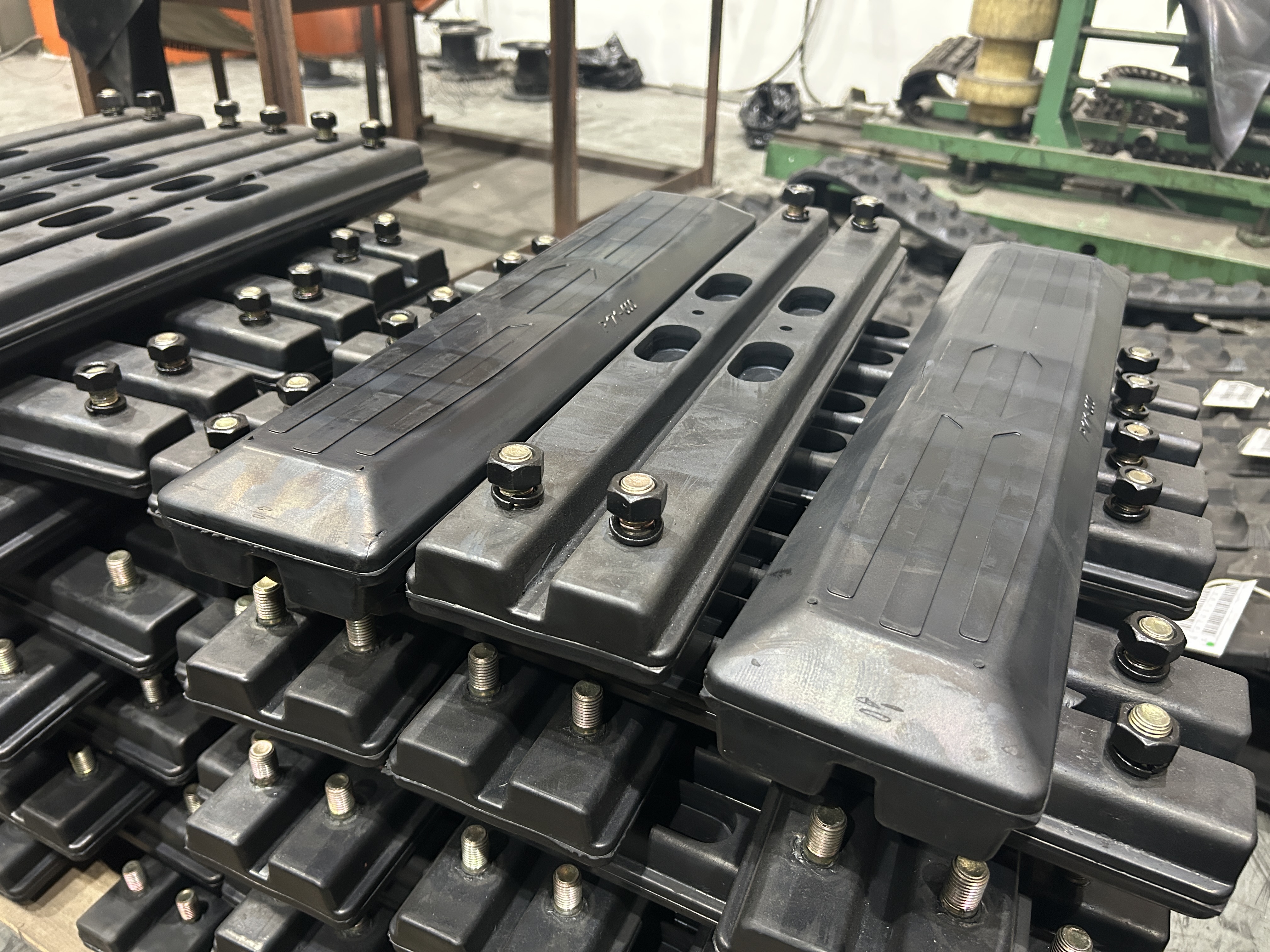
The immediate comparison for fleets often falls between bolt-on and clip-on styles, as both retain the machine’s existing steel shoe. Bolt-on rubber pads are designed to attach directly to pre-drilled steel track shoes. They are secured by passing bolts through the rubber pad and the steel shoe, fastening them tightly with nuts on the underside. This method provides exceptional stability, preventing the rubber from shifting laterally during high-torque maneuvers. These pads accommodate a wide variety of compact and mid-sized excavators, with widths varying based on OEM specifications.
Conversely, clip-on pads offer a different approach by wrapping around the edges of standard steel shoes using specialized brackets. This eliminates the need for pre-drilled holes in the steel tracks, making them an excellent choice for retrofitting older machines. While they offer superior convenience and installation speed, operators must carefully monitor the brackets. Lateral forces during sharp turns can occasionally cause the clips to bend on overly abrasive terrain. Additionally, mud or ice can pack into the brackets, and worn steel shoe edges can severely compromise grip security. Because both bolt-on and clip-on systems add a rubber layer over the existing track, they slightly increase the machine’s overall weight and transport height; however, the added rubber generally increases the contact patch, which usually lowers ground pressure.
Key Selection Factors for Fleets
The selection process heavily depends on the machine’s operating weight and the primary work environment. For lightweight utility machines operating on flat, paved urban streets, clip-on pads provide the necessary protection with minimal upfront modification. However, when deploying excavators exceeding 15 tons, the shear forces exerted on the tracks increase significantly. In these scenarios, clip-on brackets are prone to failure, pushing fleets toward more permanent solutions.
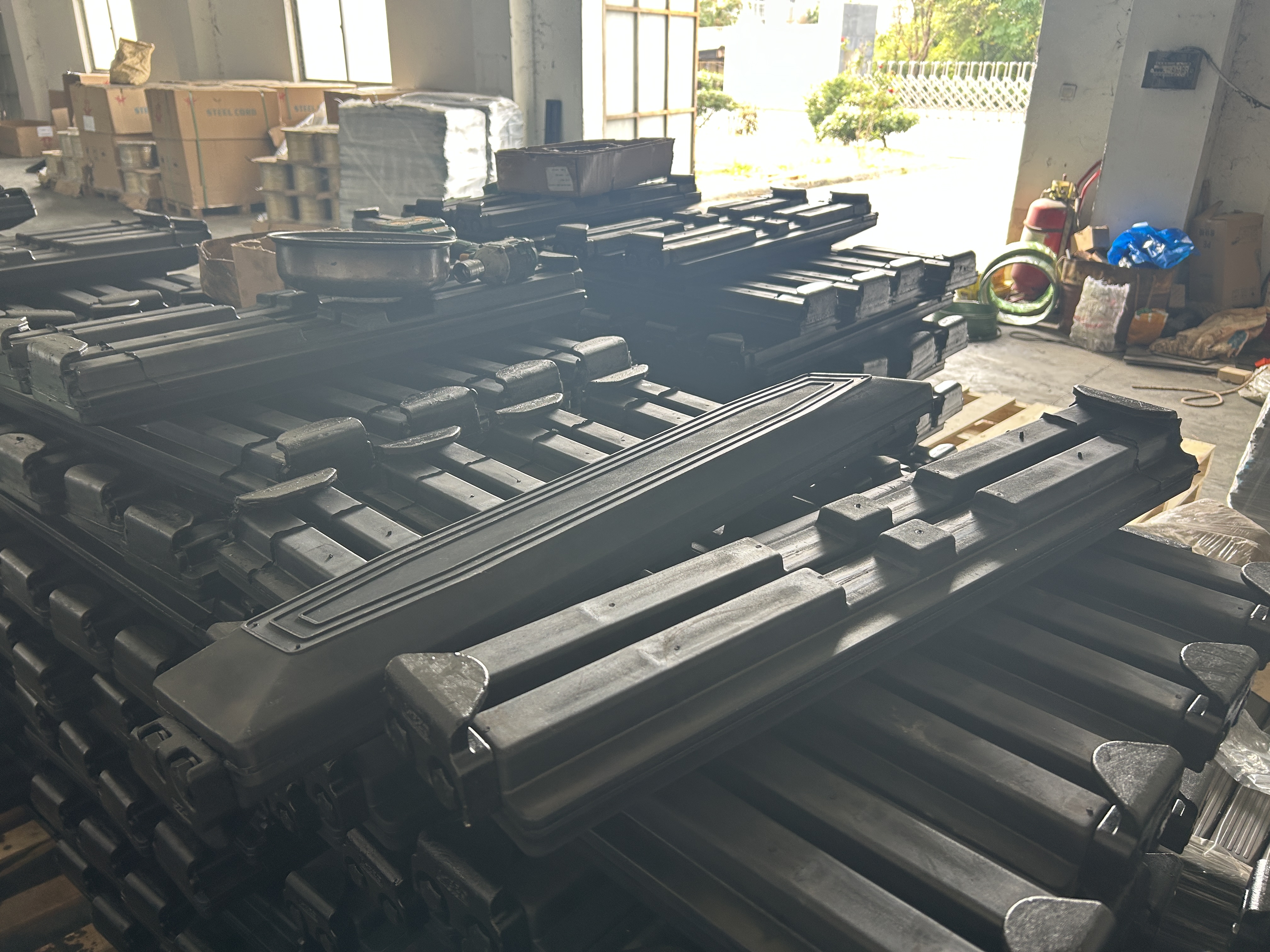
Chain-on rubber pads, also known as Roadliner pads, offer a distinct alternative for heavier machinery. Instead of attaching to a steel shoe, chain-on pads bolt directly to the track chain links, replacing the steel shoe entirely. This configuration reduces the overall weight of the undercarriage and maintains standard transport clearances while offering the highest level of stability for machines up to 25 tons. Crucially, both bolt-on and chain-on systems allow for the independent replacement of individual damaged pads. This partial replaceability, as opposed to requiring a full-set swap, significantly lowers total cost of ownership calculations.
However, fleets must consider practical caveats: removing steel shoes to install chain-on pads requires track tension adjustments, alters the operating envelope, and is not quickly reversible without reinstalling the original steel shoes. Buyers must also verify compatibility, as chain-on pads require matching track link geometry, grouser profiles, and track chain bolt patterns that may not be available across all 10-to-25-ton machines.
At boundary weights (such as 10-ton machines where all three pad types are available), selection should rely on cross-referencing project duration, reversibility needs, and ground conditions rather than tonnage alone. A 10-ton machine on a short-term urban project may benefit from clip-on pads, while the same machine on a long-term, abrasive site would require the stability of bolt-on or chain-on pads.
Comparing Installation, Durability, and Cost
Evaluating the total cost of ownership requires looking far beyond the initial purchase price of the rubber pads. A comprehensive analysis of installation downtime, anticipated wear life, and the ongoing maintenance impact associated with each mounting style is essential.
Installation and Replacement Speed
Installation speed directly impacts a fleet’s deployment readiness. While exact times vary widely by machine class and manufacturer, a two-person crew can typically equip a standard excavator with clip-on rubber pads relatively quickly, as the process only requires securing the side brackets. Bolt-on pads demand a more labor-intensive process; aligning the bolts with the pre-drilled holes and applying the correct torque extends the installation time.
Chain-on pads require the most intensive initial setup, as they replace the steel shoe entirely and must be bolted directly to the chain links. Below is a comparative breakdown of general operational observations. Note: The tonnage ranges provided are general fleet guidelines, not absolute OEM classifications, and should not be treated as rigid compatibility rules.
| Pad Type | Relative Installation Time | Optimal Machine Size | Attachment Method |
|---|---|---|---|
| Clip-On | Fastest | 3 to 10 Tons | Bracket wrap over steel shoe |
| Bolt-On | Moderate | 5 to 15 Tons | Bolted through pre-drilled shoe |
| Chain-On | Most Labor-Intensive | 10 to 25 Tons | Bolted directly to track chain |
Cost, Wear Life, and Maintenance Impact
When assessing cost and durability, the quality of the rubber compound is paramount. It is advisable to specify pads manufactured with high tear strength, abrasion resistance, and optimal Shore A hardness to resist chunking and tearing on debris-strewn sites, though exact specifications should align with OEM manuals. Clip-on pads tend to have a slightly shorter functional lifespan due to metal fatigue in the mounting brackets rather than rubber degradation.
In contrast, bolt-on and chain-on pads can reliably exceed standard operational hours if maintained properly. The maintenance impact is heavily dictated by torque specifications. For bolt-on and chain-on pads, enforcing a strict maintenance protocol to check and re-torque the nuts at OEM-specified intervals is crucial. Always consult OEM guidelines exclusively for the exact torque values, as these vary widely by machine size and pad manufacturer; relying on generic torque ranges risks inaccurate and unsafe maintenance protocols.
Sourcing, Inspection, and Buying Checklist
When outfitting an undercarriage, selecting the right rubber track pads requires a rigorous sourcing protocol. Whether I am procuring bolt on pads, clip on pads, or chain on pads, utilizing a standardized checklist ensures fleet compatibility and minimizes operational downtime.
Measurement and Compatibility Checks
Before placing a bulk order, verifying machine specifications is critical. I always recommend measuring three primary dimensions to prevent fitment failures:
- Shoe Width: The pad must match the steel track perfectly to prevent side overhang or internal friction.
- Pitch: The distance between track chain links must align precisely with the pad’s core dimensions.
- Mounting Holes: For bolt on pads, measure the center-to-center distance of the pre-drilled holes on the existing steel shoe.
If you are sourcing clip on pads, ensure the wrap-around brackets can accommodate the exact thickness of your current steel shoes. For chain on pads, verify that the pad’s internal steel core aligns securely directly onto the track chain without causing abrasive wear to the links.
Supplier Evaluation and Purchase Decisions
Selecting a reliable manufacturing partner is just as important as the product specifications. In my procurement practice, I evaluate suppliers based on material transparency and manufacturing standards. I prioritize suppliers holding ISO 9001 certification, as this indicates a verified, consistent quality management system during production.
Here is a quick checklist I use for evaluating suppliers and finalizing purchase decisions:
| Evaluation Criteria | Procurement Recommendation |
|---|---|
| Material Composition | Request laboratory test reports confirming the natural/synthetic rubber blend ratio and tensile strength. |
| Sample Inspection | Always order a pilot batch (e.g., 5–10 pads) to test physical fitment and wear resistance under load. |
| Warranty Terms | Ensure the supplier offers a standardized operational warranty (typically 6 to 12 months) protecting against premature chunking or steel core debonding. |
By rigorously checking physical compatibility and vetting supplier credentials, I ensure that fleet investments in bolt on pads, clip on pads, and chain on excavator pads yield maximum operational life and a steady return on investment.
Key Takeaways
- Use clip-on pads for fast retrofits on lighter machines operating mainly on flat paved surfaces.
- Choose bolt-on excavator pads when pre-drilled steel shoes are available and the machine performs high-torque turns or demanding work.
- Avoid relying on clip-on brackets for excavators above about 15 tons because higher shear forces can increase failure risk.
- Consider chain-on pads for heavier machines because they replace steel shoes, bolt directly to chain links, and help maintain transport clearance.
- Inspect clip-on brackets regularly in mud, ice, abrasive terrain, or when steel shoe edges are worn.
- Reduce long-term maintenance cost by selecting bolt-on or chain-on systems that allow individual damaged pads to be replaced.
Frequently Asked Questions
What is the main difference between bolt-on and clip-on rubber pads?
Bolt-on pads fasten through pre-drilled steel shoes with bolts and nuts, giving strong lateral stability. Clip-on pads use brackets around the steel shoe edges, making them faster to install when shoes are not drilled.
When should a fleet choose clip-on pads?
Clip-on pads are best for lighter utility machines working on flat paved surfaces, especially when the existing steel shoes do not have bolt holes. They are convenient for retrofits but need bracket checks in abrasive, muddy, or icy conditions.
Why are bolt-on pads preferred for higher-torque work?
Bolt-on pads are mechanically secured through the steel shoe, which helps prevent side-to-side movement during sharp turns, grading, or other high-torque maneuvers. This makes them more stable than clip-on pads in demanding conditions.
What are chain-on pads used for?
Chain-on pads, also called Roadliner pads, replace the steel shoe and bolt directly to the track chain links. They are suited to heavier excavators and can provide strong stability while helping maintain standard transport clearance.
Do rubber track pads reduce ground pressure?
In many cases, yes. Bolt-on and clip-on pads add a rubber layer over the steel shoe, often increasing the contact patch. That can lower ground pressure, although machine weight, pad size, and site conditions still matter.
Post time: Jul-21-2026