
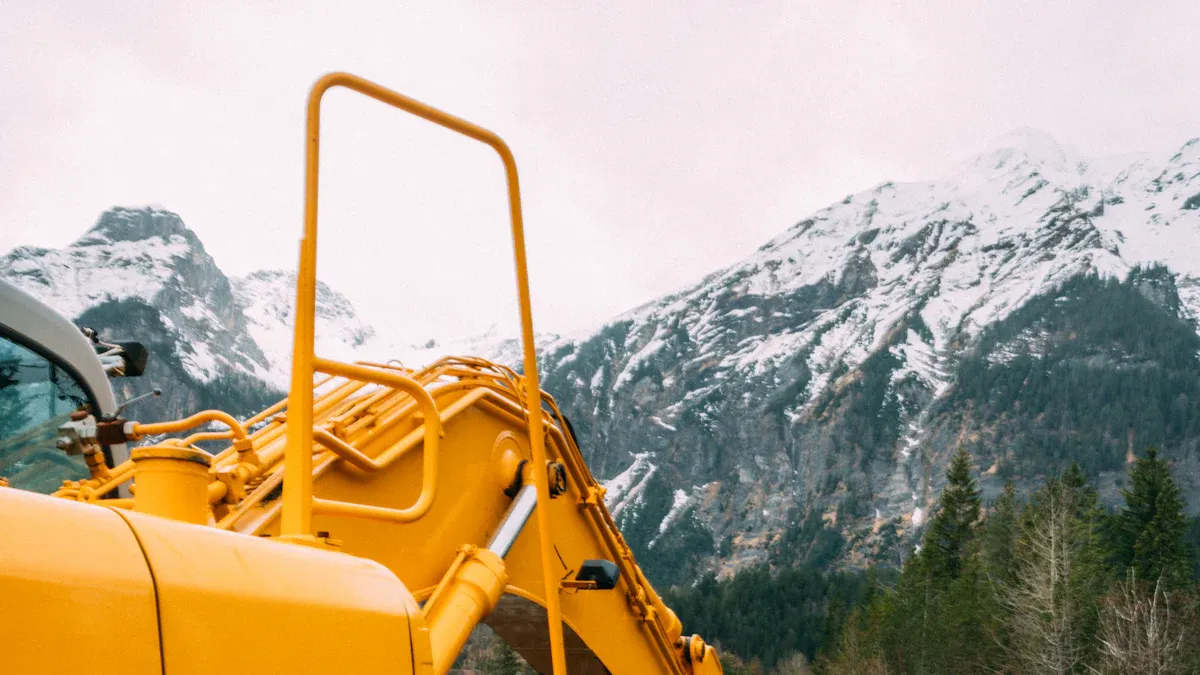
I know selecting the optimal width for your Excavator Rubber Pads is crucial. This decision depends on your specific machine, ground conditions, and operational tasks. I find 700mm excavator rubber pads offer excellent maneuverability and reduce ground disturbance effectively. In contrast, 800mm excavator track pads provide superior stability and flotation on challenging terrain.
Key Takeaways
- 700mm pads are good for tight spaces. They cause less ground damage. Use them for city work or landscaping.
- 800mm pads give more stability. They work well on soft ground. Use them for big digging jobs or muddy areas.
- Choose pad width based on your machine, ground type, and job. Always check transport rules for wider pads.
Understanding Excavator Rubber Pads: Why Width Matters
Function of Excavator Rubber Pads
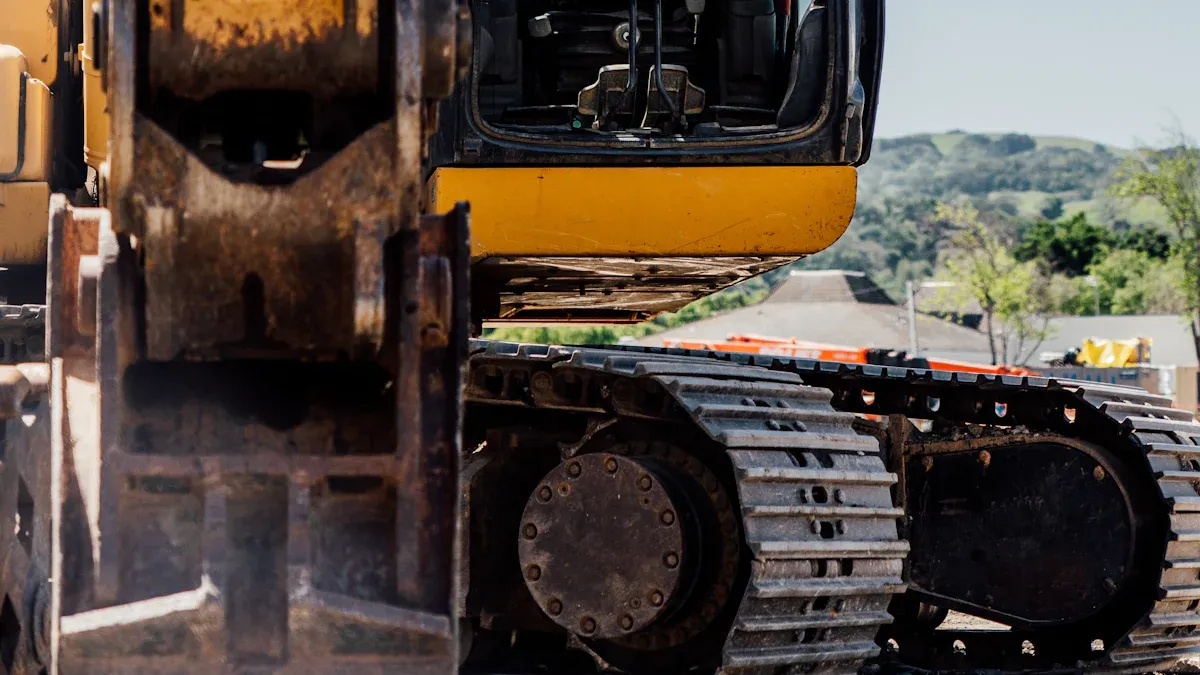
I understand that Excavator Rubber Pads are essential for protecting sensitive surfaces during operation. Bridgestone engineers first designed these pads in the 1990s, and manufacturers worldwide adopted them to safeguard paved or concreted areas. For example, Bridgestone GeoGrip rubber pads are individually vulcanized with integrated steel core metals. They bolt directly to the track chain links, offering a purpose-built solution for surface protection without sacrificing durability. These pads, with advanced Pro-Edge™ technology, prevent damage to finished surfaces like asphalt and concrete. They also significantly reduce vibration and noise, ensuring quieter operation. Similarly, Artliner-BLS track pads provide an easy transition from dirt work to delicate surfaces. They are made from durable, reinforced, cut-resistant rubber, eliminating the need for protective mats. This allows excavators into residential areas over pavement and sidewalks without causing damage.
Impact of Pad Width on Performance
The width of your Excavator Rubber Pads significantly impacts performance. I find that wider tracks enhance stability by distributing the machine’s weight over a larger area. This lowers ground pressure and prevents the excavator from sinking into soft terrain. This wider footprint also significantly reduces the risk of tip-overs, especially when operating on slopes or uneven ground. It improves safety during tasks that involve lifting or reaching with the excavator arm. For challenging or uneven terrain, excavators with wide tracks are more stable. They distribute the machine’s weight evenly, which reduces ground pressure. This design also provides a lower center of gravity, further enhancing stability when working on unstable ground and slopes.
700mm Excavator Rubber Pads: Advantages and Applications
Benefits of 700mm Excavator Rubber Pads
I find 700mm Excavator Rubber Pads offer distinct advantages for specific operational needs. Their narrower profile significantly enhances maneuverability. This allows excavators to navigate tight spaces with greater ease. I also observe a reduced ground disturbance with these pads. This is crucial when working on sensitive surfaces or in areas where minimizing impact is a priority. The lighter weight of 700mm pads can also contribute to slightly better fuel efficiency. I believe this makes them a cost-effective choice for certain projects. Their design allows for quicker turns and more agile movements, which improves overall operational speed in confined environments.
Ideal Uses for 700mm Excavator Rubber Pads
I recommend 700mm pads for several key applications. Urban construction sites often benefit from their agility. These pads allow excavators to work efficiently around existing structures and infrastructure. Landscaping projects are another ideal use. Here, precision and minimal damage to surrounding areas are paramount. I also see them as perfect for road repair and utility work. These tasks frequently occur in populated areas. The reduced ground pressure helps protect asphalt and concrete surfaces. For indoor demolition or renovation projects, I find 700mm pads provide the necessary control and surface protection. They are excellent for smaller excavators where compact size is an asset.
800mm Excavator Rubber Pads: Advantages and Applications
Benefits of 800mm Excavator Rubber Pads
I find 800mm Excavator Rubber Pads offer significant benefits, especially on challenging terrains. Their increased width provides superior stability. This wider footprint distributes the machine’s weight over a larger area. This significantly reduces ground pressure. I observe this prevents the excavator from sinking into soft ground. This increased stability is crucial when moving machines over unstable ground. It ensures safer operation and better control. These pads also provide enhanced traction and stability. They improve grip on challenging surfaces. This improved traction comes from a ‘geo-grip’ effect, a feature of their specialized rubber compounds.
Ideal Uses for 800mm Excavator Rubber Pads
I recommend 800mm pads for projects requiring maximum flotation and stability. Large-scale earthmoving operations are an ideal application. Here, excavators often work on soft or muddy ground. Pipeline construction projects also benefit greatly from these wider pads. They provide the necessary support for heavy machinery in remote, often unstable, environments. I also find them perfect for wetland reclamation or environmental restoration. These tasks demand minimal ground disturbance and maximum machine support. Forestry operations, where excavators navigate uneven and soft forest floors, also benefit from the enhanced stability of 800mm Excavator Rubber Pads.
Key Factors for Choosing Excavator Rubber Pads Width
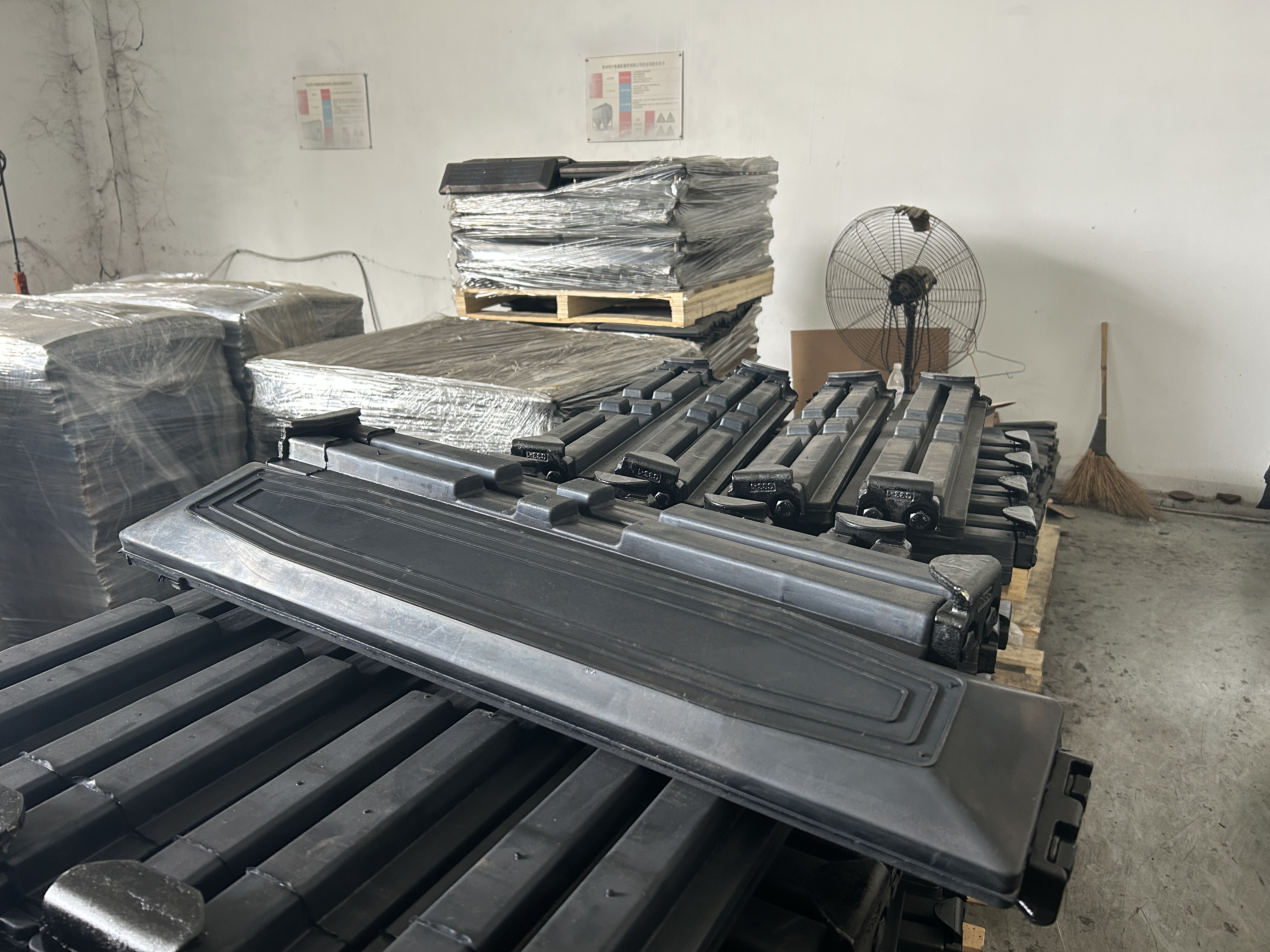
I understand that selecting the correct width for your Excavator Rubber Pads is a critical decision. This choice directly impacts your machine’s performance, operational costs, and compliance with regulations. I consider several key factors when advising on the optimal pad width.
Excavator Model and Weight Compatibility
I always start by considering the specific excavator model and its operating weight. A heavier machine generally requires a wider track pad to distribute its weight more effectively. This prevents the excavator from sinking into softer ground. For instance, a compact excavator might perform well with narrower pads, benefiting from increased agility. Conversely, a large, heavy-duty excavator often demands wider pads to maintain stability and flotation. I find that matching the pad width to the machine’s weight ensures optimal ground pressure and prevents undue stress on the undercarriage.
Ground Conditions and Terrain
The ground conditions and terrain where you primarily operate your excavator heavily influence pad width selection. On soft, muddy, or sandy ground, I recommend wider pads. They offer superior flotation, which keeps the machine from getting bogged down. For hard, abrasive surfaces like concrete or asphalt, narrower pads can be more suitable. They reduce friction and wear, extending pad life. When working on slopes or uneven terrain, stability becomes paramount.
According to Gilbeck, “The wider track gauge provides superior stability while operating on side hills and slopes.” He further notes that “The longer track and wider pads provide the maximum level of machine support on the ground surface.”
I find that wider shoes are beneficial for machines operating on side hills and slopes, especially with LGP track. They enhance stability and provide maximum machine support on the ground surface.
Specific Application Requirements
Your specific application requirements also dictate the ideal pad width. If your work involves precision tasks, such as landscaping or utility installation in urban areas, I often suggest narrower pads. They allow for greater maneuverability and minimize ground disturbance on finished surfaces. For heavy earthmoving, demolition, or forestry operations, wider pads are usually the better choice. They provide the necessary traction and stability for aggressive digging and navigating challenging environments. I always assess the primary function of the excavator to guide this decision.
Transport Regulations and Limitations
Transporting excavators with wider pads introduces specific regulatory considerations. An oversize load, such as an excavator, typically exceeds a width of 8 feet 6 inches, necessitating special permits for transport. The Federal-Aid Highway Act of 1956 established a maximum width of 8.5 feet (102 inches or 2.6 meters) for commercial vehicles, including excavators, operating on the National Network of highways. While this is the federal standard, states can issue special permits for wider vehicles, such as agricultural equipment or construction machinery, which are considered oversize loads. Some states also allow reasonable access routes for slightly wider vehicles to connect to the National Network. Safety devices like mirrors and lights are typically not included in width calculations. According to the Federal Motor Carrier Safety Administration (FMCSA), commercial motor vehicles on U.S. interstate highways are generally limited to 8.5 feet in width. Transporting oversized equipment like excavators that exceed this width requires special permits and adherence to both federal and state-specific regulations. Excavators and similar heavy equipment frequently exceed the legal width limits for transport on public roads, which is generally 8.5 feet, making them oversized loads that require special considerations and permits.
When transporting oversized excavators, special approval or permits may be required along the planned route, which can add to operational costs. I always advise checking federal, state, and local laws and regulations regarding the weight, width, length, and height of a load before making preparations to transport the machine on public roads, bridges, highways, and interstates, as load ratings and regulations vary by state and local municipalities. Permit requirements often include:
- Exact load dimensions (length, width, height, and weight)
- Specified transport route (some roads may have restrictions)
- Travel time restrictions (many states limit oversized loads to daylight hours)
- Escort vehicle requirements (for especially large loads)
Your load might be considered oversized if it is:
- Wider than 8 feet 6 inches (102 inches)
- Taller than 13 feet 6 inches in most states (some overpasses allow up to 15 feet)
- Gross vehicle weight (GVW) exceeds 80,000 pounds
Budget and Cost Considerations
Finally, I consider the budget and overall cost implications. Wider pads generally cost more than narrower ones due to increased material and manufacturing complexity. While narrower pads might offer a slight advantage in fuel efficiency due to less ground contact, this difference is often marginal. The most significant cost factor related to pad width often comes from transport. If wider pads push your excavator into the “oversize load” category, you will incur additional expenses for permits, potential escort vehicles, and route planning. I always weigh the initial purchase cost against potential operational savings and transport complexities to determine the most economical choice in the long run.
Making the Right Choice for Your Excavator Pads
I understand that selecting the perfect width for your excavator’s rubber pads can feel like a complex puzzle. This decision significantly impacts your machine’s efficiency, longevity, and overall project success. I always aim to simplify this process for you.
Decision Guide for Pad Width Selection
I believe a systematic approach helps immensely when choosing the right pad width. My primary goal is to ensure your machine performs optimally without unnecessary wear or operational issues. I find that the guiding principle for selecting track shoe width is to use the narrowest shoe that provides adequate flotation for the machine to perform its job without becoming bogged down. This optimizes the trade-off between flotation and durability. Benefits of a narrower shoe include easier turning, less wear, better maneuverability, increased durability by reducing leverage, and improved packing resistance in sticky materials. Operators should assess typical working conditions; for instance, if a machine primarily works on hard-packed dirt, a narrower shoe is appropriate, with operational techniques used for occasional soft sections rather than compromising undercarriage health.
I have developed a decision matrix to help you visualize the best choices based on ground conditions and machine weight:
| Ground Condition | Primary Requirement | Recommended Shoe Width |
|---|---|---|
| Hard Rock, Quarry | Durability, Maneuverability | Narrow |
| Packed Soil, Gravel | General Purpose | Standard/Narrow |
| Mixed Soft/Hard | Versatility | Standard |
| Soft Clay, Dirt | Flotation, Traction | Standard/Wide |
| Loose Sand | High Flotation | Wide |
| Swamp, Marsh | Extreme Flotation | Extra-Wide (LGP) |
I also want to highlight common pitfalls I have observed when operators choose incorrect pad widths. Avoiding these mistakes saves you time and money:
- Using wide pads in rocky quarries: I have seen wider pads become more susceptible to bending when operating in hard, rocky terrain. This leads to costly repairs.
- Using narrow pads in soft, sandy conditions: I find narrow pads can cause the excavator to sink due to insufficient flotation. This results in lost productivity and potential machine damage.
I recommend you always consider these factors carefully. They directly influence your machine’s performance and lifespan.
Consulting Manufacturer Guidelines and Experts
I always emphasize the importance of consulting your excavator’s manufacturer guidelines. They provide specific recommendations tailored to your machine’s design and capabilities. These guidelines offer invaluable insights into optimal pad widths for various applications. They also detail weight distribution and stress points. I believe this information is crucial for maintaining your machine’s warranty and ensuring safe operation.
Furthermore, I strongly advise speaking with industry experts. This includes your equipment dealer or experienced operators. They often possess practical knowledge gained from years in the field. They can offer advice based on local ground conditions and specific project challenges. I find their insights can be particularly helpful for unique or challenging job sites. They can guide you through the nuances of pad selection. This ensures you make the most informed decision for your operational needs.
I believe choosing between 700mm and 800mm Excavator Rubber Pads demands careful thought. I always assess machine specifications and the operational environment. Prioritize performance, safety, and efficiency by aligning pad characteristics with your specific needs. I recommend checking your excavator’s manufacturer guidelines or consulting an expert for the best decision.
FAQ
Can I use 700mm pads on a heavy excavator?
I advise against it. Heavy excavators need wider pads. They distribute weight better. This prevents sinking and maintains stability.
Do wider pads always mean better stability?
Yes, I find wider pads generally offer superior stability. They spread the machine’s weight. This reduces ground pressure. It is crucial on soft or uneven terrain.
How do I know if my excavator needs special transport permits?
I check the total width. If it exceeds 8 feet 6 inches, you likely need permits. Always consult state and federal regulations.

Post time: Dec-26-2025