Introduction
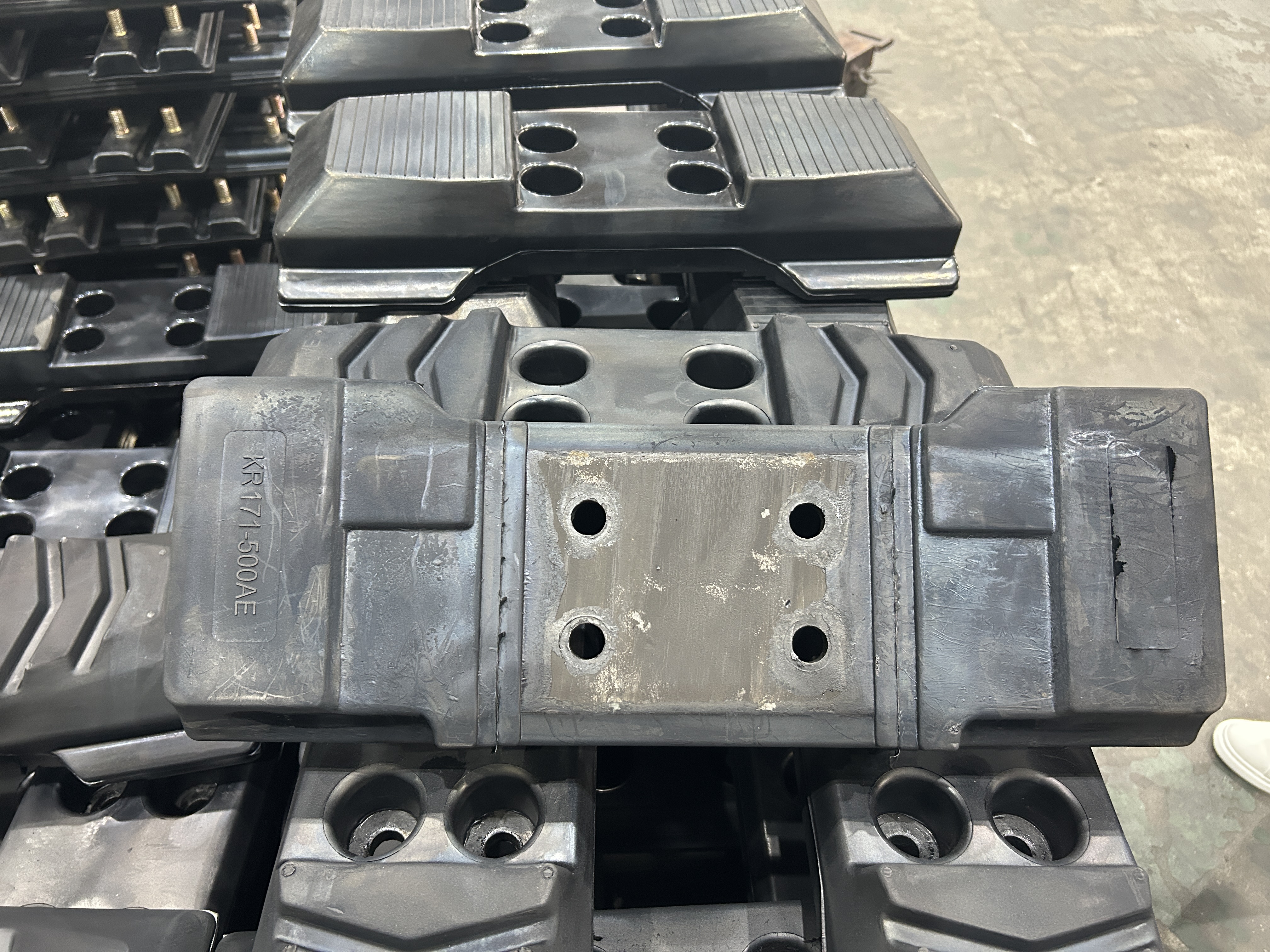
For contractors running steel-tracked machines on pavement, concrete, or other finished surfaces, chain-on pads offer more than basic surface protection. By mounting directly to the track chain, they introduce a rubber buffer that lowers vibration, softens impact, and reduces stress on rollers, idlers, and final drives. The result is slower undercarriage wear, fewer damage-related repairs, and lower replacement costs compared with full steel track components. They also help expand where a machine can work without marking the ground. The sections below explain how chain-on pads cut maintenance expense, improve equipment uptime, and extend the service life of critical undercarriage parts.
Why Chain-On Pads Reduce Costs and Extend Undercarriage Life
Heavy equipment operators face a constant dilemma when deploying steel-tracked machinery on finished surfaces. Chain-on pads offer an engineered solution that mounts directly to the track chain, bypassing the need for standard steel grouser shoes. This configuration fundamentally alters the machine’s interaction with the ground, delivering measurable improvements in both operating expenses and component longevity.
Cost Drivers and Wear Reduction
The primary cost driver in tracked equipment maintenance is undercarriage wear, which typically accounts for up to 50% of total machine maintenance costs over its lifecycle. Chain-on pads mitigate this by acting as a damping interface between the rigid steel track chain and the operating surface. High-quality vulcanized rubber absorbs impact energy, reducing high-frequency vibrations transmitted through the track frame by up to 45%.
This substantial vibration reduction dramatically limits the wear on idlers, bottom rollers, and final drives, preventing premature bearing failures and seal leaks. Furthermore, when the rubber surface eventually degrades, replacing a set of chain-on pads requires approximately 60% less capital expenditure than replacing a complete steel track group, significantly lowering the long-term maintenance burden.
Surface Protection and Machine Utilization
Beyond undercarriage preservation, chain-on pads maximize machine utilization by eliminating surface damage. Steel tracks exert extreme point loads that instantly fracture asphalt and score cured concrete. By distributing the machine’s weight across a wider, pliable rubber footprint, chain-on rubber pads reduce ground bearing pressure to roughly 4.5 to 6.0 PSI on standard mid-sized excavators.
This surface protection allows contractors to drive equipment directly across paved roads or finished commercial lots without deploying flatbed trailers or laying down plywood mats. Consequently, machines can transition between dirt excavation and urban hardscape tasks with zero downtime. Fleet managers frequently observe that eliminating these logistical bottlenecks increases daily operational utilization by an average of 15% to 20% on mixed-surface job sites.
Chain-On Pads vs Bolt-On Pads

While the industry utilizes several rubber track pad configurations—including clip-on, bolt-on, and chain-on variations—understanding the structural distinctions between chain-on and bolt-on pads is critical for optimizing fleet performance and minimizing lifecycle costs.
Key Technical Differences
The fundamental technical difference lies in the mounting architecture. Bolt-on pads are designed to attach directly onto existing steel grouser shoes via threaded studs that pass through pre-drilled holes in the steel plate, creating a stacked assembly. Conversely, chain-on pads completely replace the steel grouser shoe. The rubber pad features an integrated, heavy-duty steel core that bolts directly to the track chain links.
By eliminating the underlying steel shoe, chain-on assemblies reduce the overall track weight by 10% to 15%. This weight reduction translates to lower rolling resistance, a 2% to 3% decrease in fuel consumption, and reduced thermal strain on the hydraulic travel motors. Furthermore, chain-on pads eliminate the risk of debris becoming trapped between a steel shoe and a rubber pad, which is a leading cause of bolt fatigue in bolt-on configurations. Bolt-on pads also require a strict 40mm to 50mm clearance between the track and the machine frame, which chain-on pads bypass entirely.
Commercial and Performance Comparison
From a commercial standpoint, chain-on pads represent a lower total assembly cost for new undercarriage setups since the procurement of steel grouser shoes is entirely bypassed. In terms of performance, the direct-to-chain mounting provides superior lateral stability during aggressive slewing maneuvers, whereas bolt-on pads are more susceptible to shearing forces that can eventually strip mounting bolts.
| Feature | Chain-On Pads | Bolt-On Pads | Clip-On Pads |
|---|---|---|---|
| Mounting Base | Directly to track chain | Onto existing steel shoe | Wraps around steel shoe |
| Weight Impact | Lowest (replaces steel shoe) | High (adds to steel shoe) | Highest (adds hardware) |
| Installation Time | High (requires shoe removal) | Medium (bolts to shoe) | Low (clips onto shoe) |
| Lateral Stability | Excellent | Good | Fair |
| Typical Application | Dedicated urban/paved work | Mixed-use environments | Temporary surface protection |
How to Specify, Install, and Choose Chain-On Pads
Transitioning a machine to a chain-on pad system requires rigorous adherence to manufacturer specifications. Improper sizing or flawed installation procedures will inevitably lead to premature pad delamination, bolt shearing, or track derailment.
Specification and Installation Steps
Specifying the correct chain-on pad mandates precise measurements of the machine’s track chain. The three most critical dimensions are the chain pitch (the distance between pin centers), the track link width, and the bolt hole spacing. Standard mid-sized excavators typically utilize pitches ranging from 135mm to 171mm. Using an incompatible pitch will immediately bind the track chain and destroy the sprocket.
During installation, mating surfaces on the chain links must be completely free of rust and debris to ensure flush seating. Fastening hardware must be upgraded to Grade 8 or Class 10.9 high-tensile bolts. Proper torque application is non-negotiable; bolts must be tightened in a cross-pattern to exact OEM specifications, which generally fall between 250 Nm and 400 Nm depending on the bolt diameter. A mandatory retorquing session is required after the first 50 hours of operation to account for initial seating and thermal expansion.
Selection Criteria and Total Cost of Ownership
Selecting the optimal chain-on pad extends beyond dimensional compatibility; material science dictates the component’s lifecycle. Premium pads utilize a blended natural and synthetic rubber compound engineered for cut and tear resistance, typically featuring a Shore A hardness of 75 to 80. The internal steel core must be fully vulcanized to the rubber to prevent delamination under heavy torque loads.
When evaluating Total Cost of Ownership (TCO), fleet managers must factor in the extended lifespan of the undercarriage components alongside the operational efficiencies gained.
Key Takeaways
- The most important conclusions and rationale for Chain On Pads
- Specs, compliance, and risk checks worth validating before you commit
- Practical next steps and caveats readers can apply immediately
Frequently Asked Questions
What are chain-on pads used for?
They replace steel grouser shoes on the track chain, adding rubber contact for paved, concrete, and finished surfaces while helping reduce undercarriage wear.
How do chain-on pads lower operating costs?
They cut vibration, reduce wear on rollers, idlers, and final drives, and usually cost less to replace than a full steel track group.
When should I choose chain-on pads over bolt-on pads?
Choose chain-on pads for dedicated paved or urban work, lower track weight, and better lateral stability. Bolt-on pads fit mixed-use setups with existing steel shoes.
Can chain-on pads protect asphalt and concrete?
Yes. Their rubber footprint spreads machine weight and helps prevent cracking, scuffing, and gouging on finished jobsite surfaces.
Does Gator Track supply chain-on rubber track pads for different excavator sizes?
Yes. Gator Track offers chain-on rubber pads and other excavator pad styles across many fitment sizes and model codes; confirm your chain pitch and machine model before ordering.
Post time: Jun-12-2026