
I find heavy-duty skid steer rubber tracks deliver superior traction on challenging terrains. I understand specialized skid steer tracks are vital for optimal grip. This directly enhances operational efficiency across my projects. Selecting the correct tracks is paramount for maximizing performance.
Key Takeaways
- Heavy-duty rubber tracks give your skid steer better grip and stability on tough ground. They spread the machine’s weight evenly and prevent flat tires, which means less downtime.
- Choose tracks with aggressive patterns and deep lugs for the best grip on mud, rocks, or snow. The right rubber material also makes tracks last longer and work better.
- Match your track type to the ground you work on. Also, check track tension and clean them often. This helps your tracks last longer and keeps your machine working well.
Why Heavy-Duty Skid Steer Rubber Tracks Boost Traction
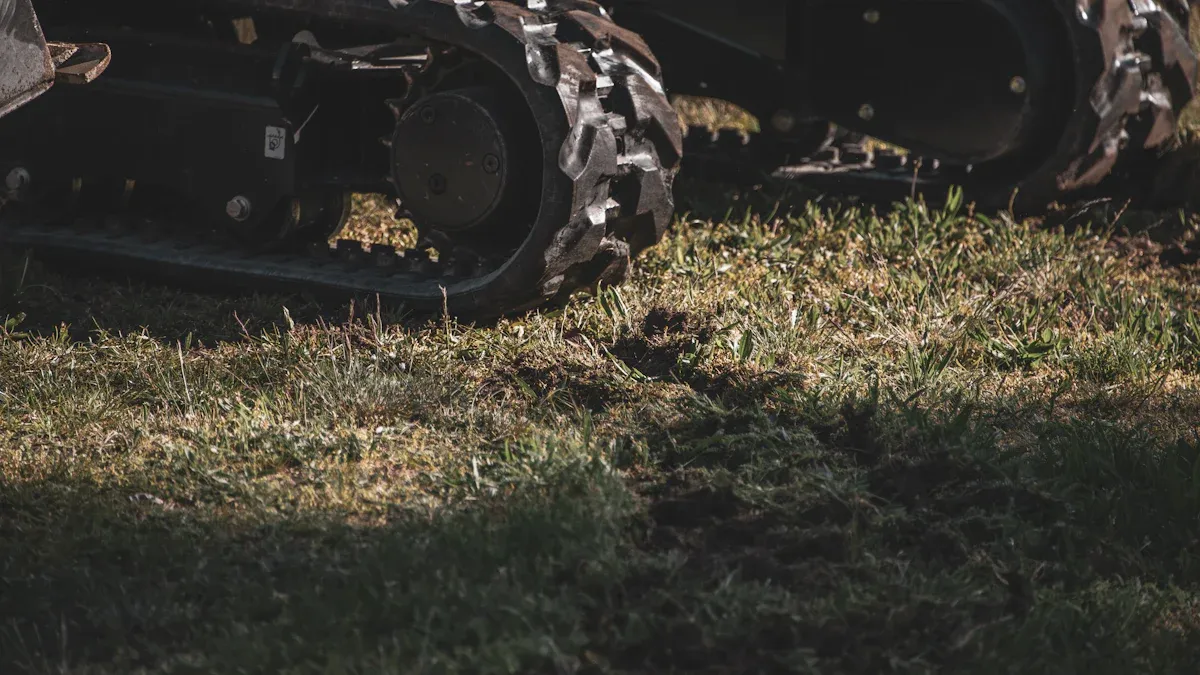
I find heavy-duty skid steer rubber tracks fundamentally change how my machines perform. They offer significant advantages over traditional tires, especially when I need maximum grip.
Enhanced Ground Contact and Load Distribution
I notice heavy-duty skid steer rubber tracks significantly improve how my machine interacts with the ground. Internally, dual continuous steel belts ensure an even distribution of the machine’s weight. This design helps me maintain consistent ground contact and operational efficiency. Fortis rubber tracks, for example, use staggered block tread distances. This engineering guarantees even weight distribution, minimizing vibration and bouncing. I experience a smoother ride and improved ground contact. The width of my skid steer track also directly influences weight distribution. Wider tracks provide more flotation, spreading the weight over a larger area. This gives me better stability.
Superior Flotation on Soft Surfaces
When I work on soft ground, superior flotation is crucial. Advanced features like rubber torsion suspension systems and internal suspension in heavy-duty rubber tracks contribute to this. These systems allow the tracks to conform to ground contours. This reduces ground compaction and enhances stability and traction, even in muddy conditions. I also rely on specific tread patterns, such as wide or multi-bar lugs. These designs are crucial for excellent traction and prevent my tracks from sinking into challenging terrains. Track width is another critical design feature for flotation. I often choose wider tracks to minimize ground disturbance and improve flotation in soft conditions like mud or sand. They further distribute the machine’s weight effectively.
Eliminating Flat Tires and Downtime
One of the biggest benefits I appreciate is the elimination of flat tires. Unlike pneumatic tires, skid steer rubber tracks are solid. This means I never have to worry about punctures or blowouts on the job site. This directly translates to less downtime for repairs. I can keep working without interruptions, which significantly boosts my productivity and keeps my projects on schedule.
Best Skid Steer Rubber Tracks for Unrivaled Grip
I find selecting the right skid steer rubber tracks is critical for achieving unrivaled grip. This involves looking closely at specific design elements. These elements directly impact how my machine performs on various challenging surfaces.
Aggressive Tread Patterns for Maximum Bite
I know aggressive tread patterns are crucial for maximizing bite on challenging terrains. These designs are specifically engineered to dig in and grip, providing the traction I need for tough jobs. For instance, when I work in extreme off-road conditions, I rely on mud-terrain (M/T) tracks. They feature large, deep tread patterns.
- These tracks include large, blocky tread lugs, wide evacuation voids, and deep grooves. They often have a scooping design for digging, biting, and gripping.
- Many mud tracks incorporate rock ejectors or ‘kick-out bars’ to clear debris.
- Tread extending onto the sidewall provides extra grip when aired down.
- Softer rubber compounds offer maximum grip, though they wear faster on pavement.
- Quality mud tracks perform well in mud, rocks, sand, and other extreme off-road situations.
For rocky terrain, I look for large, blocky tread patterns. They maximize surface contact for better grip on irregular rock faces. Stepped or wraparound tread blocks are also designed to grab rock edges from multiple angles. When I face muddy conditions, aggressive tread patterns require large blocks and deep grooves for both traction and self-cleaning. Key features for mud include deep, multi-angled lugs, wide spacing between tread blocks to eject debris, and a high void ratio. For desert driving, I prefer larger gaps between tread blocks to prevent sand from lodging. Deeper grooves and chunkier patterns are better for rocky desert trails. Wide-spaced, deep lugs churn through soft sand without bogging down. Multidirectional tread blocks offer consistent grip on uneven surfaces.
Deep Lug Depth for Extreme Conditions
Beyond the pattern, I know deep lug depth is essential for extreme conditions. This feature allows the tracks to truly dig into soft or loose materials. For extreme conditions like deep mud or loose gravel, I find lug tread blocks are recommended to be 20-30mm or more in depth. This substantial depth provides significant grip on soft surfaces. This depth ensures my machine maintains forward momentum and stability, even when the ground is highly unstable. It prevents the tracks from simply skimming over the surface.
Specialized Rubber Compounds for Durability
Finally, I understand that the material composition of the tracks directly impacts their durability and performance. Specialized rubber compounds are vital for creating robust skid steer rubber tracks. For example, Fortis HD utilizes a finely tuned blend of natural and synthetic rubber combined with additives and a specialized vulcanization process. This proprietary mix is engineered to create a robust yet flexible compound that significantly resists cuts, punctures, and abrasion, enhancing overall durability.
I also consider the specific characteristics of different rubber compounds:
| Rubber Compound | Key Characteristics for Durability & Wear Resistance |
|---|---|
| Synthetic Rubber (EPDM, SBR) | Excellent resistance to wear, weathering, and extreme temperature variations; ideal for construction sites, asphalt, and heavy-duty applications. |
| Natural Rubber Blend | Offers a good balance of flexibility, strength, and resistance to cracking and tearing; performs well on softer terrains like dirt and grass in agriculture and landscaping. |
| High Tensile Strength | Crucial for heavy-duty applications, withstanding constant pressure and movement. |
| High Abrasion Resistance | Essential for longevity on pavement, gravel, or rocky ground, maintaining integrity and performance. |
| High Heat Resistance | Prevents degradation from friction and sunlight exposure, vital for prolonged use on hot surfaces. |
I always look for tracks with high tensile strength. This ensures they withstand constant pressure and movement. High abrasion resistance is also essential for longevity on pavement, gravel, or rocky ground. It helps maintain integrity and performance. High heat resistance prevents degradation from friction and sunlight exposure. This is vital for prolonged use on hot surfaces. These specialized compounds ensure my tracks last longer and perform reliably under demanding conditions.
Skid Steer Loader Tracks Performance on Tough Terrains
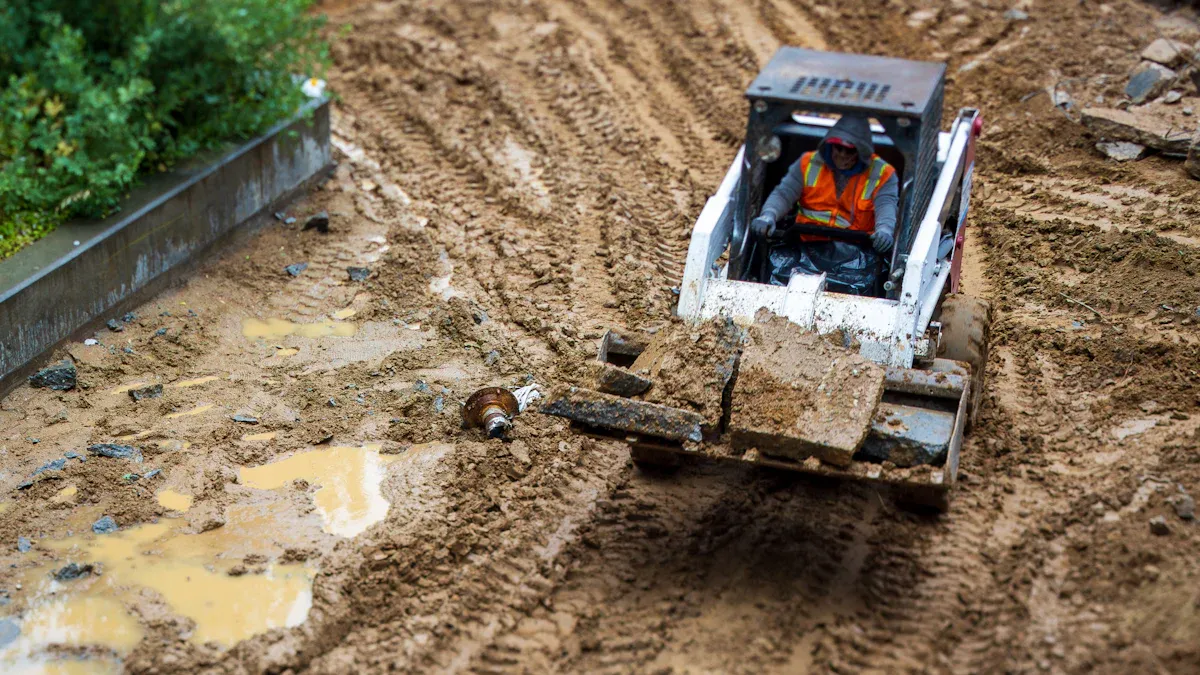
I find the right skid steer rubber tracks significantly enhance my machine’s performance across various challenging terrains. This directly impacts my operational efficiency and safety.
Conquering Mud and Soft Ground
When I face mud and soft ground, my skid steer rubber tracks prove invaluable. They handle virtually any amount of mud, provided I select the correct tread pattern. Over the Tire (OTT) tracks, whether rubber or steel, also offer an effective solution for wheeled skid steers in muddy, slippery, and soft terrain. They improve traction, flotation, and stability. The larger contact area of these tracks distributes the load more effectively, maximizing grip and offering superior flotation. I experience enhanced controllability and maneuverability compared to traditional tires, especially in these challenging conditions. This improved traction and stability lead to greater operator control, better safety, and increased productivity. In agricultural settings, these tracks provide excellent traction on muddy or loose soil, enabling efficient work while minimizing soil disturbance. Their enhanced stability comes from distributing the machine’s weight more evenly over a larger surface area. This reduces ground pressure and prevents sinking or getting stuck in soft or uneven terrain.
Stability on Snow and Ice
Operating on snow and ice demands specific track designs for optimal stability. Continuous Rubber Tracks (CTLs) provide excellent traction and stability in slippery conditions. Their continuous design helps distribute the machine’s weight evenly, reducing ground pressure. This prevents sinking into soft or thawing ground, improving pushing and clearing efficiency. CTLs also offer a more stable platform for heavy attachments, reducing bounce and improving precision. Their extended track footprint and lower center of gravity enhance stability, especially on slopes or uneven ground, and reduce rocking compared to wheeled skid steers.
I consider specific patterns for snow and ice:
- Zig-zag Pattern: These aggressive, directional tracks offer strong traction and self-cleaning capabilities. They are excellent for snow removal, even on icy roads.
- Multi-bar Pattern: I consider these ‘all-season tracks.’ They offer balanced grip and ride comfort on various surfaces, including snow.
- Wide Tracks: When lifting and transporting heavy loads, wide tracks enhance stability by providing more flotation.
For optimal traction on slippery or soft surfaces covered with snow or ice, I recommend TDF multibar tracks or terrapin tracks. These tracks feature more linear edges rather than deep lugs. This allows them to grip snow and ice effectively instead of digging into the surface.
Navigating Rocky and Uneven Surfaces
Navigating rocky and uneven surfaces requires robust track features. I find different track types perform uniquely in these environments:
| Track Type | Performance on Rocky/Uneven Surfaces |
|---|---|
| C-pattern | Performs consistently on rocky surfaces and holds up well in a wide mix of terrain. |
| Steel Tracks | Preferred for heavy-duty work and tough environments, providing superior traction in harsh terrains such as rocky, muddy, or uneven surfaces due to robust construction. Engineered for longevity and resilience in rough terrain. |
| Rubber Tracks | Suitable for uneven ground but more susceptible to wear and tear in environments with sharp rocks or jagged debris compared to steel tracks. |
| Multi-bar | Performs well on hard, rocky ground. |
| Block | Excellent for forestry, demolition, and some concrete jobs (often involving rocky/uneven surfaces), but sacrifices grip for durability. |
Abrasion resistance is essential for longevity on uneven, rocky ground. Track reinforcement is also vital for navigating roots, stumps, and rocks in forestry, and for challenging construction sites.
Key Features of High-Performance Skid Steer Rubber Tracks
I always look for specific features in high-performance skid steer rubber tracks. These elements ensure maximum durability and operational efficiency.
Reinforced Carcass Construction
I know a strong carcass construction is fundamental for track longevity. Manufacturers incorporate steel belt layers for lateral stiffness and puncture protection. This design often reduces the number of plies needed. Some tracks feature all-steel construction, offering superior durability and heat dissipation. I also see synthetic body plies with steel radial belts in some multiuse tracks. These ensure a flatter contact patch for better traction. High-grade rubber compounds are essential for durability, providing tensile strength and abrasion resistance. Steel cords embedded within the rubber enhance structural integrity. Reinforced sidewalls and additional rubber layers contribute to overall resilience. Kevlar integration further enhances cut and puncture resistance, making tracks more resilient on demanding job sites.
Anti-Vibration Technology
I appreciate anti-vibration technology in my skid steer rubber tracks. This feature significantly improves operator comfort and reduces machine wear. It minimizes the jarring and shaking often associated with heavy equipment operation. This technology allows me to work longer with less fatigue. It also protects my machine’s components from excessive stress.
Thick, Chunky Block Designs
I find thick, chunky block designs offer excellent performance. Tracks with a block pattern provide superior traction on asphalt or concrete due to their large contact area. They also perform well in muddy conditions. The lugs’ sidewalls grip the ground, providing traction. The shallow angle of the lugs aids in moderate self-cleaning, preventing material buildup. This ensures consistent grip. Block tracks are very durable. Their thick, chunky rubber construction makes them ideal for demanding applications like forestry and demolition. Each block extends about 1 to 1.5 inches from the track face. This extreme durability contributes significantly to their wear life. However, I understand they sacrifice some grip for this durability.
Choosing the Best Skid Steer Rubber Tracks for Your Needs
I know selecting the right skid steer tracks is a critical decision. It directly impacts my machine’s performance, efficiency, and overall operational costs. I always consider several key factors to ensure I make the best choice for my specific work requirements.
Matching Track Type to Terrain
I find matching the track type to the terrain is paramount for optimal performance. Different track designs excel in various ground conditions. I often refer to a guide to help me decide:
| Terrain Type | Recommended Track Type |
|---|---|
| Sand / Loose Terrain | Multi-bar |
| Clay / Mud / Wet Surfaces | Zig-zag |
| Asphalt / Concrete | C-lug (commonly used) |
| General Purpose | Multi-bar |
| Soft and Muddy Terrains | Straight Bar |
| Snow / Mud / Clay | Zig-zag |
For loose terrain, I understand tracks need wide grooves between their lugs. These channels pack sand, gravel, or snow, creating a larger contact patch. Wide tracks are also beneficial on loose terrain. They increase flotation and lower ground pressure, which prevents my machine from sinking. Conversely, when I work on hard surfaces like asphalt or concrete, I look for tracks with a high lug-to-void ratio. This design increases the contact patch for optimal traction. Narrow tracks suit hard and rocky ground where flotation is not my primary concern. They develop more pressure, which means more grip. Standard tracks offer a good balance of flotation, pressure, and maneuverability for general-purpose applications.
Considering Machine Weight and Horsepower
I recognize machine weight significantly influences my track selection. This primarily affects ground pressure and stability. For heavier machines operating on loose terrain, I always recommend wider tracks. They distribute the weight more effectively, reducing ground pressure and preventing sinking. Conversely, narrower tracks increase ground pressure. This is beneficial for achieving greater grip on hard or rocky surfaces. For example, a John Deere 317G Skid Steer has an operational weight of 8,423 lb. I see a substantial difference in ground pressure between narrow (12.60”) and wide (15.75”) tracks. The narrow tracks result in a ground pressure of 6.58 psi. The wider tracks yield 5.26 psi. This shows a smaller track width can increase pressure by 25%. When I lift and transport heavy loads, wide tracks are crucial for enhanced stability. While horsepower correlates with machine size and operating capacity, I find its direct influence on track selection is more indirect. It links to the machine’s overall weight and intended use.
Evaluating Track Durability and Lifespan
I always evaluate track durability and lifespan. This helps me manage my operational costs and minimize downtime. A typical skid steer loader rubber track usually lasts 500-600 hours under its intended working conditions. This is because it spends 100% of its life walking. I have seen this lifespan extend in soft, wet conditions without exposure to aggregate or rock. Some operators achieve over 900 hours. However, others see tracks fail at 300-400 hours due to aggressive surface conditions and abuse.
Under normal conditions, I expect most skid steer tracks to last between 1,200 to 2,000 operating hours. This is approximately 2-3 years with average use. Rubber tracks are preferred for their versatility in landscaping, light construction, and agriculture. They typically last 1,200–1,600 hours, depending on terrain and maintenance. Tracks used in rocky, abrasive, or high-usage environments may require earlier replacement. Well-maintained equipment in moderate conditions can exceed these expected lifespans.
Maximizing Traction with Proper Skid Steer Rubber Tracks Maintenance
I know proper maintenance is crucial for maximizing traction and extending the life of my tracks. It ensures my equipment performs reliably on every job.
Correct Track Tensioning
I always prioritize correct track tensioning. It prevents premature wear and maintains optimal performance. For compact track loaders (CTLs), I ensure the clearance between the middle track roller and the track surface is between 15 to 30 mm. This measurement is vital for proper track tension. I adjust to maintain this range. For Vermeer mini skid steers, I check the recommended spring length for track tension adjustment. It should be 7-3/8 inches or 19 cm. If the tension falls outside this, I rotate the tensioner adjustment nut until the spring length matches this specification.
Regular Cleaning and Inspection
I make sure to clean and inspect my tracks regularly. Debris buildup can cause damage and reduce traction. I remove mud, dirt, and rocks after each use. I also look for any cuts, cracks, or signs of wear. Early detection of issues helps me address them before they become major problems. This proactive approach saves me time and money.
Storage Practices for Longevity
I follow specific storage practices to maximize the longevity of my tracks. When my equipment is not in use, I store it in a dry, sheltered area. This protects the tracks from environmental elements. It prevents degradation from prolonged exposure to sunlight, moisture, and extreme temperatures. I store heavy machinery indoors in a cool and dry location whenever possible. If outdoor storage is my only option, I cover the entire unit or park it in the shade. Alternatively, I individually cover the rubber tracks with tarps or cloths to protect them from UV rays. During off-seasons or infrequent use, I run the engine at least once every several weeks. This helps maintain rubber flexibility. For extended storage, I remove the tracks and lay them on their side. This prevents misshaped rubber, folds, and crimps.
I find investing in high-quality tracks is a smart long-term decision. They provide superior traction and performance, significantly reducing my operational costs over time. Choosing the right tracks enhances my job site productivity and safety; for instance, tracked machines offer greater stability and superior traction on challenging terrains. I always prioritize track features that match my specific operational needs for optimal grip.
FAQ
How long do my skid steer rubber tracks typically last?
I find my skid steer rubber tracks usually last 1,200 to 2,000 operating hours. This depends on terrain and maintenance. Aggressive conditions can shorten this lifespan.
Which track type should I choose for muddy conditions?
I recommend zig-zag or straight bar patterns for mud. These designs offer superior grip and self-cleaning capabilities. They prevent my machine from getting stuck.
Why do I prefer rubber tracks over tires for grip?
I prefer rubber tracks because they offer a larger contact area. This distributes weight better and provides superior flotation. They also eliminate flat tires and downtime.

Post time: Dec-17-2025