
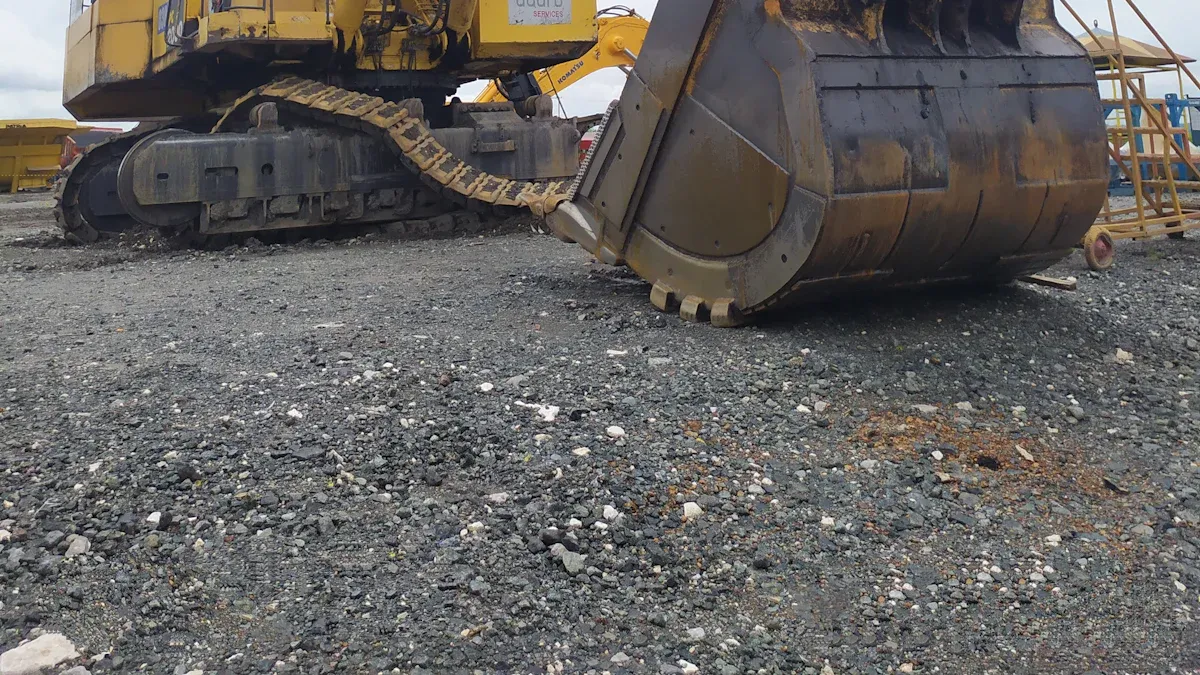
I believe maximizing uptime and minimizing operational costs are paramount for any business. Proactive track care offers immense value. I find it helps achieve optimal performance and durability for your excavator rubber tracks. This dedicated approach ensures your machinery consistently operates at its peak.
Key Takeaways
- Daily checks and cleaning of excavator tracks help find problems early and remove dirt.
- Operating your excavator carefully, like avoiding fast turns and overloading, makes tracks last longer.
- Keeping tracks at the right tightness and cleaning them often prevents damage and saves money.
Daily Inspections for Excavator Rubber Tracks

I always begin my day with a thorough inspection of my excavator rubber tracks. This daily routine is crucial for catching potential issues before they escalate. It helps me maintain optimal performance and prevent costly downtime.
Visual Checks for Damage
I perform a detailed visual check for any signs of damage. I look for cracks or cuts on the surface of the rubber track. Tears, especially along the edges, also catch my attention. I check for missing chunks of rubber from the track. I also inspect for any stretching of the track. Visible or damaged internal steel cords are a major red flag for me.
Identifying Early Wear Signs
I actively look for early wear signs. I notice visible cracks or missing pieces in the rubber. Worn tread patterns reduce traction, so I check for those. Exposed or frayed cords weaken the track’s structure; I identify these quickly. Signs of de-lamination, like bubbles or peeling rubber, also indicate wear. I also observe excessive wear on sprockets or undercarriage components. Frequent loss of tension suggests internal damage. Reduced performance, such as slower operation or higher fuel consumption, also signals issues. I know scrap wood and cinder blocks can puncture or tear the rubber. Bricks and stones often cause abrasions and cuts. Rebar and other sharp objects can slice through the rubber, exposing internal components.
Debris Removal Essentials
I make debris removal a priority. I regularly inspect and clean my excavator tracks at the start of each shift. I also clean them whenever I enter the cab. For sandy or dry dirt, I lift one track by swinging the arm and pushing into the ground. Then, I rotate the elevated track forward and backward. I repeat this process for the other track. For wet or compact material, I use a shovel for removal. More frequent cleaning is necessary in these conditions. While checking for debris, I also look for damage to undercarriage components. This includes track pads, idlers, rollers, and sprockets.
Operational Best Practices for Track Longevity
I have learned that how I operate my excavator directly impacts the lifespan of its tracks. Adopting smart operational practices significantly extends track durability. This approach helps me avoid unnecessary wear and tear.
Smart Driving Techniques
I always focus on smart driving techniques. I avoid high operating speeds. When going uphill, I position the final drive motor at the back. I minimize unnecessary reverse driving. I also avoid track spinning, same-direction turning, and counter-rotation. I opt for wider turns instead of quick, aggressive ones. I dig over the idler, not the sprocket. For very steep angles, I use ramps or boards. I alternate my work direction when operating on slopes. I maintain correct track tension. Too tight causes stress, and too loose causes excessive wear on bushings and sprockets. I adjust for muddy conditions (slack) versus hard ground (tight). I use the narrowest shoe width that provides necessary function and flotation. Wide shoes are more prone to bending or cracking.
Avoiding Harsh Turns and Pivots
I understand the impact of harsh turns and pivots. These actions, especially with wider track shoes, significantly increase turning resistance. This resistance places immense stress on the entire undercarriage. It particularly affects the track chain pins and bushings. This accelerates internal wear. It can also cause links to bend or crack. A tall, aggressive single grouser provides maximum traction. However, it experiences high stress when turning on hard surfaces. This contributes to wear and potential damage.
Navigating Challenging Terrain
I employ specific strategies when navigating challenging terrain. I perform routine machine maintenance. This includes checking and lubricating moving parts to prevent friction-induced damage. I inspect tracks, molds, and other components for damage caused by uneven surfaces. I periodically recalibrate automated systems to maintain accuracy. This ensures reliable performance even under tough conditions. I regularly clean tracks and remove debris. I inspect and adjust tension and alignment to maintain efficiency. I evenly distribute the load across the machine. This prevents sinkage, especially in soft or muddy terrains. I implement regular checks for undercarriage components. I add rock guards where possible. I replace worn parts proactively. This extends the lifespan of undercarriage components.
Preventing Overloading and Stress
I always prevent overloading my excavator. Exceeding the load capacity of the track leads to excessive wear of the track chain and track plate. Overloading can cause the fracture of the track chain and track plate. Overloading an excavator places undue stress on its undercarriage and structural components. This directly includes the track system. This accelerated wear and tear increases maintenance costs. It also shortens the equipment’s overall operational lifespan.
Maintaining Optimal Track Tension and Cleanliness
I know proper track tension and cleanliness are critical for extending the life of my excavator’s undercarriage. These practices prevent premature wear and costly repairs.
The Importance of Correct Tension
I always emphasize correct track tension. Improper tension, either too tight or too loose, significantly impacts track components. Too much tension creates excessive stress on pins, bushings, and rollers. This accelerates wear. Loose tension causes the track to slip and can lead to de-tracking. It also increases wear on sprockets and idlers. Maintaining the right tension ensures smooth operation and maximizes component lifespan.
Adjusting Excavator Rubber Tracks Tension
I follow a precise procedure when adjusting the tension of my excavator rubber tracks.
- I park the machine on horizontal ground.
- I lift the back end of the machine by pushing the blade down.
- Then, I lift the entire excavator by pushing the boom and bucket down.
- I engage the Pilot Shutoff Lever. This prevents accidental hydraulic movements.
- If my machine has no blade, I turn the cabin 90 degrees towards a track. I keep a 90-100 degree angle between the boom and arm. Then, I push down with the bucket and boom.
- I measure track sag. The recommended sag is 10-15 mm (0.4-0.6 in) between the bottom roller closest to the center and the rubber track.
- I locate and remove the cover of the grease valve access hole in the track frame.
- To loosen tracks, I turn the grease valve counterclockwise until grease exits.
- To tighten tracks, I pump grease through the grease nipple using a grease gun.
- After adjustment, I rotate the tracks forward and backward for 30 seconds. Then, I recheck the sag clearance.
Regular Cleaning Procedures
I make regular cleaning a priority. This prevents premature wear.
- I remove packed mud, debris, and foreign material from the undercarriage at the end of each day.
- I use high-pressure washing. I focus on areas between track links and around rollers.
- I perform visual inspections before starting work. I thoroughly clean the undercarriage at day’s end.
- I remove accumulated debris. This debris accelerates wear and harbors moisture.
- I pressure-wash tracks after each workday. This removes damaging buildup like dirt, rocks, and concrete fragments.
- Regular cleaning improves traction and reduces slippage.
- I start every shift with a clean undercarriage. This prevents faster component wear from mud and debris buildup.
- If cleaning was not done at the end of the previous shift, I complete it before starting work.
- I clean the undercarriage more than once per shift if operating in very cohesive or abrasive materials like mud or clay.
Preventing Debris Buildup
I know debris accumulation is unavoidable. However, neglecting this buildup can severely damage the final drive motor. It can lead to total failure. Debris packs around track motors. This compromises face seals. It causes leaks of hydraulic fluid and gear oil. It also allows contaminants to enter. This quickly ruins a travel motor. I regularly clean the tracks and undercarriage. This stops debris accumulation. It is a simple task. It saves significant repair and replacement costs.
I also take these steps to prevent debris buildup:
- I regularly clean the undercarriage and tracks. I do this ideally at the end of each day. This prevents debris from hardening or freezing. It also aids in visual inspections. It reduces fuel consumption by minimizing added weight.
- I maintain correct track tension. I check it every 10 to 15 hours of operation. I adjust tension based on working conditions. I slacken for muddy environments. I tighten for hard ground or rocks. Incorrect tension increases stress and wear on components.
- I select the appropriate track shoe width. Using shoes that are too narrow causes the machine to sink. Debris packs tightly. This increases wear and cleaning difficulty. Overly wide shoes bend, crack, or wear out quickly. This happens especially on hard ground. I use the narrowest shoe width that provides necessary flotation for the job.
Undercarriage Care for Extended Track Life
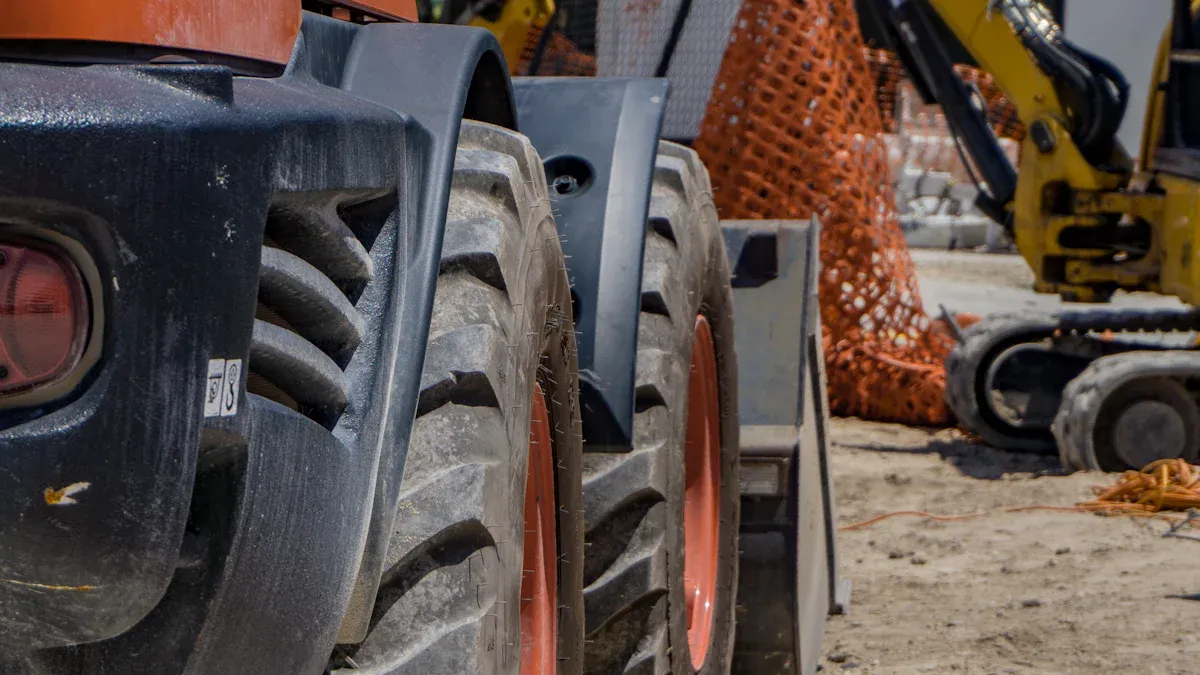
I know that proper undercarriage care is fundamental for extending the life of my excavator tracks. A well-maintained undercarriage directly supports track durability and overall machine performance.
Inspecting Undercarriage Components
I regularly inspect all undercarriage components. This proactive approach helps me catch issues early. I check carrier rollers for oil leaks, uneven wear, or seized rollers. I look at idlers for excessive movement, noise, or misalignment. I examine drive sprockets for worn teeth, cracks, or misalignment. I assess track shoes for improper selection or excessive wear. I also ensure the tensioning mechanism works correctly. Regular adjustment prevents unnecessary wear. I inspect and clean the frame and bottom guard to prevent damage.
Lubrication Schedules for Rollers and Idlers
I follow a strict lubrication schedule for rollers and idlers. This prevents premature wear.
| Component | Lubrication Schedule |
|---|---|
| Guide wheel bearing | 20-30ml grease injection per lubrication |
| Sprocket wheel | Replenish grease once every 3 hours of operation |
I check track roller lubrication every 200 hours of operation. This is especially important in harsh conditions. I also check for oil leakage around roller seals every time I lubricate.
Addressing Worn Parts Promptly
I address worn undercarriage parts immediately. Ignoring them leads to more significant problems. I look for excessive track looseness or misalignment. This happens when rollers lose their roundness or guiding flanges wear out. I listen for unusual noises like grinding, squealing, or clunking. These sounds can indicate a lack of lubrication, worn seals, or flat spots on rollers. Oil leakage around roller seals signals a failure in the internal lubrication system. I also check for flat spots or uneven wear on the roller surface. This often occurs from continuous use on abrasive terrain. Vibration and reduced machine stability also point to damaged rollers.
Impact of Sprocket and Idler Health
I understand the critical impact of sprocket and idler health. Worn sprockets lead to improper engagement with track links. This causes grinding, slipping, and misalignment. It accelerates wear on the track’s drive lugs. Misaligned track engagement increases friction, heat, and stress. This can lead to cracks, deformations, and breakages. Poor fit can also cause serious derailment risks. Worn sprockets and misaligned rollers or idlers also impact torque transfer from the final drive motors. This shortens the life of the final drive motor.
Storage and Seasonal Considerations for Excavator Rubber Tracks
I know proper storage and seasonal adjustments are vital for extending the life of my equipment. These practices protect my investment and ensure readiness for any job.
Proper Storage Techniques
I always prioritize proper storage for my excavator rubber tracks. UV exposure significantly reduces track life. It causes treads to wear faster. I store my machinery indoors in a cool, dry place whenever possible. If outdoor storage is necessary, I cover the entire unit. I also park it in the shade. Alternatively, I individually cover tracks with tarps or cloths. For equipment not used daily, I run the engine every few weeks. This helps keep the rubber flexible. For extended storage, I remove the tracks. I lay them on their side. This prevents misshaping, folds, and crimps. It allows the material to relax.
Preparing for Off-Season
I prepare my tracks carefully for the off-season. I inspect them for wear. I adjust them according to manufacturer specifications. I slightly relieve track tension. This prevents strain from cold temperature contraction. I also inspect tracks for damaged or worn links and rollers. I remove all mud, stones, or debris from the tracks. This prevents rust and corrosion during storage.
Adapting to Extreme Weather Conditions
I adapt my track maintenance for extreme weather. During the rainy season, I loosen track tension by 2-3 grids compared to the standard value. This helps manage the wet conditions. I adjust track tension based on operating conditions. For soft ground, often associated with wet extreme weather, I recommend standard tension. This prevents track damage. For mixed conditions, I check and adjust track tension more frequently.
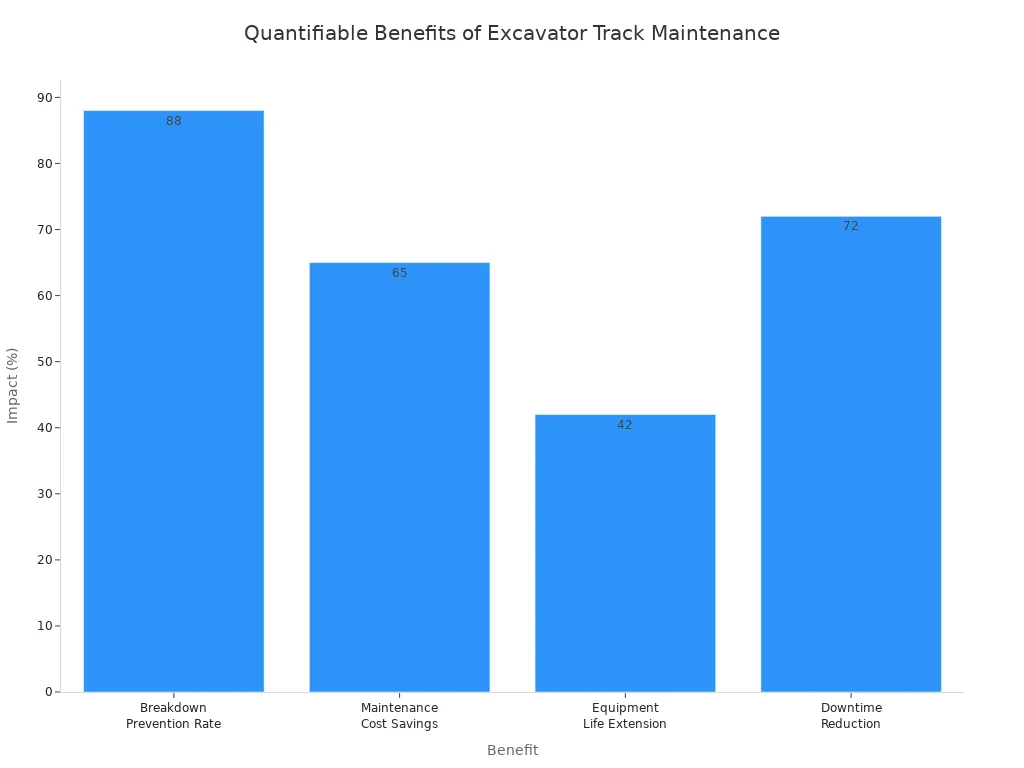
I find consistent maintenance of my rubber excavator tracks delivers significant long-term benefits. My proactive approach reduces breakdowns by 88% and cuts maintenance costs by 65%. This extends equipment life by 42% and reduces downtime by 72%.
| Benefit | Quantifiable Impact |
|---|---|
| Breakdown Prevention Rate | 88% |
| Maintenance Cost Savings | 65% |
| Equipment Life Extension | 42% |
| Downtime Reduction | 72% |
Empowering operators for proactive care ensures these gains. Investing in track care drives business success.
FAQ
How often should I check my excavator track tension?
I check track tension every 10 to 15 hours of operation. I adjust it based on my working conditions. This prevents unnecessary wear.
What are the biggest threats to my excavator tracks life?
I find harsh turns, overloading, and debris buildup are major threats. UV exposure and improper storage also significantly reduce track life.
Can I repair a damaged excavator rubber track?
Minor cuts or tears might be repairable. However, I usually recommend replacement for significant damage like exposed cords. Safety is my priority.

Post time: Jan-16-2026